As Utah burns, state officials urge ‘extreme caution’ over July 4
Jul 02, 2026 | 7:37 pm ET
Description
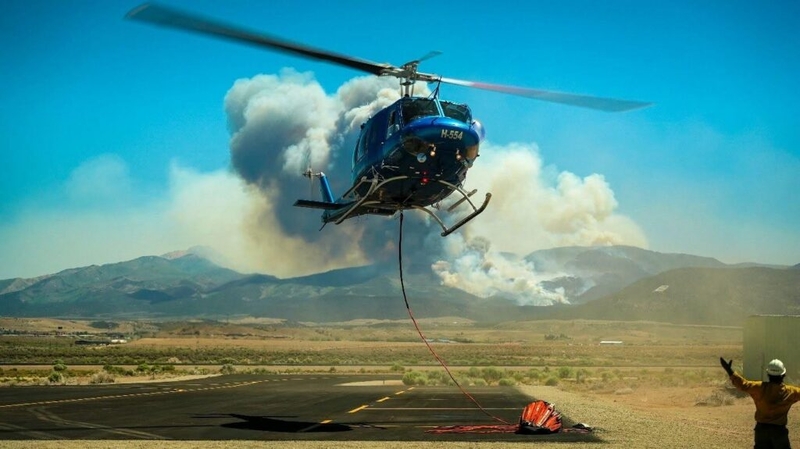
A helicopter carrying a bucket to drop water over the Cottonwood Fire takes off in southern Utah. (Mike McMillian/U.S. Forest Service)
As crews gain ground on one massive fire in southern Utah, another is burning uncontrolled in a fierce start to the season that claimed the lives of three firefighters, destroyed dozens of homes and has already scorched more land than in the last two seasons combined.
With so much of Utah on fire, state and federal officials must figure out where to dedicate finite resources like helicopters and airtankers that help to douse flames from above.
“If they’re being called to multiple fires at once, it’s definitely a balancing act,” said Brianne Emery, deputy director of the Utah Division of Forestry, Fire and State Lands. “Dispatch and the incident commanders are prioritizing where those resources are going based on risk and safety.”
Emery and other state officials want Utahns to keep that in mind on July 4, when the United States tends to see a spike in human-caused wildfires. They’re urging “extreme caution” over the holiday weekend, saying the escalating fire danger is combining with drought to strain resources.
Some Utah cities are rejecting statewide restrictions on fireworks and opting to allow them for the holiday, while others are sticking to outright prohibitions this year. In another precaution, target shooting is temporarily banned across state wildlife management areas in 16 counties, state officials said this week.
Crews in southern Utah made progress this week against the Cottonwood Fire east of Beaver, which has burned nearly 94,000 acres, destroyed 150 buildings and remains the largest in the nation. It was 19% contained as of Thursday, and firefighters were hoping to make progress despite higher winds in the forecast.
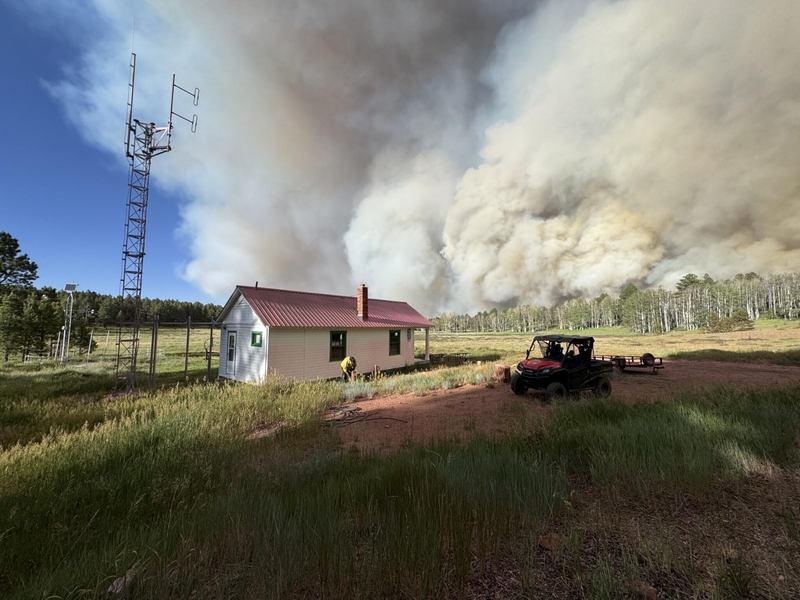
In southeastern Utah, the Babylon Fire grew to more than 70,000 acres in Bears Ears National Monument, with no containment as of Thursday afternoon.
As they work around the state and around the clock, firefighters were mourning three of their own who perished in a burnover incident on the Utah-Colorado border on June 27; two more were injured. Several lightning-caused fires there merged into the Snyder Fire, which was nearly 50% contained at 30,000 acres Thursday.
It’s early in the season for such aggressive fire behavior, and the total acres burned across Utah to date — more than 312,000 — top last year’s season total of roughly 165,000 acres, and 2024’s more than 90,000 acres.
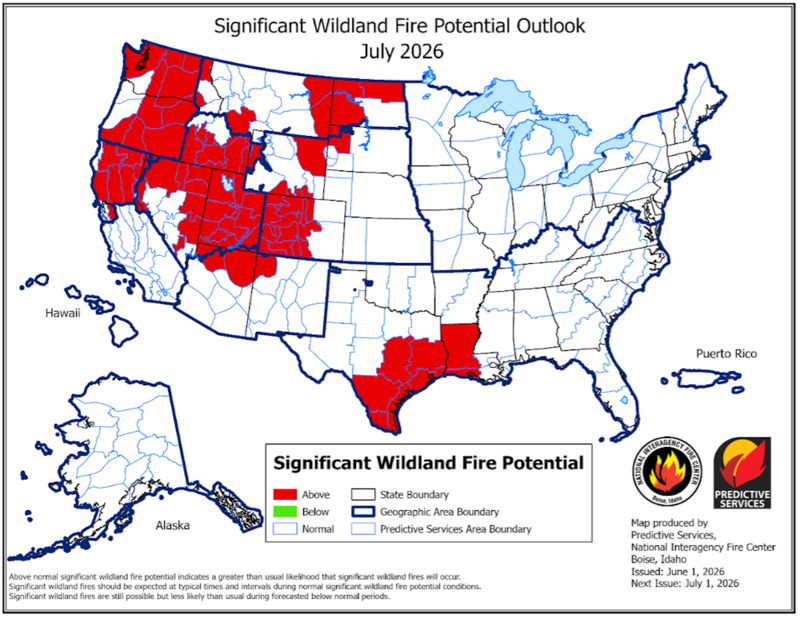
The National Interagency Fire Center’s outlook for July shows the entirety of the state blanketed in red, meaning the potential for wildfire is above normal. In its forecast, the center noted the state recorded no measurable rainfall in June.
The tinder-dry conditions come after Utah hit alarming records this year, with its warmest winter and lowest snowpack on record. In another sign of dry times, Salt Lake City confirmed the 2025-2026 winter provided less snowfall than it has received at any other point in at least 150 years.
The effects were on display at the state’s reservoirs this week, which averaged 64% full — 11% lower than normal for this point in the year, according to the Utah Division of Water Resources.
As they work to help battle this year’s fires, helicopters and airtanker pilots are filling up at Utah’s reservoirs, though they’re not pulling away enough water to further deplete the water supply in a meaningful way, Emery told Utah News Dispatch.
“Dip sites” include the Minersville, Millard County Road and Scipio reservoirs, along with Kent’s Lake and Utah Lake. As part of the effort, officials have drawn up agreements to reimburse farmers or other water rights holders for the gallons scooped up for fire suppression under emergency authority to protect lives and property.
In a prepared statement, Emery said it’s easy to take for granted that the state will always have easy access to water to fight fires.
“But in a year like this one, our planning and relationships are more important than ever,” Emery said.
Salt Lake City, UT