Long-awaited NC budget passes first votes, but 2 Senate Republicans break ranks over ferry tolls
Jul 01, 2026 | 7:42 pm ET
Description
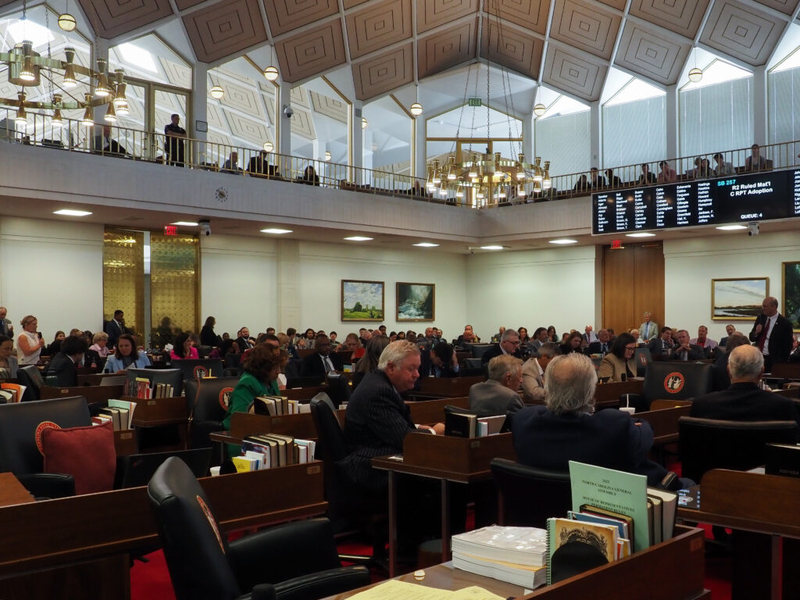
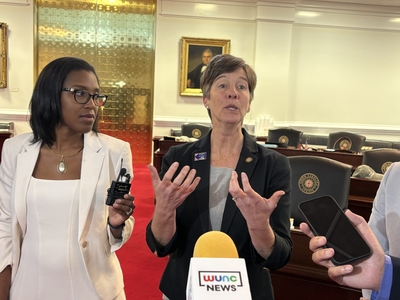
The NC House passed a $34 billion state budget after more than two hours of debate on July 1, 2026. (Photo: Claire Michal/NC Newsline)
North Carolina’s state budget cleared initial votes in the House and Senate on Wednesday on its way toward final passage expected on Thursday.
The budget passed by a vote of 36-13 in the Senate, with all Republicans except two coastal GOP lawmakers voting in favor. Senate Democrats split roughly evenly, with nine in favor and 11 opposed.
The House passed the budget with a 92-23 vote, with 23 Democrats and two unaffiliated members supporting it. House Republicans praised their budget as great for teachers, education, and public safety.
“I’m as proud of this budget as any budget we’ve had since I’ve been up here,” House Speaker Destin Hall (R-Caldwell) said.
Sen. Brent Jackson (R-Sampson) touted the budget’s fiscal responsibility as he gave an overview of the 634-page budget bill, which was unveiled Tuesday morning.
“For months, myself and others and the budget writers and teams have been working to secure a responsible and reasonable spending plan,” Jackson said. “ The result is a $34.4 billion spending plan that provides guaranteed tax relief for all North Carolinians and increases salaries for state employees and law enforcement officers.”
Meanwhile, House Republican budgetwriters took credit for slowing down the Senate’s triggered income tax cuts. Rep. Dean Arp (R-Union) said more gradual reductions will give the state time to see the effects of the most recent cut before enacting the next.
“A tax cut you cannot afford is not a tax cut,” Arp said. “It’s a promise you break later.”
But the budget drew vocal opposition from Democrats and two Republican senators. Sen. Bobby Hanig (R-Currituck) and Sen. Norman Sanderson (R-Pamlico) objected to controversial new tolls on all state ferries.
The fine print: NC’s $34B budget includes DEI cuts, ferry tolls, AI, prison funds and more
Democrats criticized the budget as being far too late and stuffed with bad policies. Disagreements between House and Senate Republicans prevented the legislature from passing a comprehensive budget last year.
Teacher and state employee raises
Republicans said the wait resulted in a budget that invests in people while providing for future tax cuts.
Raises for teachers average 8%. Teachers will also receive bonuses based on years of experience. Starting teacher base pay will rise to $48,000 a year. Local salary supplements will mean many beginning teachers will make more.
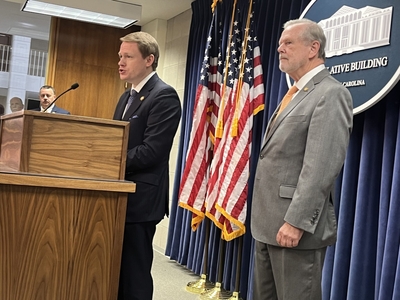
These are the largest raises in 20 years, said Rep. Erin Pare (R-Wake), and make starting teacher pay top in the Southeast.
State Highway Patrol officers will receive 15% raises, officers with the SBI will see 16.2% increases in each step of their salary schedule, and other sworn law enforcement officers will receive 13% pay hikes.
But raises for most state employees will average just 3%, plus one-time bonuses. Democrats criticized those raises as far too low, saying they don’t even keep up with inflation and increases in state health plan costs.
They noted that teachers and state employees received no raises last year, and raises this year are not retroactive.
“State employees, they are the ones keeping this place running, yet we offer them painfully little,” said Rep. Deb Butler (D-New Hanover). “It’s really sort of an insult.”
No time for input and not enough time to read
For many Democrats, a lack of transparency soured any positives to be found in the budget. Sen. Val Applewhite (D-Cumberland) said she could not support the bill simply because she was provided no time to give it a thorough review.
“It’s a dealbreaker for me because what you had months to do, we literally had 72 hours to do. And I can’t speak to anyone else, but there’s no way that you can give me a thousand pages of anything and expect me to vote in an affirmative way,” Applewhite said. “If you can stand here and say how amazing this budget is, why wouldn’t you share that with us earlier?”
Rep. Abe Jones (D-Wake) said legislators didn’t have a chance to read the 634-page document in a day.
“This is the most important thing we do,” Jones said. “Why was it so fast? It just doesn’t make sense to me. Does it make sense to you?”
Rep. Amos Quick (D-Guilford) said he was voting for the budget reluctantly. Democrats aren’t responsible for the late budget, he said, “but we do feel the weight of the widespread criticism across the state that this is the only one that has not passed a comprehensive budget.”
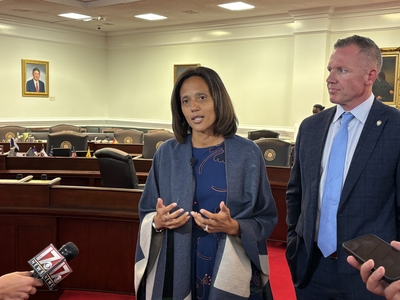
Quick criticized the budget for eliminating the Office of Historically Underutilized Businesses when the state’s Latino and multiracial populations are growing rapidly. The community college minority male success program should not have been cut, he said.
“We’re about to lock 10,000 students out of a program that has been shown to work,” Quick said. “Doesn’t make sense.”
Senate Democratic Leader Sydney Batch (D-Wake), who voted against the budget, said after session that she was not surprised that around half of her caucus supported its passage.
“A lot of my members who felt like we had waited 366 days to deliver something for North Carolinians, felt that they needed to vote,” she said.
Senate President Pro Tem Phil Berger (R-Rockingham) said members of the minority party should not be surprised to be cut out of the budget-making process.
“If you go back to the things I said when we were in the minority party, I think those very same things were being said,” Berger said. “This building works on majorities, and majorities ultimately make the decision.”
Ferry fees take toll on GOP unity
Hanig and Sanderson became the first Senate Republicans to vote against the state budget in more than a decade on Wednesday — a revolt against Berger, who became a lame duck Senate leader after losing his primary in March.
Some ferry routes mostly used by tourists have charged tolls for several years. But the budget would extend the tolls to commuter ferry routes as well. The two senators cited commitments to their constituents to never support such a toll.
“I believe no North Carolina citizen should have to pay a toll to ride on a ferry. They are, by all accounts, a part of the North Carolina highway system,” Hanig, who is not running for reelection, told the Senate. “We’ve done an amazing job in lowering our tax rate. Now we’re proposing to tax the hardworking people of eastern North Carolina to go to work, go to school, go to doctor’s appointments.”
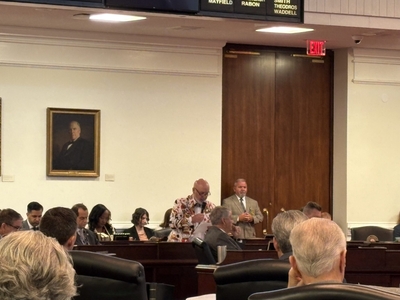
Sen. Michael Lazzara (R-Onslow) said in his presentation of the transportation budget that the state is investing new money into the ferry system, but that new tolls are necessary for ongoing financial support.
“It requires the ferry division to develop a plan for long-term vessel replacement of the division’s aging fleet, and requires tolling, which will increase recurring revenues dedicated for that essential purpose,” Lazzara said.
But Hanig and Sanderson urged their colleagues to wait until the completion of a statewide audit of the ferry system to see if there are other ways to reduce costs or raise revenue before passing a toll on daily users.
Sanderson warned that introducing a toll will create “a lot of ill feeling” in towns where the ferry is a way of life.
“I rode it every day at 5:30 in the morning for 15 years going back and forth for my business,” Sanderson said. “It’s a part of our life, it really is. We don’t even think about using it anymore. It’s just something that you wake up and naturally do.”
Sen. Michael Garrett (D-Guilford) said he shares Hanig and Sanderson’s view on the toll, which he slammed as a “ferry tax.” He believes Republicans and Democrats can find common ground on cost of living issues like this one.
“People in every part of the state, and definitely in eastern North Carolina, are dealing with rising energy costs, rising fuel costs, rising grocery costs, housing costs, access to health care,” Garrett said after Wednesday’s session. “We just piled on even more to the people of eastern North Carolina.”
Democrats demand more for education and healthcare
Democrats said the bill does not do nearly enough to support North Carolinians’ education and healthcare needs. But some said they had no choice but to vote for it anyway because of how dire their constituents’ needs are.
Sen. Sophia Chitlik (D-Durham) praised the funding the bill provides for education in the science of reading, but said it fails to allocate needed funding where literacy education can make the most difference: at the preschool level.
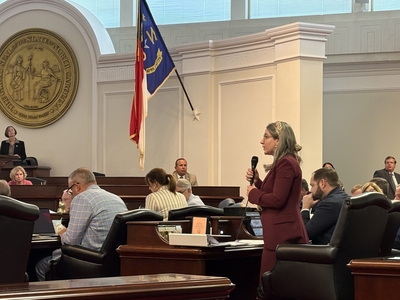
“They come to kindergarten unprepared and they just never catch up,” Chitlik said. “What could our 61,000 failing third graders have achieved if they all had been given access to high-quality early childhood education?”
Only 30% of four-year-olds in the state are in early learning because it is unaffordable for most families, she said, and the new budget does nothing to help that, Chitlik said.
She told lawmakers the choice was theirs: they could invest in universal pre-K education now, or “pay more for special education and prison later.”
“I can’t vote for a budget that promises that third grade won’t be any different for a kid turning three this year than it is for the majority of current third graders who still can’t read at grade level,” Chitlik said.
Sen. Julie Mayfield (D-Buncombe) said she was voting for the budget despite reservations over a lack of significant funding for the Healthy Opportunities Pilots.
The budget provides $9 million for the health intervention program, which provides food, housing, and transportation services to prevent future health complications. It was was shuttered last July due to a lack of funding, but Mayfield said data showed the program had been working well to lower Medicaid costs.
But $9 million is just a fraction of the $87 million Gov. Josh Stein requested to draw down additional federal dollars for the program, Mayfield said, so the state will receive $25 million instead of $134 million in matching federal funds.
“How effective is that money going to be?” Mayfield asked. “The infrastructure in those three areas, does it still exist so that those programs can get back up and running?”
Berger said after session that the low budget figure for HOP reflects continued GOP skepticism of the program’s efficacy.
“We’ve got some members in our caucus who feel we should be putting more money toward that. We’ve got some members in our caucus who feel like we shouldn’t be putting any money toward that,” he said. “My personal view is that the results of the Healthy Opportunities Pilots aren’t as conclusive as those who want to see a huge amount of additional money go towards that.”
Legal aid fund restricted
Democratic lawmakers also condemned restrictions on a longstanding legal aid fund, the Interest on Lawyers’ Trust Accounts program, that gave millions to services for low-income North Carolinians for four decades before the legislature froze its grant program last year. A state audit released in April called for greater oversight of the program, but found no violation of grant eligibility rules.
The budget bars future grants from going toward any organization that “provides representation, assistance, or advocacy” relating to immigration law or transgender health matters, or which engages in legislative advocacy except with regard to its own funding or laws that directly affect it.
Mayfield said those changes spoil a budget that elsewhere provides greater funding for indigent legal services.
“So we’re helping poor people over here, and we’re hurting them over here,” Mayfield said. “That’s money that they used to help survivors of domestic violence, to help poor people who are struggling with housing.”
She noted that Pisgah Legal Services, which provides legal aid in western North Carolina and was instrumental to helping survivors of Hurricane Helene, stands to lose $2 million from the new restrictions. “Who is going to help those people now?”
The House and Senate will convene Thursday for expected votes on final passage of the state budget. A technical corrections bill making changes to the budget is also expected before the session ends.
Raleigh, NC