UH Report: Oʻahu Needs More Solar, Not New Power Plants
Jun 30, 2026 | 6:01 am ET
Description
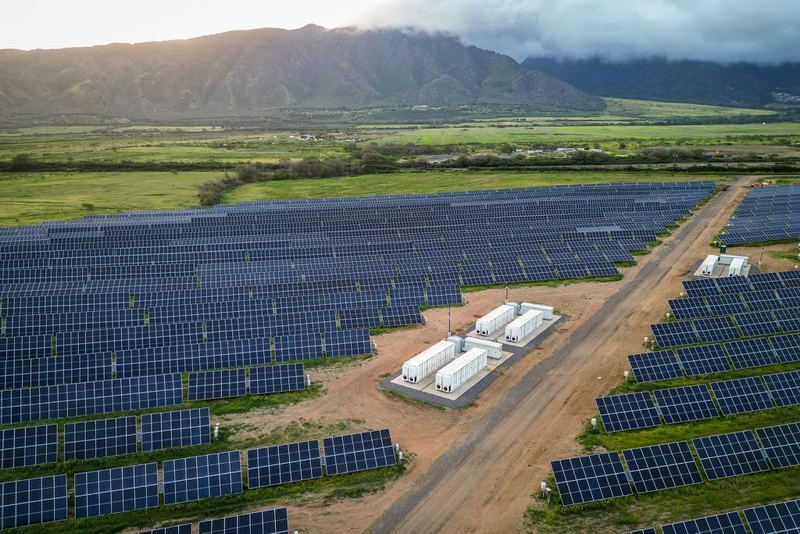
Photo courtesy of Honolulu Civil Beat
Building more solar farms with battery storage is the most cost-effective way to power Oʻahu as the state transitions to 100% renewable energy, and policymakers should do more to support solar and storage to further reduce costs, the University of Hawaiʻi Economic Research Organization said in a report issued Monday.
The report says ratepayers could save billions of dollars over the next two decades if the state simply reduced regulatory costs associated with developing solar and battery storage projects.
The report comes as Hawaiian Electric Co. is pushing forward with a plan to rebuild a power plant that would transition to renewable fuel, and JERA Co. proposes to build a power plant that would be fueled with natural gas before transitioning to renewables in 2045.
JERA, which has announced a strategic partnership with Gov. Josh Green’s administration, is expected to submit a formal proposal to the Hawaiʻi Public Utilities Commission but hasn’t done so. JERA has reportedly engaged in talks with HECO about a potential partnership, but neither company has officially signaled an intent to work together.
The report by UHERO economist Michael Roberts, UH doctoral student Ethan Hartley and California-based researcher Matthias Fripp, concludes that Oʻahu doesn’t need a new fuel-burning power plant at all — whether it's built by JERA or HECO and fueled with natural gas or anything else.
Instead, the report says, Hawaiʻi should do more to lower the price to develop solar farms and storage.
“Cheaper solar is by far the biggest lever Hawaiʻi has,” the report says.
Lowering regulatory burdens and “soft costs” so solar development costs in Hawaiʻi equal those on the mainland, the authors conclude, would save Oʻahu customers $3.4 billion between 2027 and 2050.
HECO rebutted the finding, saying the report underestimates the price of developing solar plus storage projects. Jim Kelly, HECO’s vice president for government and community relations and corporate communications, expressed appreciation for UHERO looking at the complex issue of forecasting infrastructure costs, fuel prices and consumer impacts.
“Unfortunately,” Kelly said in a statement, “one of the key findings of this report, that solar-plus-battery is always the cheapest option, relies on a pricing calculation that doesn’t reflect the actual cost of the latest projects.”
HECO also took issue with the assertion that so-called soft costs alone are what make developing solar projects more costly on Oʻahu than on the mainland.
“Ignoring the premium on the cost and availability of labor, the cost of shipping, the cost of land, the cost of steel, concrete and heavy equipment," Kelly said, "doesn’t reflect the true cost of the ‘fundamentals’ in Hawai‘i."
Report: Oʻahu Has Ample Land For Solar
The report also addresses an issue that has often frustrated developers of solar farms: the lack of relatively flat land on Oʻahu to build sprawling photovoltaic arrays. State and local land-use laws and policies allow solar farms on some land designated for agricultural use, which at times has created conflicts between farm advocates and solar companies.
In 2021, for example, the Hawaiʻi Clean Power Alliance and several solar companies asked the Hawai‘i Land Use Commission to postpone approving the City and County of Honolulu’s proposal to designate about 41,000 acres as “Important Agricultural Lands,” out of concern that the designation might hinder their ability to develop solar projects on the land.
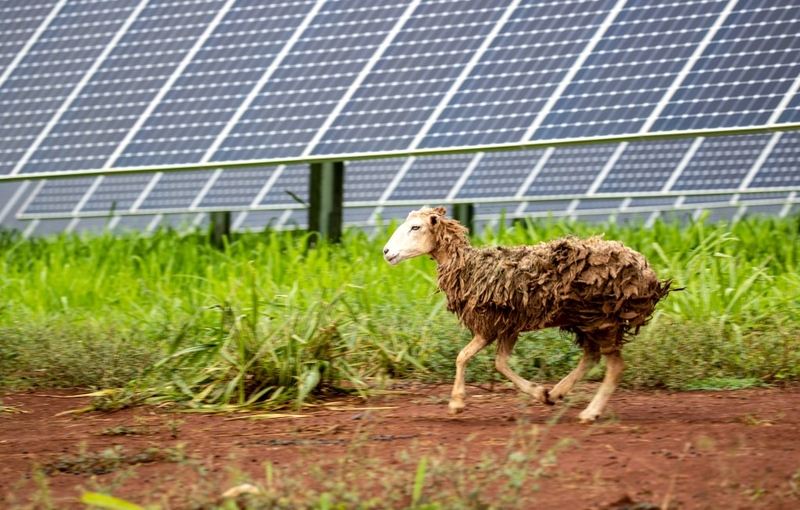
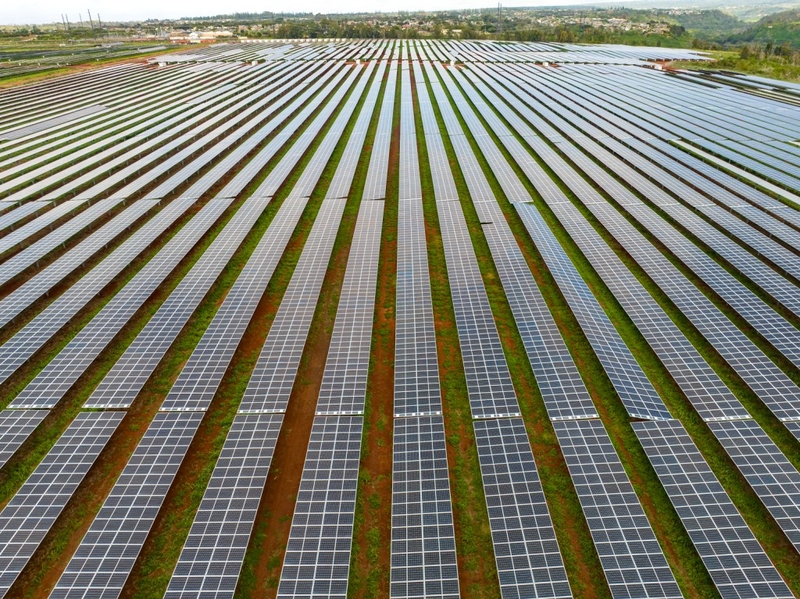
But UHERO says there’s ample land for solar farms on Oʻahu. As a benchmark, the authors estimate developing approximately 6,600 megawatts of needed solar capacity by 2050, about 1,300 of which could be deployed on rooftops, parking lots and the like.
Full-scale build-out of solar would need tens of thousands of acres — 31,500 acres by one estimate — of open space. The report identifies more than 27,500 acres across 334 sites but says easing land-use restrictions could increase available land to 49,000 acres across 653 sites.
“That said,” the report acknowledges, “the picture is not ‘easy.’”
HECO said the study “largely ignores the impracticality of covering 31,000 acres on Oahu – about 60% of developable land — with solar panels and batteries.”
Roberts was not available for comment.
Honolulu, HI