Landry teacher stipend plan back on after judge scraps lawsuit on technicality

Description
Gov. Jeff Landry can move forward with his strategy to cut public school operations funding to provide another round of teacher pay stipends this year after a Baton Rouge judge threw out an order Monday. (Photo by Greg LaRose/Louisiana Illuminator)
Gov. Jeff Landry can move forward with his strategy to cut public school operations funding to provide another round of teacher pay stipends this year after a Baton Rouge judge threw out an order Monday that was preventing the plan from moving forward.
Judge Richard “Chip” Moore of the 19th Judicial District Court lifted a temporary restraining order blocking Landry’s education funding strategy.
Moore said Baker Donelson, the law firm representing the lawsuit’s plaintiffs, could not be involved with the case without Landry’s permission because it also represents the governor and the state in federal litigation over foster care.
“It all starts with him,” Moore said, referring to the governor.
State Deputy Solicitor General Zack Faircloth accused Baker Donelson of “sandbagging” the governor by agreeing to take the education funding case without consulting Landry.
Faircloth’s boss, Attorney General Liz Murrill, praised Moore’s ruling and said her office had terminated its contracts with Baker Donelson.
“A law firm cannot represent the Governor in one courtroom and sue him in another without proper consent,” she said in a written statement.
Murrill also threatened to file “a bar complaint,” presumably with the Louisiana Bar Association that is in charge of state legal licenses, in an email sent earlier this month that was highlighted in filings for the lawsuit last week.
A public relations manager for the law firm did not respond to an immediate phone call and email for comment sent to her Monday evening. The three attorneys who represented the plaintiffs in court declined to comment on the allegations of professional misconduct before the legal hearing Monday.
The judge did not address whether Landry has the constitutional authority to cut K-12 schools funding for a teacher pay stipend through an executive order. The plaintiffs, three longtime public education advocates, had argued the governor was overextending his powers by doing so.
Greg Beuermann, a spokesman for the plaintiffs, said they may consider further legal action, like another lawsuit with new legal representation. But that would likely have to be done before Wednesday, when Landry’s plan for cutting school funding takes effect, Beuermann said.
Landry issued an executive order on June 2 asking state lawmakers to pull $168 million from K-12 schools general operations funding and use it to pay for a fourth year of annual teacher and school support worker stipends.
The stipends would be worth $2,000 and $1,000 respectively, though they won’t be given to everyone who received one in the previous three years. School staff members like therapists and nurses would be left out of this round of pay boosts.
Legislators overwhemingly approved Landry’s plan last week over the objections of several superintendents, school board members and the state’s largest teachers union. They said moving their general operations funding into pay stipends would force them to cut education programs and, in some districts, lay off teachers and other employees.
Legal documents the plaintiffs filed show that Baker Donelson started advising “a client” about a potential lawsuit over Landry’s education funding plan on the same day Landry’s executive order was released. Faircloth said the firm didn’t tell the governor they would be involved in the lawsuit until two weeks later on June 17.
Barbara Irwin, an outside attorney representing Baker Donelson, argued the firm’s work with the plaintiffs was permitted under a waiver Landry signed in 2023 when he was attorney general before Murrill. It allows the firm to take on cases challenging the state even while handling the child welfare litigation, she said.
Baker Donelson currently represents clients in 50 other cases against the state government, and the attorney general’s office has never raised concern over a potential conflict of interest in any other matter, Irwin said.
“At no point during this extensive course of dealing – spanning multiple years and a change of administration – did the State challenge Baker Donelson’s ability to be adverse to the State,” she wrote in a legal brief filed last week.
In the same brief, Irwin also accused the state of leaning on the concern about Baker Donelson’s involvement to delay the lawsuit overall.
“The Motion to Disqualify is merely an attempt by the State to cause delay and stall the Petitioners’ efforts to have the Executive Order revoked on constitutional grounds by requiring them to seek new counsel,” she said.
In the court Monday, Faircloth responded that the education funding case is different from the others because it involves “personal accusations launched at the governor.”
“Such a willful violation of Louisiana law and breach of loyalty owed to a client should make any Louisiana client wonder whether it can trust Baker Donelson’s representation,” Faircloth wrote in a legal brief filed last week.
The judge sided with Faircloth, saying that the waiver Landry signed for Baker Donelson as attorney general did not carry over to his role as governor, which he started in January 2024.
Once the judge ruled Baker Donelson’s representation out of order, another attorney seated behind the plaintiffs’ bench stood up and tried to step in as substitute legal counsel. Moore immediately scuttled that attempt. The attorney declined to give reporters his name before leaving the courtroom.
In its legal briefs filed, the attorney general’s office had also asked the judge to require Baker Donelson to return any legal fees paid by the state for work on the child welfare case done since June 2. But Moore did not say whether he would force the return of the payments to the state when he issued his ruling from the bench Monday.
Landry has been pushing for his teacher stipend plan in order to avoid an potentially unpopular teacher pay cut.
The governor and state lawmakers finalized a state budget plan in late May that didn’t include money to cover the stipends for the 2026-2027 school year. If no action was taken, teacher would have seen the state portion of their pay reduced by $2,000, though some school districts are using local funding to cover the pay hikes.
The governor and legislators had initially hoped voters would agree to a constitutional amendment that drained public education trust funds to free up money for a permanent teacher salary increase that would have replaced the temporary stipends. But the public has rejected two of those amendments over two years, most recently in the May 16 election.
If Landry’s plan goes into place, the state will still have reduced state funding for public education and education pay by at least $198 million from last year. That’s the amount of money that was used for the teacher and school staff stipends in three previous budget cycles.
Louisiana is also facing a budget shortfall of a little over $100 million in the fiscal year that starts July 1 after the governor and state lawmakers cut personal income and business taxes in 2025.
Plaintiffs in the lawsuit are former school superintendent Michael Faulk, former state school board member Belinda Davis and current Orleans Parish School Board member Katherine Baudouin.
Besides Landry, the other defendants in the case were Louisiana’s Department of Education, state Education Superintendent Cade Brumley, Louisiana’s Division of Administration, Commissioner of Administration Taylor Barras, Louisiana’s Department of Treasury and state Treasurer John Fleming.
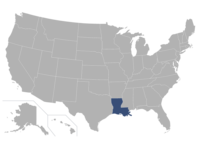
Baton Rouge, LA