After Supreme Court Blow To Gun Restrictions, What’s Next For Hawai‘i?
Jun 26, 2026 | 6:01 am ET
Description
Photo courtesy of Honolulu Civil Beat
Hawaiʻi has long been among the states with the strictest gun laws, accompanied by some of the nation's lowest rates of gun ownership and gun violence.
Some gun control advocates, though, fear that recent actions by the U.S. Supreme Court and national shifts in attitudes surrounding guns are starting to erode the island state’s status as one of the safest from gun crime.
On Thursday, the Supreme Court struck down part of a Hawaiʻi law that required gun carriers to ask property owners for permission before entering certain businesses with their weapons, including cafes and restaurants. The court, in a 6-3 vote, ruled that the default should be to allow guns in private establishments.
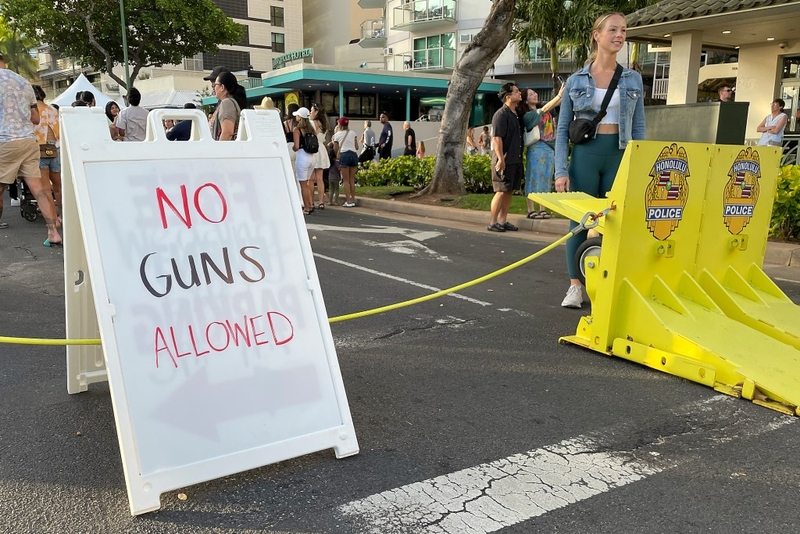
While narrow in scope, the decision is indicative of a wider trend toward policies friendlier to gun owners that will, in turn, make Hawaiʻi less safe, said Chris Marvin, a Hawaiʻi-based gun violence prevention expert.
Other recent court decisions have struck down aspects of Hawaiʻi’s permitting system. For example, an April ruling allows non-state residents to apply for concealed carry permits in Hawaiʻi, as long as they join the Hawaiʻi Rifle Association. Another ruling from 2024 allows U.S. nationals who are not American citizens to apply for those permits.
Hawaiʻi’s age restrictions on gun ownership also are facing a legal challenge that is pending in the 9th Circuit Court of Appeals. Aspiring gun owners must currently be 21 or older before they can buy a firearm or ammunition here.
“There’s tons of erosion of good gun laws that have been put in place to keep Americans safe, and to keep the people of Hawaiʻi safe,” Marvin said. “And we’re going to see more gun deaths.”
Alan Beck, a San Diego-based attorney who represented plaintiffs in the recent Supreme Court case, said he sees the recent changes to Hawaiʻi laws as victories for gun owners. He is also representing plaintiffs in the age restriction case, including a Hawaiʻi resident and aspiring gun owner who was 19 when the original lawsuit was filed.
“I can't wait to see a day when my clients, my friends that live there, my family, are able to live in a state that has, you know, sensible gun laws,” he said, “that don't unduly restrict people's right to keep and bear arms.”
Another recent change he achieved, he said, was getting the City and County of Honolulu to remove its "Guns Not Allowed" signage from all of its city buses. That change didn't take a court case, just a conversation with the city's attorney. Beck reached out and highlighted the fact that state law permits gun owners to ride public transit with their firearms.
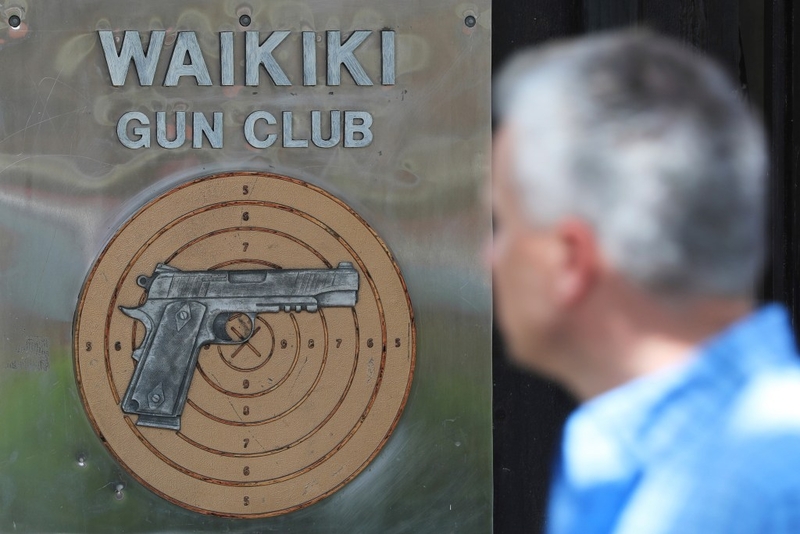
"Up until about a month ago, you couldn't carry a gun on the bus, on public transportation, in Honolulu," he said. "How are you supposed to get to the gun range if you don't have a car?"
'Nibbling At The Edges'
The law that was partially struck down Thursday was passed in 2023 in response to another Supreme Court decision that upended how concealed carry permits are granted in Hawaiʻi. That decision, commonly known as the Bruen decision, forced the state to broaden who is allowed to carry concealed firearms in public.
Before Bruen, police chiefs in Hawaiʻi had discretion over who could get a concealed carry permit, and applicants had to show they had an urgent need to carry a gun for self defense. The Supreme Court ruled that requiring people to prove a need in order to exercise their Second Amendment right was unconstitutional.
In turn, Hawaiʻi police departments started issuing thousands of concealed carry permits. Before the decision, virtually no one had a concealed carry permit. As of last year, more than 3,700 permits had been issued across the state, according to the Attorney General’s Office.
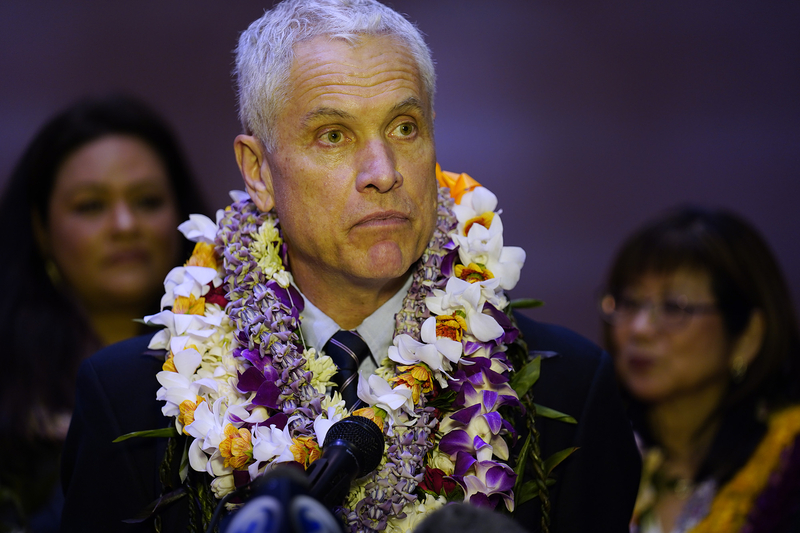
Legislators acted quickly to pass bills they thought would help ease the impact of the decision. In 2023, they passed Act 52, which banned guns from private property without the express permission of the property owner. Though since then that provision has been struck down, other aspects of the law still stand, including its ban on guns in public areas such as parks and beaches.
Despite the Supreme Court ruling, lawmakers and advocates say Hawaiʻi still has some of the most robust gun laws in the nation. For example, the state has a lengthy set of requirements an applicant must meet to receive a concealed carry permit, including being 21 or older, completing a firearms safety training course, passing a background check and waiting 14 days.
One of the only remaining improvements the state can feasibly make to its gun laws is to pass an assault rifle ban like the one that failed on the Senate floor last year, said state Rep. David Tarnas, chair of the House Judiciary Committee.
Despite Thursday’s decision, Tarnas said Act 52 is still a good law that serves to protect state residents. He said now lawmakers will need to amend the law’s language to make it clear that property owners must put up signage prohibiting guns from their establishments if they don’t want gun owners to enter with their weapons.
“All we're seeing is just nibbling at the edges of some of the administrative parts of it, not really questioning or threatening the core foundations of the law,” he said. “I think we will continue to be recognized as a state that has very strong and reasonable gun safety laws, even with this decision.”
Kainoa Kaku, president of the Hawaiʻi Rifle Association, said he is happy with the decision. He said he felt like the law as it was written effectively restricted concealed carry permit holders from moving freely around the city.
"At the end of the day, we're all law-abiding citizens and we just want to do what's right," he said. "So if businesses want to put up those signs, they're more than welcome to, and nothing has changed in regards to private property rights."
Civil Beat reporter Caitlin Thompson contributed to this story.

Honolulu, HI