SC Ports temporarily halts Leatherman operations in face of high costs, waning demand
Jun 25, 2026 | 11:01 am ET
Description
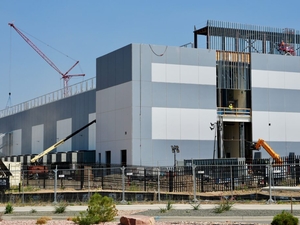
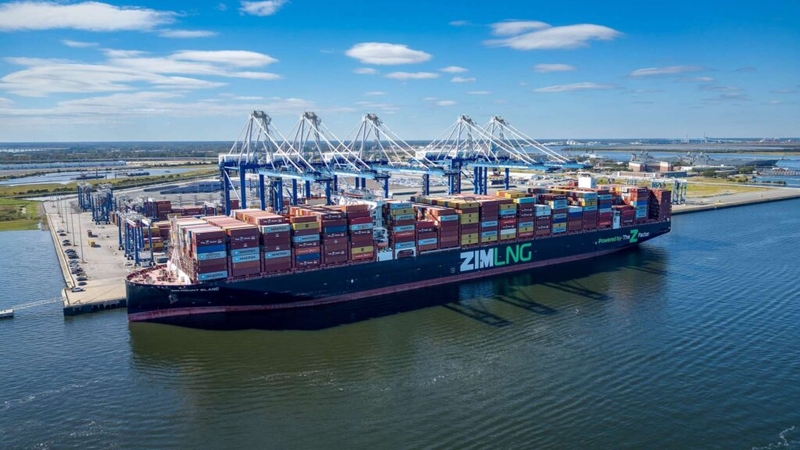
The Port of Charleston’s Leatherman Terminal in North Charleston will temporarily halt operations starting Aug. 1 due to lagging container trade globally and higher costs compared to the port’s other terminals. (Photo courtesy of SC State Ports Authority)
NORTH CHARLESTON – The state agency that owns and operates the Port of Charleston is temporarily halting operations at its underutilized Leatherman Terminal here to save money in the face of a global trade slowdown.
The S.C. State Ports Authority said on Thursday that the container terminal’s shutdown will be complete by Aug. 1 and will continue for an undetermined period.
Currently, five Mediterranean Shipping Co. vessels make weekly calls at Leatherman. The company is eliminating one of those routes because of the dip in worldwide trade volumes. The other four ships will be moved to either North Charleston Terminal or Wando Welch Terminal in Mount Pleasant.

Micah Mallace, the authority’s president and CEO, termed the shutdown as a “short-term pause” and said it is necessary “to sustain long-term, sustainable growth.”
“We need to see the market turn around,” Mallace told the SC Daily Gazette. “Once we see volumes get to the level where it makes sense to reopen, we get our costs right and all that kind of stuff then we’ll reopen.”
Mallace declined to say how much money the authority will save by having the $1 billion terminal along the Cooper River pause operations.
The first phase of Leatherman has handled 75,455 containers of all sizes through the first 11 months of this fiscal year.
That is a little more than 10% of the terminal’s capacity. By comparison, Wando Welch has handled nearly 1.1 million containers during the same period.
Leatherman has a higher cost structure than the port’s other container terminals because of a 2024 Supreme Court decision that let the International Longshoremen’s Association hold all of the jobs at the waterfront facility. The union labor is more expensive than the workforce at other port terminals, where a mix of union and state employees move containers through the yards.
Some container lines have balked at calling on Leatherman because of the higher costs.
State Sen. Larry Grooms, who heads the Senate Transportation Committee, could not be reached for comment. But the Berkeley Republican told the Gazette in October that Leatherman is “too costly to operate right now,” adding the authority must “get a handle on the costs and get assurances from the steamship lines they’re willing to pay them and continue to send ships to Charleston.”
“Without that,” he said, “we could end up in a downward spiral.”
Ken Riley, who heads the Charleston branch of the International Longshoremen’s Association, has acknowledged the cost challenges at Leatherman and told the Gazette he’s willing to work with the authority. He could not be immediately reached for comment about Thursday’s announcement.
The temporary Leatherman shutdown is part of the authority’s effort to get a handle on costs during a difficult economic environment. The maritime agency previously said it would not open a $690 million rail yard adjacent to Leatherman this year as planned but will wait until market conditions and demand for the facility improve.
However, Mallace said work on a second berth at Leatherman will continue as the authority predicts a need for future capacity at the terminal once the global economy and trade improve. That second phase is expected to be completed next year.
“We do not think this is a long-term problem,” Mallace said, adding: “We remain really bullish on the Southeast of the U.S.”
He acknowledged, however, that most industry analysts are forecasting flat-to-down container volumes into the coming year.
“The indicators are very challenging right now,” he said. “It’s a very hard time to forecast.”
Ben Hackett, founder of maritime analyst Hackett Associates, said in a written statement that he expects “a weakening in import volume (this year) as consumer uncertainty remains high and the impact of increasing inflation takes its toll.”
Charleston’s port, like most in the U.S., has an outsized reliance on imports, with loaded import containers outnumbering loaded exports by about 2-to-1.
The National Retail Federation said in a report that “the ongoing trend is for lower imports” through at least the rest of this year.
Leatherman, named after late state Sen. Hugh Leatherman, opened in March 2021 as the East Coast’s newest and most modern container terminal.
It closed for roughly 21 months starting in January 2023 as a legal battle over who would supply labor at the terminal played out in several courts. The International Longshoremen’s Association ultimately won that dispute and the terminal reopened in September 2024.
Columbia