New Mexico Racing Commission to seek $8.4M from state budget in upcoming legislative session
Sep 14, 2026 | 6:27 pm ET
Description
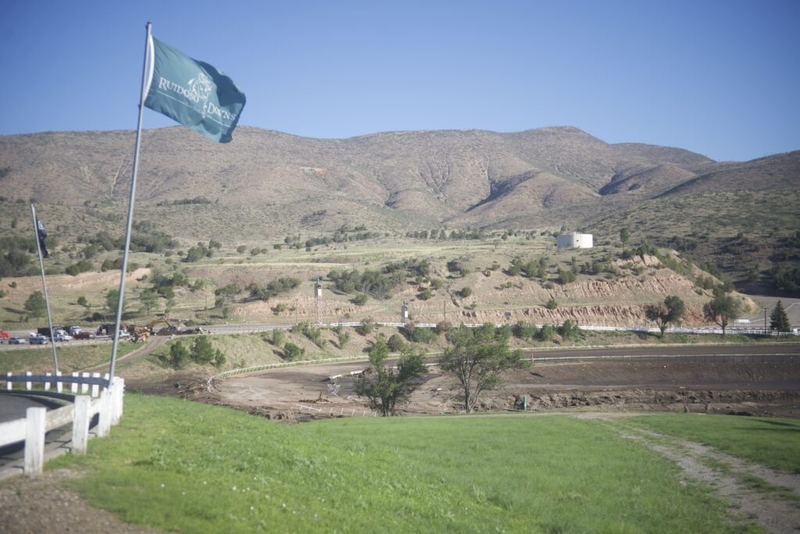
Mud and debris cover the track at Ruidoso Downs Casino and Racetrack on July 10, 2025. A panel of industry officials recently told state lawmakers that New Mexico horse racing faces significant economic challenges. (Danielle Prokop/Source New Mexico)
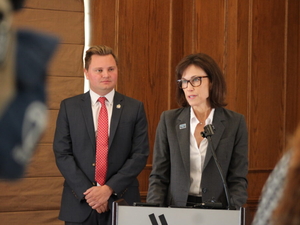
The New Mexico Racing Commission, which regulates horse races at non-tribal casinos across the state, plans to propose an $8.4 million budget during the next legislative session, NMRC Chief Financial Officer Amber Trujillo told a panel of state lawmakers last week.
Trujillo acknowledged that the figure “seems like an alarming number,” when speaking to the interim Economic and Rural Development and Policy Committee in Las Cruces on Sept. 9, but went on to explain some of the factors restricting how the commission’s funding works.
While the commission has the cash on hand to support much of its annual budget of about $8 million, it’s limited in how it can spend much of the money it generates through its programming, Trujillo explained.
For example, when the state racing commission makes money by charging a racehorse owner a registration fee, that fee goes into one of several commission funds and can only be spent on specific purposes. One such fund has a balance of more than $3 million, but state law dictates that the commission can only spend that money on certain uses, such as jockey insurance. Another fund, with some $700,000, can only be used on drug testing athletes. When the state Legislature appropriates money to the commission, however, it is typically for general use.
“A lot of our funding is restrictive,” Trujillo said, adding that more than half of its money can only be spent on specific uses.
Trujillo spoke alongside New Mexico Racing Commission Vice Chair John Buffington and Sunland Park Racetrack and Casino President Fred Heinrich. Their remarks came as the state has seen a shifting landscape in the sport.
After fires and floods impacted Ruidoso in recent years, the local racetrack relocated several of its lucrative races. The Ruidoso track held its 2026 racing season in Albuquerque, and more recently track officials have proposed holding its 2027 races in Texas.
To illustrate the challenges facing the industry statewide, Buffington pointed to the drastic decline in the number of thoroughbred racehorses born in the state each year. In 2008, he said there were 1,078 thoroughbreds foaled in the state. In 2023, it was just 269, he said.
He said that decline concerns him, because the industry has historically produced hundreds of millions of dollars of revenue annually. A report from the New Mexico Horse Breeders Association found that it supports about 10,000 jobs statewide each year.
New Mexico tribe and pueblos wrap up case that Kalshi sports betting hurts their sovereignty
“Besides the role in the culture and history of New Mexico, it’s also an economic machine,” he said.
Many of the “racinos” — racetracks with adjacent non-tribal casinos — have a uniquely challenging business model. Under New Mexico law, non-tribal casinos are only allowed to exist in conjunction with a racetrack and are prohibited from offering many of the attractions found in a tribal casino, including table games like poker or roulette. But the casinos have become what’s subsidizing the horse races.
“Our hands are tied. The casino probably funds 95% of our operation,” Heinrich said. “We are not allowed sports betting. We are not allowed to have live table games. We cannot even have alcohol on the gaming floor…New Mexico is the only state where you can drink a beer, you can play a slot machine, but you can’t do both at the same time.”
One state lawmaker, Republican Senate Leader Bill Sharer of Farmington, told the panelists that he wanted to see the industry thrive, but was concerned by a lack of specific information regarding the causes behind the industry’s decline.
“We’ve got to go backward now. How do we rebuild the industry? How do we get more horses? If we have more horses, we have more race days,” Sharer said. “What I fear is we don’t know why it’s broken, and since we don’t know why it’s broken, we don’t know where to go.”
Santa Fe, NM