Phoenix, Mesa and other cities oppose Republican plan to slash Arizona photo radar fines
Jun 10, 2026 | 8:47 pm ET
Description
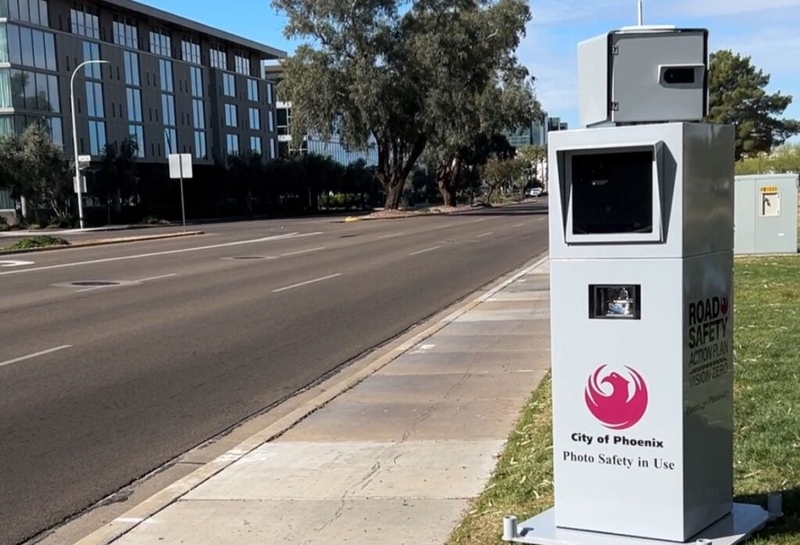
A photo radar camera in Phoenix. (Photo courtesy City of Phoenix)
The price of tickets issued by speed or red-light cameras would be reduced by more than a third under a proposal that has the backing of the Republican legislative majority, who ignored concerns from cities in Maricopa County that say it would take away a critical incentive for Arizona drivers to follow the law.
The Arizona House of Representatives on Wednesday gave preliminary approval to Senate Bill 1624, which would cap the fine for tickets originating from photo radar cameras at $75, far below the current maximum of $250.
Doug Cole, a lobbyist for the League of Arizona Cities and Towns, testified during a March 18 meeting of the House Transportation and Infrastructure Committee that six cities in Maricopa County have photo radar enforcement systems, and the highest fine is Paradise Valley’s $243. Chandler, Mesa, Paradise Valley, Phoenix and Tempe, all of which use photo radar cameras, are opposed to the legislation.
Republicans have long railed against traffic camera enforcement systems, and have pushed a ban on speed and red light cameras for years with no success. This year’s iteration would ask voters in November to decide whether city officials need to get their permission every 10 years to keep traffic cameras in place. If lawmakers send it to the ballot and voters approve the proposal, they would be given a chance at the next general election to preserve existing photo enforcement systems or scrap them altogether.
Cole told lawmakers in March that the proposal slashing the cost of tickets should be tabled until after voters have a chance to weigh in on whether they want photo enforcement at all, but supporters of the bill are pushing ahead regardless, in a bid to chip away at traffic camera systems even if voters choose to keep them.
The bill also prohibits the Arizona Department of Transportation and its Motor Vehicle Division from considering tickets issued via photo radar when deciding whether a person’s license should be suspended or revoked. And insurance companies would be forbidden from using data from photo radar cameras to raise rates or decide which clients to take on or keep.
Several insurance companies, including Allstate, Progressive and Nationwide have registered their opposition with the legislation.
While the bill won an initial greenlight from the House, it has a long way to go before it can become law. It must still undergo a final vote in the chamber and travel back to the Arizona Senate to have its amendments approved before it can be sent to Gov. Katie Hobbs. And it’s unlikely that the Democrat will sign it into law: Hobbs has rejected previous attempts to regulate photo radar systems and frequently sides with city officials when they criticize legislation. And her party appears poised to oppose it.
During early hearings in the Senate, the legislation netted bipartisan approval. It passed out of the Senate with the backing of the majority of the chamber, on a vote of 25-2. But in the House, it began to face pushback from Democrats who voiced concerns about the possibility that Arizona drivers would lose a deterrent to speed or run red lights.
“Seventy-five dollars – that’s chump change for some people,” said Rep. Patty Contreras, D-Tempe, during the March 18 meeting of the House Transportation and Infrastructure Committee.
Republicans, meanwhile, emphasized that the point of the legislation is to persuade people to pay their fines and noted that traffic cameras, unlike police officers, don’t have the ability to discern why a driver might be forced to speed or run a red light sometimes.
Sen. David Gowan, a Republican who represents Sierra Vista, said that most people wait to pay their tickets until they’ve been served. Arizona law doesn’t require people to respond to a mailed notice of a traffic violation caught by a photo radar enforcement system, but failing to respond can result in being officially served and additional fees. Gowan, during debate of the bill in March, said that a lower ticket cost might convince people to pay faster and help cities capture that revenue.
“The issue is just making it simple,” he said. “And it’ll probably get people to just pay their fines at the end of the day.”
But Cole told lawmakers that the ticketing system was never meant to function as a revenue source and that its value lies instead in the threat of an expensive punishment.
“We don’t want those seventy five dollars,” he said. “We want behavior changed for things to be safer.”
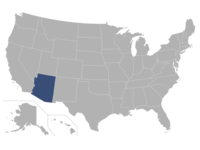
Phoenix, AZ