Massive clean energy project caught in legal crosswinds at WA Supreme Court
Jun 10, 2026 | 7:38 pm ET
Description
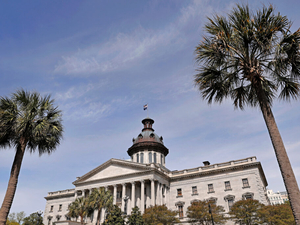
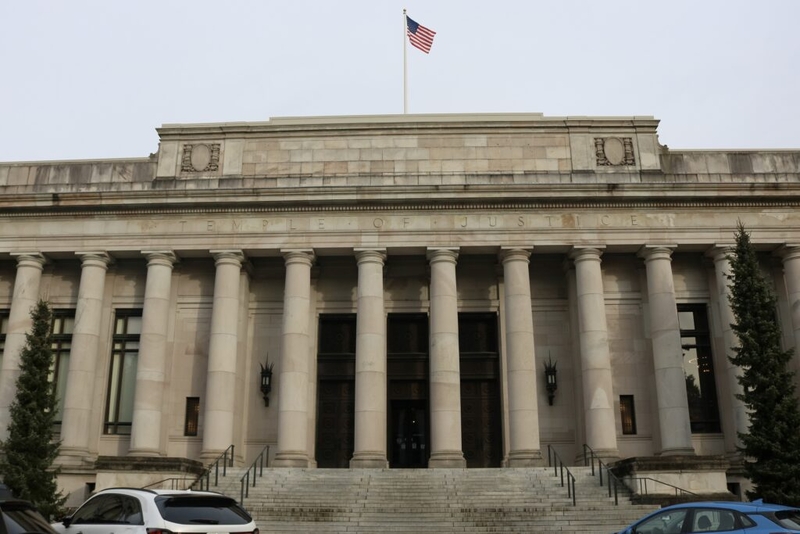
The Washington state Supreme Court building in Olympia. (Photo by Aspen Ford/Washington State Standard)
Washington’s desire to accelerate clean energy development will be in the spotlight Thursday when the state Supreme Court considers whether a state panel and a former governor bypassed permitting requirements en route to approving a major wind farm.
Opponents of the Horse Heaven wind project contend that, in looking to act expeditiously, the state Energy Facility Site Evaluation Council and former Democratic Gov. Jay Inslee failed to properly account for the project’s negative impacts on the environment, surrounding communities and tribal cultural resources.
Tri-Cities CARES, Benton County and the Yakama Nation filed separate petitions seeking to overturn the final decision issued in October 2024. Justices consolidated the petitions and will hear arguments at 10 a.m. Thursday.
At stake is the future of a massive wind, solar and battery storage project envisioned on roughly 72,500 acres along Interstate 82 south of the Tri-Cities. More broadly, if the court sides with the project’s foes, it will seriously crimp state efforts to reduce Washington’s reliance on power generated from fossil fuels.
Tri-Cities CARES, a nonprofit representing residents and businesses, says if the Supreme Court doesn’t reverse the approval, it should remand the project to the current governor, Bob Ferguson, also a Democrat, for a do-over to evaluate and mitigate visual impacts.
“When great ends — alternative energy development — are pursued by improper means, the consequences are far-reaching, not only on a local level but also to the cause of alternative energy itself,” the group’s lawyers told the court.
Separately, attorneys for the state and developer counter that the project underwent exhaustive review and had carefully prescribed conditions imposed to minimize its consequences for the surrounding environment and communities.
“A lawful and rigorous process produced a clean-energy project that Washington urgently needs,” reads the brief filed by lawyers for the developer, Scout Clean Energy, Inc.
A long path
Scout Clean Energy, of Boulder, Colorado, submitted its application in 2021. It called for 244 wind turbines, each about 500-feet tall, and three solar arrays. The firm said it would generate 1,150 megawatts of electricity once built.
In three-plus years of environmental reviews and public hearings, concerns proliferated about the wind farm’s potential to alter the landscape, endanger wildlife habitats, threaten tribal cultural resources and disrupt the economy and character of nearby communities.
In April 2024, the Energy Facility Site Evaluation Council recommended Inslee approve the project. But not until the panel scaled it back with conditions to significantly reduce the number of turbines to allay some concerns, including about the effects on a certain hawk species.
“Like all energy facilities, they will necessarily have impacts. The question is not whether all impacts must be avoided. They cannot be,” the council wrote in its recommendation to Inslee. “Instead, the question is whether all reasonable measures have been required to mitigate and minimize them with the full understanding of the tradeoffs and benefits.”
Inslee sent the recommendation back. He directed the council to focus mitigation on “specific and narrowly tailored approaches” that will enable the wind farm “to achieve its full or near-full energy generation capacity.”
“Based on my review of the record and the potential impacts, mitigation measures that substantially reduce the generation capacity of the proposed project should not be required,” he said at the time.
The council, after reconsideration, submitted a revised agreement in September 2024, restoring many areas where turbines could be placed. Inslee approved it the following month.
Opponents sued in Thurston County Superior Court and successfully sought to have the Supreme Court take the case directly.
Pro and con
This case hinges on whether the facility siting council and the former governor cut procedural corners in making their respective decisions.
Opponents contend the state’s Administrative Procedures Act was not followed and that the environment and wildlife are inadequately protected. Residents say nothing was done to address interference with their views of the Horse Heaven hills.
In its brief, Tri-Cities CARES argued the council “did not follow any semblance of typical procedure” in its processing of the application and took “improper steps” to accommodate the developer. If the process is not done right, “public confidence in the integrity of siting decisions is lost,” the group’s lawyers told the court.
The Yakama Nation contends the final decision resulted in a project that would have significantly greater harm to wildlife and their cultural resources compared to the council’s initial recommendation. They also said there was inadequate consultation between the tribe and the council.
State Rep. Joe Fitzgibbon, D-West Seattle, authored legislation reforming how the council conducts reviews of major energy facilities. He was among the interested parties allowed by the Supreme Court to file briefs. He said the court should affirm Inslee’s decision.
“Projects like this one are imperative to protect our state from the long-term negative impacts of climate change,” he wrote in the brief he submitted on his own and not as a lawmaker. “The process used here is exactly what the Legislature intended.”
Olympia, WA