NC lawmakers push free college tuition to combat public safety worker shortage
Jun 10, 2026 | 3:52 pm ET
Description
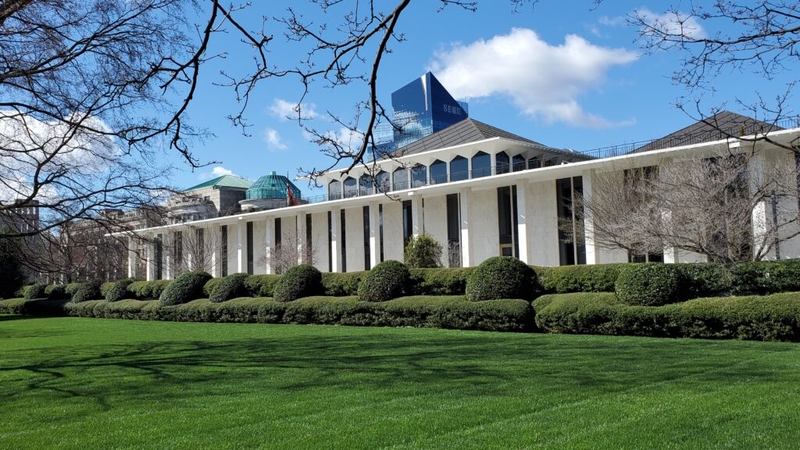
The North Carolina Legislative Building (Photo by Clayton Henkel/NC Newsline)
Children of North Carolina law enforcement officers, firefighters and experienced correctional officers could receive free community college tuition under a bill that passed the state House Education committee Wednesday.
Supporters said House Bill 1203 is intended to help recruit and retain public safety workers as agencies across the state struggle with staffing shortages. Department of Adult Correction officials have told lawmakers the state is operating with roughly half the correctional officers needed to fully staff its prisons, while North Carolina ranks 49th nationally in starting pay for those positions.
“We have issues with recruitment and retention,” said Rep. Mike Schietzelt (R-Wake), a primary sponsor of the bill. “This is one tool that I think we can use to continue to recruit and retain, particularly correctional officers, but also our firefighters and our law enforcement.”
Under the current version of the bill, the state would waive community college tuition for the college-aged children of living, active first responders. State correctional officers would also qualify after at least 10 years of service in North Carolina.
The program expands on an existing state law that waives university and community college tuition for the spouses and children of first responders who are killed or permanently disabled in the line of duty.
Lawmakers estimate the expansion would cost the state about $2 million, an investment Schietzelt argued could ultimately save money if it helps agencies recruit and keep officers.
“You put this money into this sort of a system if it has the impact that you want, and you wind up recruiting and retaining even a few extra officers,” Schietzelt said. “The savings on the other side of that could, I would think, easily exceed what we would have to put into this program over time.”
Lawmakers from both parties praised the bill, but questioned how it would operate and whether other types of state employees could be added.
The proposal would only cover children between the ages 17 to 23. Reps. Renée Price (D-Orange) and Tim Longest (D-Wake) pressed for details on how that would work, with Longest asking whether a student who turns 24 during a semester could lose eligibility.
Schietzelt said the benefit ends at age 24, and suggested that eligibility would likely be determined at the beginning of each semester.
Rep. Brian Turner (D-Buncombe) suggested expanding the benefit beyond the current proposal. The bill as it is currently written excludes probation officers.
“They are putting themselves in harm’s way,” Turner said of probation officers. “A lot of times, they are loaned out to different task forces that they’re working with other law enforcement officers.”
Justin Davis, director of legislative affairs for the state Department of Adult Correction, backed the bill and echoed the request to include probation officers.
Schietzelt said he is open to adding probation officers as the bill moves forward through the legislative process. He also expressed interest in eventually expanding the waivers to include the state’s four-year “NC Promise” universities, which offer discounted tuition.
“In my opinion, community college is the best bang for your buck in the state educationally,” said Rep. Jay Adams (R-Catawba). “This is a small enough population that we can actually measure the results, we can actually see what it provides for us for the state. So I’m very strongly in favor of this.”
A similar bill, Senate Bill 1004, was introduced this session but has not received a hearing.
The bill now goes to the House Appropriations committee.
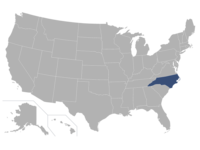
Raleigh, NC