Alabama AG’s office appeals ruling declaring nitrogen gas executions unconstitutional
Jun 10, 2026 | 3:08 pm ET

Description
An oxygen mask. Alabama attaches a similar-looking mask to a condemned inmate when conducting executions using nitrogen gas. (Getty Images)
The Alabama Attorney General’s Office Wednesday appealed a federal district court ruling declaring the state’s nitrogen gas execution protocol unconstitutional.
U.S. District Judge Emily Marks Tuesday wrote that Jeffery Lee, a death row inmate scheduled to be executed on Thursday, had shown that execution by firing squad would be a feasible alternative. In its appeal, the attorney general’s office said the U.S. Supreme Court has never declared an execution method unconstitutional.
“If nitrogen hypoxia violates the Eighth Amendment because of a risk of anxiety and emotional discomfort, then so too must every other method of execution, many of which carry inherent risks of real physical pain — manual strangulation, bullets ripping through flesh and bone but not killing, the ‘agonizing choking and gagging’ of death by cyanide, burning alive, and drugs delivered in insufficient doses,” the filing said.
Federal judge blocks use of Alabama’s nitrogen gas execution protocol
In a response filed on Wednesday, Lee’s attorneys said the state was asking to execute Lee under an “unconstitutional method” and said the state had failed to show that the court made any clear error in its decision.
“If this court grants defendants’ extraordinary (and, by all accounts, unprecedented) request, defendants will proceed to execute Mr. Lee tomorrow using a method that a federal district court just found to be unconstitutional,” the filing said. “Once that execution occurs, neither this Court nor the Supreme Court can review Mr. Lee’s Eighth Amendment claim. Defendants are therefore asking this Court to suspend the district court’s final judgment long enough to render it effectively unreviewable.”
Marks’ ruling did not stay the execution, but it was not clear what if any method the state would use in lieu of nitrogen gas should it attempt to execute Lee on Thursday. A spokeswoman for the Alabama Department of Corrections said in an email Wednesday the department was “proceeding as normal” but did not provide details.
Seven executions
Alabama has conducted seven nitrogen gas executions since 2024. In several instances, witnesses have reported those subjected to the process convulsing and struggling for breath over several minutes. Marks initially upheld the constitutionality of nitrogen gas execution in a May 29 ruling, but a three-judge panel of the 11th Circuit Court of Appeals on Monday reversed that decision, ruling that the process created “air hunger” of one to three minutes that was “over and above” the stress that accompanies an execution.
The attorney general’s office said in the filing that it would waive oral arguments given the short time frame and because the three-judge panel has already heard oral arguments and partially ruled on the matter. The panel had not ruled as of early Wednesday afternoon.
A jury convicted Lee of capital murder for his role in the deaths of Jimmy Ellis and Elaine Thompson during a pawn shop robbery in 1998 in Orrville, Alabama. A jury voted 7-5 to recommend that he be sentenced to life in prison without the possibility of parole, but the judge in the case sentenced him to death.
Firing squads are not currently authorized as an execution method in Alabama law. Following the three-judge panel’s ruling, Marks cited the testimony of James Williams, a physician and gunshot survivor, who said that death resulting by firing squad would happen relatively quickly.
The Alabama Attorney General’s Office tried to undermine Williams’ testimony, focusing on the problems when Mikal Deen Mahdi was put to death by firing squad in South Carolina in 2025. Witnesses reported that Mahdi took at least 45 seconds to die after being shot. A pathologist for attorneys representing inmates on South Carolina’s death row later said that two of the bullets entered below his heart.
Bullets mostly missed SC inmate’s heart, attorneys claim in legal filing
Williams argued that the issues that happened in that episode were an anomaly, and that most times that process would proceed as expected. Lee’s attorneys said Tuesday the state had not tried to rebut Williams’ testimony about the speed of death following an execution or attempted to depose him.
The Alabama Attorney General’s Office also said that it does not have the facilities to carry out an execution by firing squad.
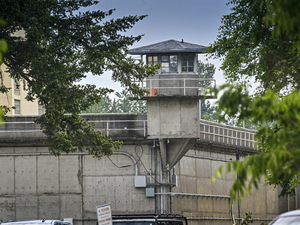
“Warden (Terry) Raybon testified that the walls of the execution chamber are constructed of cinderblocks, and he did not believe they were reinforced with concrete or rebar,” the appeal said. “He testified that the decommissioned portion of Holman is not fortified with things like bulletproof glass and that there are security concerns with its use.”
Lee’s attorneys cited testimony from former Corrections Commissioner John Hamm, who said the department could find and modify a space for a firing squad execution if authorized and funded by the Legislature.
“This case is the first trial — on a full evidentiary record — to address the constitutionality of nitrogen asphyxiation as a method of execution,” the brief said. “This Court’s decision will affect not only Mr. Lee’s case, but also multiple pending challenges to Alabama’s use of nitrogen asphyxiation. The public has a strong interest in making sure that Alabama’s method of execution comports with the Constitution.”
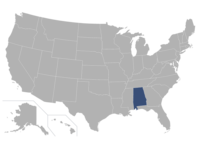
Montgomery