Mississippi Today pushes to unseal court filings in Greenville missing DNA evidence case
Jun 10, 2026 | 9:56 am ET

Description
Photo courtesy of Mississippi Today
Audio recording is automated for accessibility. Humans wrote and edited the story.
Mississippi Today is challenging a judge’s sealing of court filings in a case in which over 100 pieces of DNA evidence have gone missing.
On Monday, Andrew Coffman, an attorney for the Reporters Committee for Freedom of the Press, made a motion to Circuit Judge Richard A. Smith to unseal the records and restore public access to information on whether Washington County Circuit Clerk deputies or employees of the district attorney’s office in Greenville bear blame for the evidence’s disappearance.
Coffman argues on behalf of Mississippi Today that the move also violates the right to review court records, which are generally public record.
“It’s important that Mississippians be able to see exactly how courts exercise the enormous powers granted to them by the state’s constitution,” Coffman said. “Judicial transparency is essential to promoting trust and confidence in the justice system.
“Without access to the record of the underlying arguments in this case, the public simply will not be able to understand the basis of the court’s ultimate decision to determine if justice has been done.”

The missing evidence is tied to a rape and manslaughter appeal in Washington County. Attorneys for King Young Brown Jr., are appealing his 2005 conviction for the rape and killing of Robernisha Webster, who was 6 years old. (Editor’s note: Mississippi Today does not usually identify victims of sexual assault. However, Robernisha’s family previously agreed to the use of her name.)
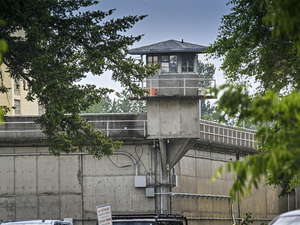
Brown is serving two consecutive sentences — 30 years for rape and 20 for manslaughter — at the Marshall County Correctional Facility. He was 15 years old when he was first arrested and charged and has maintained his innocence. His attorneys are appealing his convictions and hope a new analysis of the evidence will help to clear their client’s name. Brown was tried three times for the crimes. The first two trials resulted in hung juries. At the third trial, after over 13 hours of deliberation, a jury found Brown guilty of rape and manslaughter.
Last year, Smith ordered Washington County Circuit Clerk Barbara Esters-Parker to ship the biological evidence, ranging from a sexual assault kit to fingernail scrapings and strips of masking tape, to a Virginia lab for testing. But officials including Esters-Parker, her deputies and district attorney’s office employees have been unable to account for the materials. Instead, they have shifted blame, or in some cases blamed each other, for the missing evidence.
On April 9, Smith canceled a hearing that had been scheduled in part for the following day to determine the chain of custody of the missing evidence and sealed all evidence in the case.
Documents and other filings have already been removed from the public court docket since April. Deputy Clerk Cynthia Lakes told Mississippi Today that she was instructed by the court to remove further filings by the two main parties per the judge’s order.
A document filed on April 30 by prosecutor Austin Frye was removed from public view the next day. Additional sworn testimonies in May from Washington County Circuit Clerk deputies were filed directly with the judge. A notice of filing by one of Brown’s defense attorneys was scrubbed.
Public officials responsible for storing evidence were expected to testify at the April 9 hearing. Smith said he canceled the hearing in part to save the witnesses from “undue embarrassment” and harassment.
With the case sealed, the public may never know what became of the evidence and whether public officials had a hand in its dissapearance. That’s also true for the family of Robernisha, whose killing and rape is at the center of the case.
“Mississippi Today is seeking to intervene to open this case because the public deserves to know how courts are operating,” Editor-in-Chief Emily Wagster Pettus said. “Transparency in government is important.”
Missing evidence, sealed records, fuzzier timeline
Incomplete court filings have further complicated the timeline of events that led to the evidence going missing from a Greenville courthouse.
Deputies in the Washington County Circuit Clerk’s Office were first unable to find the box of DNA specimens in September.
The recollections of circuit clerk deputies and district attorney’s office employees diverge after this point.
Deputies implied, in a series of affidavits, that Frye and District Attorney Dewayne Richardson visited the evidence room before the materials disappeared.
The district attorney’s office officials refuted that claim.

Frye questioned how Lakes, the deputy circuit clerk, was able to confirm that Richardson and he visited the evidence room based on a colleague’s description of them. He said her and her colleagues’ testimony included “hearsay” and “speculation.”
As Frye indicated in a since sealed document, testimony differed among circuit clerk deputies that observed similar events.
Frye’s analysis is no longer accessible to the public because it is under seal. Attorneys for Brown filed additional deputy circuit clerk testimonies, which are also expected to remain hidden from public view unless the seal is lifted.
Their responses to Frye’s comment may never be known.
“The public simply cannot understand the basis of any argument or decision without access to the underlying facts,” Coffman wrote. “Secrecy promotes distrust.”
‘A right to know’
Coffman also argued that sealing records prevents news outlets from reporting accurately on a case of great public interest. For many Greenville locals, Brown’s case dominated headlines and shocked a generation of parents and children.
“The public has a right to know how its elected officials and government employees maintain public safety and how its courts administer justice,” the motion reads.
Coffman said that sealing court records shuts the victim’s family out of the conversation, too. Robernisha’s family told Mississippi Today that recent developments in the case have brought up painful memories and put off closure.
“We shouldn’t be in the dark about this,” Addie Cannon, Robernisha’s aunt, said of the judge sealing the filings. “I’m still so upset about it, and I don’t think it’ll go away until we get some kind of justice and are able to read what’s going on.”
“We need to know what they’re saying because this is very important to my family, and we don’t have anything to go by.”

Jackson, MS