When politicians put profits over people, Utahns are left to protect ourselves
Jun 09, 2026 | 1:32 pm ET
Description
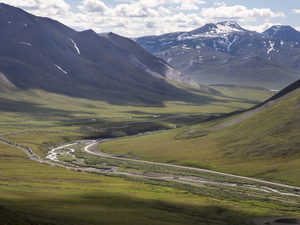
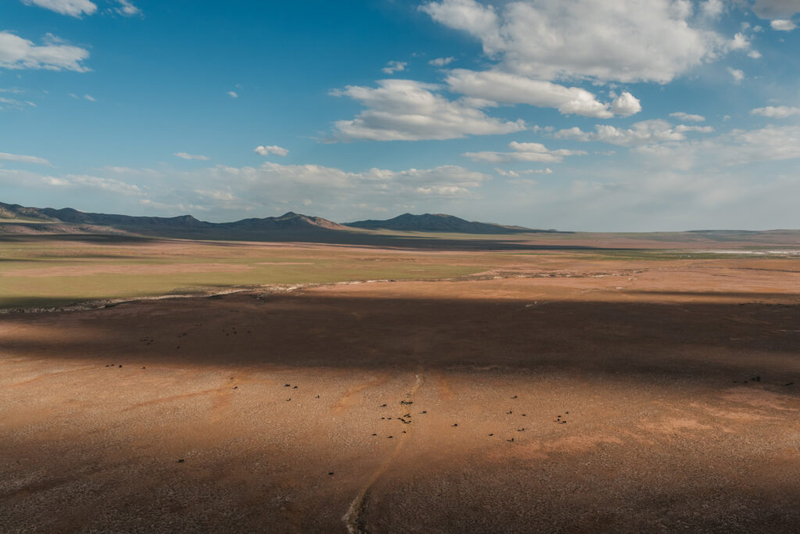
An area of Hansel Valley, in Box Elder County, that is part of the proposed Stratos Project, a massive data center planned for 40,000 acres of land, is pictured on Wednesday, May 27, 2026.(Photo by Spenser Heaps for Utah News Dispatch)
Utah’s Military Installation Development Authority (MIDA) wants to develop the Stratos Hyperscale Data Center in Box Elder County, just north of the shrinking Great Salt Lake. Supporters like Gov. Spencer Cox and Canadian investor Kevin O’Leary are telling Utahns that this is the price we must pay for national security.
This is not the first time “national security” has threatened Utah’s way of life.
In January, I attended National Downwinders Day of Remembrance, hosted by HEAL Utah and LDS Earth Stewardship, to honor communities impacted by World War II-era nuclear weapons testing. When the first atomic bomb was detonated in the New Mexico desert, followed by hundreds more in Nevada, radioactive fallout descended across the Intermountain West and crept into Utahns’ lungs and bones. Now, downwinders — individuals who developed “compensable diseases” whilst living in the flight path of nuclear debris — can receive $100,000 in reparations through the Radiation Exposure Compensation Act (RECA).
One speaker, Mary Dickson, shared her experience as a downwinder growing up in Salt Lake City. Mary was just a child during the atomic age. In her 20s, she was diagnosed with thyroid cancer, and by her 30s, the tumors had spread to her ovaries and uterus. She was never able to have children. At least 54 of her neighbors reported cancer, autoimmune diseases, birth defects, or miscarriages.
Years later, Mary would call her sister to celebrate their successful RECA filings. But by then, Mary’s sister had her own news to share: her cancer had spread to her breasts, bladder, and brain. She passed shortly after.
And to think that Mary and her sister were considered lucky. Many Utahns are completely unaware of their RECA eligibility, and those who do file often die while waiting — for the last artifact they need to submit their claims, for the Department of Justice to review their applications, for their checks to come in the mail. Though hundreds of thousands of Americans are RECA-eligible, only 42,308 claims have been approved so far.
Mingling with attendees after the program, I learned that the majority were downwinders, and their friends and family, seeking support on RECA applications. Some traveled from other counties. One man accompanied his wife hoping to submit her application in the next few months. Another man named Bart Markman came with three printed applications — thick, stapled packets riddled with sticky notes — in hand. He volunteers his time helping his neighbors file their RECA claims and attends events like this in their stead. Why? Because he too is a Utahn with a family history of cancer. He too understands the grief.
So, when Gov. Cox says Utahns have an obligation to help defeat China in the AI arms race, I think of downwinders. When Utah State University professor Rob Davies says the Stratos project could release heat equaling “23 atomic bombs” per day, I think of downwinders. When communities living in the shadow of data centers now report higher rates of cancer and miscarriages, I think of downwinders — their lives lost, their futures stolen.
The data center is just one of many recent disappointments. In March, the state Legislature failed to pass a resolution that would have discouraged future explosive nuclear testing. Last December, the Northwest Interstate Compact approved storing 1.3 million cubic yards of Canada’s nuclear radioactive waste in Tooele County, despite public safety concerns raised by 88 U.S. and Canadian advocacy groups. As early as 2021, Gov. Cox responded to historic droughts by asking Utahns to pray for rain. The data center he now defends, if built, will devour an estimated 16.6 billion gallons of Utah’s water per year.
When politicians put profits over people, we are left to protect ourselves.
Only we can prevent a new generation of downwinders. Mary dedicates her life’s work to defending victims of nuclear proliferation. Bart continues to help his neighbors file for RECA. HEAL Utah began as a group of neighbors fighting against a military weapons incinerator in their backyard — and they won.
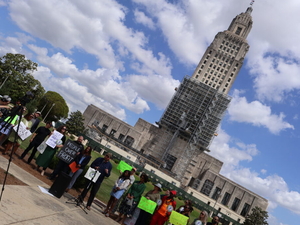
Today, Utahns of all political persuasions are organizing to contest water rights, protest on the Capitol steps, and place referendums on local ballots. Public pressure has already cut Stratos’ initial acreage in half, with more legal challenges to come. This is what happens when we are moved by love and audacious hope — for our state, our neighbors, and the grandchildren we have yet to meet.
Victory is not inevitable, but neither is defeat. There is still time for David to defeat Goliath.
Salt Lake City, UT