Crypto ATM regulations move quickly through NC House with concessions to industry
Jun 09, 2026 | 12:45 pm ET
Description
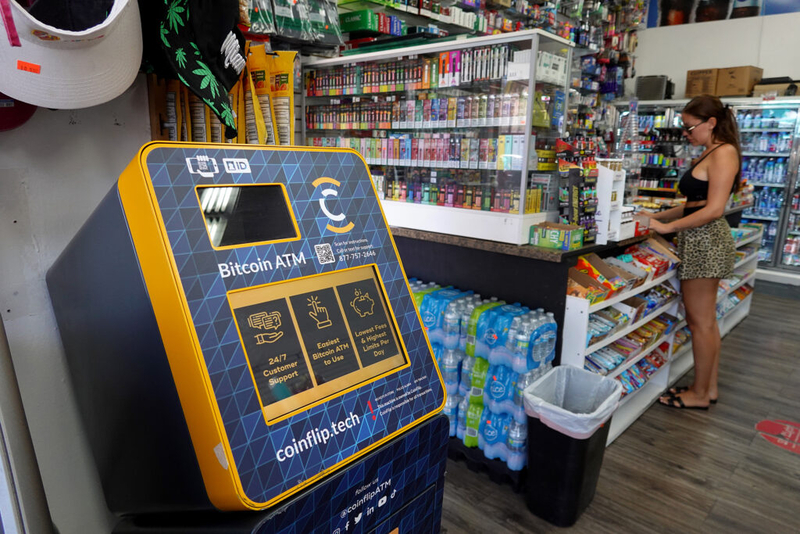
A crypto ATM in a convenience store in Miami, FL. Supporters of consumer protection rules for cryptocurrency kiosks say more than half the victims of crypto scammers are over 60. (Photo: Joe Raedle/Getty Images)
A proposal to regulate the growing cryptocurrency ATM industry in North Carolina was fast-tracked through the state House Tuesday, but not without some concessions to the industry.
Cryptocurrency kiosks are ATMs that allow a user to convert currency to blockchain cryptocurrency. They’re currently unregulated in North Carolina, and they’re often used in criminal scams because cash converted to crypto can’t be traced or retrieved.
For example, a scammer might call and claim to be an IRS agent or a member of law enforcement. The scammer tells the victim they’ll be arrested unless they pay a massive “fine” using a crypto ATM. Once the transaction has begun, it can’t be canceled, and the money can’t be retrieved even after the scam is revealed.
Bill sponsor Rep. Neal Jackson (R-Moore) said senior citizens are the primary target of crypto scams, and North Carolina is one of the hardest-hit states, with more than 4,300 fraud complaints in 2025.
“More than half of victims are over age 60. Seniors lost $257 million last year to these scams,” Jackson said.
House Bill 920 would subject crypto kiosk operators to the state’s Money Transmitters Act, under the oversight of the North Carolina Commissioner of Banks. It requires consumer protections like scam alert signs on kiosks, live customer service, receipts for transactions, and the ability to cancel a transaction while in progress until it’s finalized. It also allows a 30-day window for customers to claim refunds for fraudulent transactions.
The original version of the bill, heard in House Commerce last week, included daily transaction limits of $1,000 per day for new customers and $2,500 for existing customers, and capped transaction fees at 3%.
Claire Wolfson, a representative of kiosk operator CoinFlip, told lawmakers her company supported most of that version, but had “some concerns with some of the numbers.”
The version of H920 that emerged from House Finance Tuesday is considerably more generous to the industry. It would raise the fee cap from 3% to 14%, and raise the daily transaction limits to $2,000 for new customers and $5,000 for existing customers.
CoinFlip didn’t immediately respond to NC Newsline’s questions about its involvement in the changes to the bill.
Rep. Tim Longest, a Wake Democrat, tried unsuccessfully in the House Finance committee Tuesday morning to change the bill back to its original limits and caps. He said the 14% fee cap is too high, while a 3% cap, which is what conventional ATMs can charge, would still allow kiosk operators to make a profit without taking “a large chunk” of the transaction.
As consumers lose millions to gift card scams, lawmakers pressure businesses
Longest also said lowering the daily transaction caps would offer more protection to customers targeted by scammers.
“If they want to put a large chunk of money into the crypto market, they can do so online,” he said, “but if you’re going to go do it in person like this, I think there should be some more guardrails.”
Jackson spoke against Longest’s proposed changes.
“We have to decide if we want to regulate a current industry that’s not regulated at all, or do we want to put it out of business?” he asked. “I believe this amendment would put the industry out of business.”
Jackson pointed out that kiosk operators are currently charging fees of 20% to 30%. He said seven other states have capped fees at 15%.
Longest responded, “There are also plenty of states that have outright banned this industry, so I don’t think that settling at 3% is an inappropriate place to land.”
The committee ultimately defeated the amendment on party lines.
Longest also tried to amend the measure on the House floor Tuesday afternoon, but that attempt also failed.
House Bill 920 passed the chamber unanimously Tuesday and now goes to the Senate.
This story has been updated to reflect the House vote Tuesday afternoon.
Raleigh, NC