A Q&A with Jeff Starling, a Republican candidate for Oklahoma AG
Jun 09, 2026 | 6:30 am ET
Description
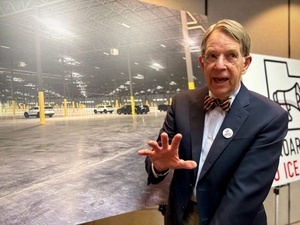
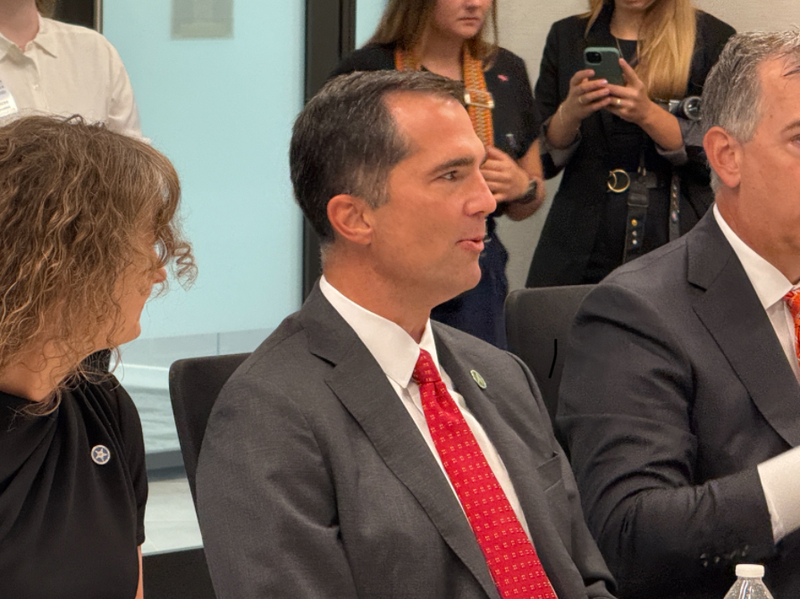
Oklahoma Secretary of Energy and Environment Jeff Starling speaks at an about Oklahoma's role in the biotechnology industry at Innovation Hall in Oklahoma City on Aug. 19, 2025. (Photo by Emma Murphy/Oklahoma Voice)
Editor’s note: This is one of two stories on Republican primary candidates for Oklahoma Attorney General being published by Oklahoma Voice in partnership with KOSU.
OKLAHOMA CITY — Jeff Starling believes his private sector experience in agriculture, law enforcement and oil gas would serve him well as Oklahoma’s next attorney general.
Starling, 51, of Oklahoma City, said he’s worked in the private sector defending agricultural and oil and gas producers and law enforcement. He’s also worked at Devon Energy as assistant general counsel, led litigation at other major corporations and previously worked as a clerk for a federal judge.
“In my mind, Attorney General has three main functions,” he said. “One’s criminal law, one’s civil law, and one’s the general counsel, the head lawyer for the state agencies. … I’ve had experience in all three of those roles, and I’m the only candidate that even comes close to satisfying that.”
This is Starling’s first time running for political office. He said he’s running for attorney general because he thinks he has something to give back to Oklahoma through public service and the state needs more private sector voices in statewide elected offices.
Starling, who currently serves as Gov. Kevin Stitt’s Cabinet secretary of Energy and Environment, faces Jon Echols during the June 16 primary to secure the Republican nomination for attorney general. The winner will face Democrat Nick Coffey on the Nov. 3 general election ballot.
Oklahoma Voice and KOSU sat down with Starling to ask him about his positions on several key legal issues that are expected to face the next Oklahoma attorney general. Answers from the candidate have been paraphrased and shortened for space and clarity.
Q & A with Starling
Q: What kind of relationship would you like to see the Attorney General’s Office have with the next governor?
A: I believe the current relationship between the governor and the attorney general, which is very antagonistic and hostile even, which is not good for the state. We need to have an attorney general and a governor that are on the same team and rolling in the same direction for the betterment of the state of Oklahoma. That doesn’t mean we’re going to agree all the time, and that’s fine. The system is designed like that. … My pledge to all the governors is that when I disagree with you, you’re not going to read about it for the first time in the newspaper.
Q: What do you think the attorney general’s role in regulating and enforcing the marijuana industry and illegal grows should be?
A: We’ve played whack-a-mole with it, as I call it. We’ll find an illegal grow house, we’ll kind of knock it down, arrest the people there. But these Chinese criminal cartels will bus people in and they’ll start growing again. … A day one priority of mine is to go to President Trump and say, “Sir, we need your help, we need the help of the U.S. Attorney’s Office, we need the help of ICE, we need the help of the DEA, the FBI.” And we need to pull these organizations out, root and branch, by using those tools, just like we did with the mob in the 1980s.
Q: Where do you stand on the issue of religious charter schools, like St. Isidore, receiving public dollars?
A: I’m very in favor of giving parents more options about where to send their kids to school. But even putting that aside, the attorney general is there to defend the laws of the state of Oklahoma. This is a very tightly contested issue, so you have a very good faith basis to defend that in a court and in front of judges. It ended up going to the U.S. Supreme Court and it was resolved in a 4-4 decision so nobody really won, I would be there to defend that law.
Q: What do you think of how the poultry pollution lawsuit settlements were handled and what would you do differently?
A: I don’t have a high regard for these type of claims, especially given the amount of time that’s passed here. This case was filed 21 years ago. If it was a person, it’d be old enough to buy a beer. And holding companies responsible for things that happened 20-21 years ago or longer, to me, isn’t the right way to go about doing business. … If we want to change the rules going forward on chicken producers, then that’s fine, but we shouldn’t be changing those afterwards. … I think a reset is worthwhile here to engage the agricultural community.
Q: Where do you stand on issues of tribal sovereignty stemming from the U.S. Supreme Court McGirt decision, such as income taxation, criminal jurisdiction, cart tags, etc.?
A: A lot of this is unforced errors by the state, to be frank, of being too hostile in how we go about these negotiations. But we need to have a tone change. We’re all Oklahomans at the end of the day. My particular view is, when you get all these ancillary issues coming from McGirt, is that the tribes didn’t ask for that uncertainty, the state didn’t ask for the uncertainty. That uncertainty really came from the courts. And we need to go back to the courts to ask them, “What does McGirt really mean on these other issues?” Now we should be able to do that hand in hand with the tribes. They need certainty as well.
Q: Oklahoma has been criticized for its use of the death penalty, lengthy stays on death row and botched executions. Do you support the use of the death penalty?
A: I think capital punishment is an important tool in the tool chest, if you will, of a prosecutor. It needs to be reserved for the most heinous crimes and the most vicious folks, but it is a very important tool, and I would defend the death penalty and certainly support it for the most violent criminals.
Q: If elected as attorney general, would education and enforcement of the state’s open records and meetings laws be a priority?
A: We have a crisis in Oklahoma of trust and government. … The antidote for that, if you will, is sunshine. The Sunshine laws, open meetings, open records, that sort of stuff needs to be enforced. We’ve certainly had some attorneys general in the past that didn’t hold agencies’ feet to the fire when they got open records requests. We need to make sure those are properly and promptly responded to. … We need to really educate these agencies and those entities that are subject to the Open Meetings Act on how properly to meet the requirements of that act, and not use it as a weapon so much, but use it as a tool.

Oklahoma City, OK