‘They’re already here’: Regulating data centers stalls in Missouri
Jun 05, 2026 | 12:44 pm ET

Description
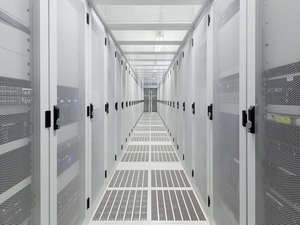
Interior of a modern data center (Getty Images).
The rapid expansion of hyperscale data centers is far outstripping efforts to regulate them in Missouri and other states.
As a result, communities are left with failed legislation, hastily called moratoriums and divisive local elections to address the massive industrial facilities popping up across rural America.
“Legislation traditionally lags very far behind technology, and that can create some problems,” said state Rep. Mike Costlow, a Republican from Dardenne Prairie. His bill and others regulating data centers failed to get a vote in the Missouri legislative session that ended May 15.
At the local level, St. Louis suburb St. Charles is one of the first cities in the country to enact a local moratorium on data center construction. In Festus, south of St. Louis, voters in the April election rejected a slate of four city council members who supported a local data center.
Weeks earlier, hundreds of residents mobbed a city council meeting, and council members were escorted out by police. Petitions seeking recall elections for the mayor and other council members who backed the project were certified last week. The city of Independence, a Kansas City suburb, voted out two council members who approved tax breaks for a data center company.
Local government meetings around the country have been attended by throngs of residents strongly opposition to data center development in their communities.
Other states are struggling to regulate data centers. Maine would have been the first to pass a statewide moratorium on data centers, but the governor vetoed the proposal. Georgia tried to implement a moratorium, but the bill stalled in the session that ended in April.
Alli Finn, director of community partnerships at AI Now, a policy research firm in New York City, said state and local regulation is desperately needed to moderate explosive growth. According to a Stanford University report, the United States hosts 5,427 data centers, more than 10 times any other country, with hundreds more in development. This rapid growth is driven by cloud computing, streaming services and artificial intelligence use.
The Midwest is one of the hottest growth areas, according to a recent Pew Research Center survey. Missouri has at least 91 active data centers of various sizes, according to Data Center Map. At least 14 data centers are in various stages of development across the state, according to Missouri News Network reporting.
Data centers use massive amounts of energy and water. One data center can use as much electricity as 80,000 households, according to a report from consulting firm McKinsey and Co. Some have the potential to use up to 5 million gallons of water daily, according to the Environmental and Energy Study Institute.
“Our current laws around zoning, economic development, water and energy use were not at all built for this moment of rampant data center buildout,” Finn said.
Missouri’s attempt at legislation
During a February press conference, state Rep. Colin Wellenkamp, a St. Charles Republican and chair of the House Future Caucus, announced his intent to make AI and data center regulation a top priority in Missouri’s legislative session.
Wellenkamp and other caucus members introduced legislation regulating water and electricity use for large-load users, like data centers.
“It’s a bipartisan effort that addresses urgent needs in our state that aren’t going away, “ Wellenkamp said. “They’re only going to get more urgent.”
But his bill and identical legislation sponsored by Costlow never made it to the House floor for debate.
House Bills 3362 and 3364 were aimed primarily at utility regulation and customer protection. They would have required large water users, excluding agricultural users, to receive a permit from the Department of Natural Resources. They would have codified requirements for water and electric utilities to create tariff schedules for large-load users and Public Service Commission-approved contracts between large-load users and utility companies.
Wellenkamp’s district covers parts of St. Charles, which in 2025 became one of the first cities in the country to pass a temporary moratorium on data centers, in part due to water supply concerns from residents.
Wellenkamp said the bill was not meant to block data center development, but instead to find a balance between community needs and business needs.
“These things are already here,” Wellenkamp said. “It’s a matter of ‘How do we get the best of both worlds?’ and I think everybody wants that.”
Environmental regulations proposed
Another member of the Future Caucus, state Rep. Marty Joe Murray, a St. Louis Democrat, proposed legislation adding several environmentally conscious regulations.
Murray’s House Bill 2239 would have required data centers that use 100 megawatts of power to use a closed loop or other low-water-use cooling system, ensuring that excess water is not used to cool data centers’ electronic components.
The bill would have required data center operators to submit a report on their health and environmental impact to the Department of Natural Resources each year. These reports would be made public on the department’s website.
Murray said he was inspired to put his legislation forward after public meetings on data center proposals in St. Louis called for more transparency.
Among other proposed legislation this year were bills from state Rep. Scott Cupps, a Republican from Shell Knob, and state Sen. Tracy McCreery, a Democrat from Olivette. Cupps’ bill would have banned using incentives for data centers, discouraged placing data centers on agricultural land or near recreational areas or state waterways, and created a state board to approve new projects.
McCreery’s bill aimed to increase transparency about data centers’ environmental impacts, including energy, water and noise.
None of these bills had a legislative hearing.
If these bills had reached the Senate, they likely would have been referred to the committee chaired by outgoing state Sen. Mike Cierpiot, a Republican from Lee’s Summit. Cierpiot, sponsor of last year’s major energy bill, has signaled reluctance to implement further regulations on large-load users .
Missing tax revenue
Cierpiot has said he doesn’t get the opposition to data centers, especially at a local level.
“I don’t really understand it because (of) the taxes they bring to a district for the school districts and for the local governments. The state really doesn’t get much off of it, but the locals do,” Cierpiot said. “Some communities would really benefit from a large data center as far as a tax base.”
Murray said he is not opposed to the development of data centers, and that Missouri may need taxable data center development.
Missouri, like many states, is under a constrained budget future as federal COVID-19 funding runs dry. Missouri also is expecting lower general revenue after a 2025 law eliminated the capital gains tax.
While data centers could generate tax revenue, Murray said that transparency and environmental regulations should be in place to ensure that data centers provide benefits.
“As a state, we need more revenue,” Murray said. “We have an economic need for business and enterprise in our state, and if this is the lever that they are trying to use, we need to make sure we have some regulations in place.”
That could take a while.
“The Senate is going to have to come around with this; they’re going to have to treat it one way or the other,” Wellenkamp said.
Local backlash
As state legislation has failed, local officials have dealt with data centers, often facing backlash.
St. Charles Mayor Dan Borgmeyer saw the benefit of the tax revenue that would have come from a 440-acre, $1 billion data center proposed by developer CRG.
“I’d love to have the $9 million a year,” he said. “Our casino generates about as much as the data center.”
But after residents fought back on Facebook and meetings turned into shouting matches, Borgmeyer said there was no hope for data centers in his town. Community members feared a data center’s potential impacts on their already contaminated water supply and rising electricity rates.
“The public does not want it, and so therefore I’m supporting their wishes,” Borgmeyer said.
In St. Charles, the city council approved a one-year ban on data centers in August 2025. On May 19, eight months into that moratorium, the council approved another measure effectively banning data centers permanently.
Borgmeyer believes the resistance to data centers was misinformed and overly reactive to things like nondisclosure agreements, which he said are necessary for sensitive business deals.
“A — it’s a highly, highly competitive situation and B — it’s just not good economics to develop that way where everybody else knows all your business,” he said. “So, the NDA became the villain.”
St. Charles City Council member Justin Faust told the House Future Caucus during its November meeting that transparency is key. He said if data center developers want community buy-in, they need to get ahead of residents’ concerns.
Faust said the data center developer in St. Charles provided limited information, and representatives from the company could not answer basic questions. He cited this lack of transparency as a reason for the moratorium.
“We have to answer to our residents in a timely manner,” he said. “Saying, ‘Trust me, I’ll get that information later,’ is not acceptable on any terms.”
Lessons learned
Former leaders in the Kansas City suburb of Peculiar have had two years to reflect on their rejection of a proposed data center in 2024. The New York Times reported that residents were concerned about increased water rates, traffic, noise pollution, light pollution and the loss of their small-town way of life.
Former Alderman Zach Poland said data center opposition was so “publicly vile” and “vicious” that it led him not to seek reelection.
“I was exhausted, frustrated, discouraged and had determined that public service was not for me, and I would be done after my term,” he said.
Public acrimony led City Administrator Mickey Ary and Mayor Doug Stark to resign.
Poland emphasized that communities should not let opposition shut down discussion. He advised officials faced with data centers to declare their neutrality early.
“If I was to do that again, I think I’d need to be a little bit more bold and say ‘Just hold on, nothing is done,’” he said.
In Festus, new council members will have to deal with the debate over the proposed $6 billion CRG data center, which the company proposed after failing in St. Charles.
Murray said state regulations on local government action may not be the solution to problems posed by data centers — but elections are.
“That’s what elections are for,” Murray said. “If they feel as though their representative isn’t listening to them. … They always have the means to change that person next August.”
Creating comprehensive regulations
To Finn, of the AI Now Institute, data center regulation needs to be comprehensive.
Finn co-authored the North Star Data Center Policy Toolkit, which provides options for local, state and regional authorities. Suggested interventions include establishing conditional use permits, limiting tax incentives and subsidies, implementing air pollution measures, regulating noise, requiring fair labor practices, promoting grid stability and renewable energy infrastructure.
“We are seeing that it is very hard to move forward all of the comprehensive legislation and protection that is needed at a state level in a way that matches the speed of this buildout,” Finn said.
Moratoriums are a good way for communities to have more time to develop regulations, Finn said. For example, Maine’s proposed moratorium would have created a regulatory body to oversee development.
“Moratoriums are only as good as what happens when they’re in place or after,” Finn said.
Wellenkamp thinks moratoriums will continue as long as cooperation is strained between local governments and data center developers.
“If the industry does not answer citizens’ concerns and start being more transparent, talking to localities, being partners with localities in this buildout, life is just gonna get harder for them,” Wellenkamp said.
Abigail Cornell contributed to this reporting.
This story originally appeared in the Columbia Missourian. It can be republished in print or online.
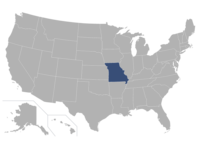
Jefferson City, MO