2026 Louisiana legislative session: Winners and losers
Jun 05, 2026 | 10:32 am ET
Description
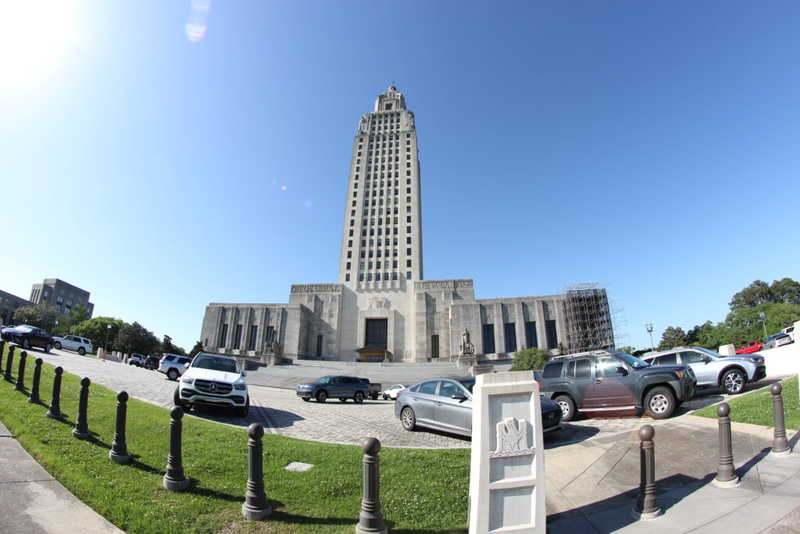
The Louisiana State Capitol building. (Wes Muller/Louisiana Illuminator)
Louisiana lawmakers adjourned their annual lawmaking session Monday after dramatically altering Louisiana’s congressional election map and amid a frantic funding search for teacher pay stipends.
The three-month session started with little excitement as Gov. Jeff Landry had no clear agenda other than another ultimately fruitless push to get more funding for his signature LA GATOR program, which provides public funds for private school students.
Some early fights made the headlines, including the push to eliminate the Orleans Parish Clerk of Criminal Court’s office before its new elected leader, Calvin Duncan, could take office. Sparks really began to fly after the U.S. Supreme Court released its decision in Louisiana v. Callais in April.
Following the decision, the final weeks of session were marked by increased racial and partisan tension that bled into nearly every other issue.
Here’s who won and who lost in the fray.
LOSER: New Orleans
Gov. Jeff Landry, Attorney General Liz Murrill and the conservative lawmakers who oversee the legislature passed a series of bills this year that targeted New Orleans for cuts.
They reduced the number of elected officials in the city by eliminating local judgeships and the criminal clerk of court position. They also took away state funding for prosecutor positions in New Orleans.
Republicans said this was merely an effort to “right-size” New Orleans’ bloated court system, but Democrats saw it as an effort to strike at the influence of the city, which is the state’s largest Democratic stronghold.
WINNER: Prison system
Landry’s administration successfully pushed a $100 million year-over-year boost to prison system funding in the state budget plan this year.
This includes $17.5 million for an expansion of Louisiana State Penitentiary at Angola, $15.2 million for a new juvenile correctional facility in Vernon Parish, $18.6 million for prison guard pay raises and more than $8 million for unbudgeted prison medical expenses.
The state prison population has grown by 2,000 people since Landry took office at the beginning of 2024. The governor and lawmakers passed a number of new laws two years ago that keep people incarcerated for longer periods of time when they commit crimes.
WINNER: District attorneys
Many prosecutors offices around the state will receive more state funding starting July 1, and they will enjoy the newfound ability to move a case to a new judge if they don’t like the first one assigned to oversee it.
The proposal to reassign cases to new judges involves trials where a defendant waives their right to a jury. It was one of several measures Attorney General Liz Murrill brought to lawmakers this session. She and state Rep. Josh Carlson, R-Lafayette, described the jury waiver bill as an end to “judge shopping” that will protect the public from supposedly lenient judges who ignore evidence and let criminals escape justice.
Opponents said it amounts to an erosion of individual rights in Louisiana.
TBD: Public school teachers
The Louisiana Legislature passed an annual budget this year that could result in public school teachers and support staff receiving a pay cut from the state. The spending plan that kicks in July 1 does not include $2,000 and $1,000 pay stipends the teachers and support workers have received, respectively, for the past three years.
Landry and lawmakers were relying on a constitutional amendment that failed to pass on May 16 to shore up teacher compensation. Now, the governor has proposed shifting $168 million from public school operations funding into another round of stipends, but it’s not clear yet whether lawmakers will agree to his proposal.
LOSER: Government transparency
Lawmakers chipped further away at laws meant to ensure government transparency and protect state government from corruption.
They agreed to put a large number of records about applicants to run the state’s public universities and colleges secret. Legislators also agreed to keep the details of which college athletes receive public funding for playing sports out of the public eye.
They also lifted requirements that immediate family members of state board members disclose whether they have business with the state government that could pose a conflict of interest.
WINNER: College student safety
Following the death of Southern University student Caleb Wilson last year, lawmakers convened a task force named in his honor to combat hazing. At the task force’s request, lawmakers passed House Bill 636, by Rep. Vanessa LaFleur, D-Baton Rouge, which seeks to combat college hazing by increasing penalties, training and reporting requirements for schools and campus organizations.
Landry signed the bipartisan legislation into law.
LOSER: Early childhood education
Louisiana lawmakers chose college athletic programs over early childhood education when the House Criminal Justice Committee allowed a bill that would have increased funding for the latter to die without a vote.
Senate Bill 135 by Sen. Beth Mizell, R-Franklinton, would have removed the existing $20 million cap on sports gambling tax revenue the state directs to an early childhood education fund and placed it on the Supporting Programs, Opportunities, Resources and Teams (SPORT) Fund, which gives tax money from the same source to Division I college athletics programs.
Under existing state law, both receive 25% of the revenue from onsite and mobile sports gambling, but only early childhood education has the $20 million cap. State college athletics programs are slated to receive approximately $24 million, which would exceed the $20 million cap Mizell wanted to place on their allotment.
LOSER: LGBTQ+ people
Louisiana lawmakers again declined to pass protections for LGBTQ+ people in the workplace but easily passed two pieces of legislation that could affect transgender people.
House Bill 578 by Rep. Mike Johnson, R-Pineville, replaces all references to “gender” in state law to “sex.” Opponents of the bill have raised concerns it will erase transgender people from state law, and that it could create a conflict with federal guidance on Title IX, a federal civil rights law that ensures equal opportunity to educational opportunities regardless of sex.
Interpretation of Title IX has varied over the years, but it has trended toward acknowledging discrimination based on gender identity, gender expression or refusing to conform with gender norms as a type of sex-based discrimination.
Additionally, House Bill 1137 by Rep. Raymond Crews, R-Bossier City, protects employees from punishment or dismissal for misgendering a colleague, customer or any individual for using the incorrect pronouns to refer to them.
LOSER: Black voters
Though votes had already started coming in for Louisiana’s U.S. House primaries when the Supreme Court ruled on the Callais case in April, the governor moved quickly to suspend the elections so the Republican-majority legislature could pass new congressional boundaries for the midterm elections.
The new map eliminated the majority-Black district currently held by U.S. Rep. Cleo Fields, D-Baton Rouge, and turned it into a safe Republican district.
The move infuriated Black voters, who filled the halls of the Capitol multiple times to express their discontent as the bill progressed through the process. It also drew the ire of the Louisiana Legislative Black Caucus.
Rep. Edmond Jordan, D-Baton Rouge and chairman of the Black caucus, said he feels like he is in an abusive relationship with his Republican colleagues in the House.
“How many racist acts can you participate in until you yourself are considered racist?,” Jordan asked House members.
WINNER: Menhaden fishing industry
Bills filed to put more stringent regulations on the menhaden commercial fishing largely flopped during this legislative session. There has long been tension between the industry and recreational anglers and charter boat operators.
Sport fishers and charter captains say that overfishing of menhaden threatens the survival of the gamefish, such as redfish, that feed upon them. This year, legislation was filed to push the depths at which the nets used to fish for menhaden to 22 feet of water further offshore in order to decrease the amount of redfish accidentally caught by menhaden fishers.
Heavily opposed by the menhaden commercial fishing industry, the bill failed to pass.
Approved measures the industry did not oppose include those to increase transparency on reporting and tracking of menhaden fishing vessels.
LOSER: Carbon capture opponents
Nearly all of the bills filed to provide local say-so over carbon capture and storage projects in Louisiana failed to advance through committee this legislative session.
The failure of the least restrictive proposals early on spelled doom for the rest. Rep. Mike Johnson, R-Pineville, carried the bill, which would have restricted private industrial use of eminent domain, or taking private land used for carbon capture and storage projects.
Johnson’s eminent domain bill failed in a close committee vote in April, as well as six proposals heard in May that would allow parishes to opt-in for a vote on whether to permit CO2 capture and sequestration.
WINNER: Hunters
Hunters in Louisiana won a lot of new opportunities coming out of this legislative session.
The state opened up a recreational alligator hunting season across the state, the first of its kind, based on the growing number of species in the wild.
Non-residents who own land in Louisiana will also now be able to participate in the state’s black bear hunting season, recently expanded to allow up to 42 bears to be hunted across the entire state.
Hunters also pushed back against restrictions related to controlling chronic wasting disease, an illness affecting deer spreading through Louisiana and across the United States. New measures on how the state manages the disease with baiting, feeding and hunted deer transport restrictions will roll back regulations the state’s wildlife and fisheries department previously used to stop the disease from spreading.
WINNER: Billionaire space moguls
Louisiana continues to roll out the red carpet with hopes of attracting investment from the private aerospace industry, where prominent mega-billionaires, sucg as SpaceX’s Elon Musk and Amazon’s Jeff Bezos, are betting big on extraterrestrial exploration
.After enacting sweeping tax breaks for the industry, state lawmakers gave the businesses legal immunity from a variety of damage claims.
House Bill 1098, sponsored by Rep. Jack McFarland, R-Jonesboro, prevents residents from filing lawsuits against aerospace companies that create excessive visual, noise and environmental disturbances that inadvertently damage property or diminish the quality of life in neighboring communities.
The legislation also shields companies from liability for any injuries to flight crew members or passengers who choose to fly with them.
WINNER: Boaters
Boaters won new legal protections as wildlife agents and other law enforcement personnel will no longer be able to randomly stop and board boats in Louisiana waters without reasonable suspicion of a crime under legislation state lawmakers have approved.
House Bill 756, sponsored by Rep. Bryan Fontenot, R-Thibodaux, takes effect Aug. 1.
Proponents say the measure will bring state law in line with the U.S. Constitution. It replaces a statute adopted in 1984 that allowed state Wildlife and Fisheries agents to randomly stop and board boats in state waters to perform safety checks.
LOSER: Firearm victims
Republicans blocked a proposal that would have made it a misdemeanor crime to leave loaded guns unsecured in the presence of young children, the mentally ill or anyone prohibited from having firearms.
Senate Bill 344, sponsored by Sen. Regina Barrow of Baton Rouge, failed in the Senate Committee on Judiciary C in a 1-5 vote. All five Republican members voted against it. Barrow, the committee’s lone Democrat, was the lone vote in favor.
Her measure had the backing of the Louisiana Conference of Catholic Bishops, whose leader called it a “pro-life” bill. But his support wasn’t enough to overcome the pro-gun lobby at the Louisiana Legislature.
Baton Rouge, LA