Michigan Senate panel mulls financial ‘Catch-22’ for farms pledged federal clean energy funding
Jun 05, 2026 | 7:00 am ET

Description
A combine harvests corn on an Illinois farm in the fall. (Photo courtesy of Lance Muirhead/Muirhead farms)
Members of the Michigan Senate continued to interrogate the impact that the administration of President Donald Trump has had on business and energy.
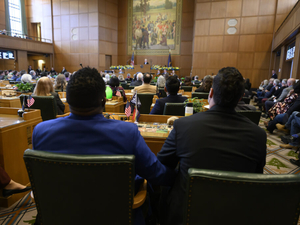
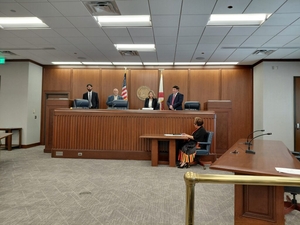
Giving testimony on Thursday to the Senate Energy and Environment Committee were individuals harmed by the administration’s move to cancel rural energy grants.
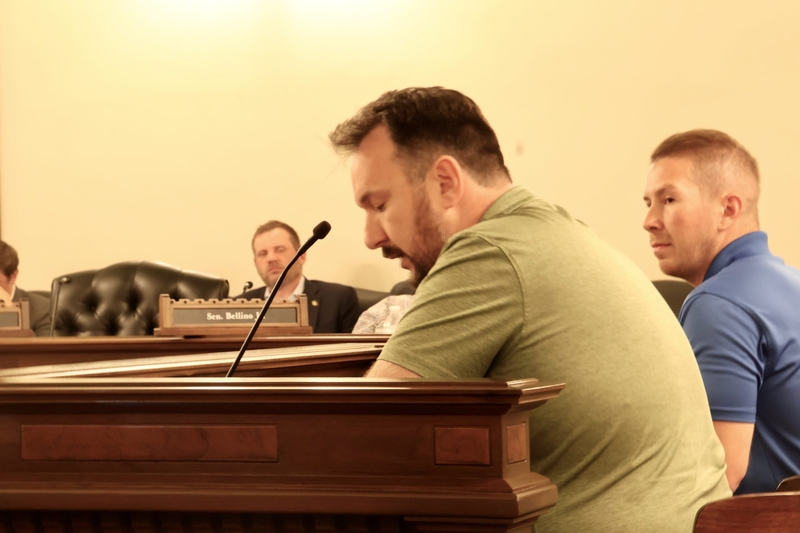
Among them were Allen Bonthuis, the vice president of sales and marketing at Jackson-based Harvest Solar, and Kyle de Beausset, a member of the Sierra Club and manager of Westcroft Gardens and Farm. The pair testified on how the Trump administration’s move to cancel funding for renewable energy projects through the Rural Energy for America Program had affected their businesses.
Bonthuis told members of the committee he wasn’t just representing himself, but the 18 businesses the company was working with whose clean energy projects were now in jeopardy.
Initially conceived through the 2002 Farm Bill and formally created in 2008, the Rural Energy for America Program provides grants and loans to farmers and rural businesses making energy efficiency upgrades and purchasing renewable energy systems, with Bonthuis telling the committee those grants could cover up to 50% of project costs.
The U.S. Department of Agriculture obligates the funds, legally committing them to the project, he said.
Bonthuis said his customers moved forward after the funds were obligated to build the projects using their own money, in many cases taking on debt.
On April 15, the USDA issued a notice rescinding funds for projects that do not have “a fully executed financial assistance agreement,” a document Bonthuis said is intentionally saved for the very end of the process after the project is completed.
“USDA placed that agreement at the finish line,” Bonthuis said. “USDA is now refusing to sign it, and USDA is using the absence of its own signature as the reason to deny reimbursement. That is a catch-22 of the government’s own making.”
Every single one of those 18 customers appealed the USDA’s decision to rescind their funding, Bonthuis said, and each was denied.
Those appeals were not rejected on their merits, Bonthuis asserted, but rather on the grounds of general applicability.
A denial determination Bonthuis shared with the committee explained that because the agency had broadly rescinded notices of funding opportunities through the program, the appeals were not subject to individual review, noting “this decision to effectively suspend the REAP grant program at this time is based on the general policy priorities of USDA.”
“Think about what that means. The government changed the rules after the work was done and structured the change so that no individual business could challenge how it landed on them,” Bonthuis said. “My customers were told in effect that there is no door to knock on.”
While the decision hurts the farms and rural businesses who followed federal requirements and government timelines, Bonthuis said it also harms businesses like Harvest Solar, because they delivered and installed energy systems on the assumption that their customers would be made whole.
Harvest Solar has 25 effective projects across 18 businesses, Bonthuis said, together representing $18 million in solar investments, most of which are structured around grants from the Rural Energy for America Program. Of that $18 million, $7.7 million in projects are already complete and paid for in full by customers who are now waiting for a reimbursement that may never come.
Bonthuis later shared that those customers had been denied about $9 million in reimbursements.
“If obligated funds can be withheld after businesses have fully performed on the basis of a signature government itself is refusing to provide them, then it becomes very hard for any Michigan business to confidently rely on a federal program again,” Bonthuis said. “Maintaining confidence in the USDA commitments is exactly what’s at stake.”
Bonthuis asked members of the committee to adopt a formal resolution or communication calling on USDA to honor its obligations to Michigan Rural Energy for America Program participants and to reimburse projects built in good faith under the program’s guidance.
He also asked them to call on Michigan’s Congressional delegation to press USDA for the legal basis for refusing to reimburse projects, and to examine whether withholding these obligated funds is consistent with the Impoundment Control Act of 1974.
Engaging the governor’s office, the Michigan Department of Agriculture and Rural Development and the Department of Attorney General could also help to explore all avenues available to protect Michigan businesses, Bonthuis said. It would also help to convene affected Michigan business owners and the USDA state office, so the committee can document harm directly and press for a resolution before it becomes irreversible.
US House passes ‘skinny’ farm bill that keeps big GOP cuts to food assistance
While speaking with the committee, de Beausset noted that his farm dates back to 1776 and has been with his family since.
“When you’re part of a piece of land for that long, you tend to look at it a little bit differently,” de Beausset said.“I can speak for my parents and myself, we don’t really see it as something that we own. It’s more as stewards of it. You also come to realize just how much of the history depends on trust and commitments. The farm was there before me, and my hope is it’ll be there after I’m gone in some form or another.”
Westcroft Gardens and Farm applied for a Rural Energy for America Program in September 2024, de Beausset said.
“We didn’t see it as free money, we understood it as a shared responsibility that we were responsible for half of it.” de Beausset said. “We liked it because it would reduce our operating costs and improve the long-term sustainability of the property and help ensure that a farm that survived for almost 250 years could continue to be viable.”
The plan for the project was to have the whole farm operate off solar panels placed on a barn roof, de Beausset said.
Changes to the grant funding make that much harder to pay off, he said, while noting that there are other projects, like a boiler replacement and building upgrades, that demand money now.
“We relied on the government’s commitment. We made plans in good faith, and for us, it’s not easy to absorb that loss, I’ll say that straight up. It’s a $120,000 project, we would have gotten $60,000 back,” de Beausset said, noting that’s more money than the farm made last year.
Lansing, MI