Bill Stalled in Assembly Could Determine Fate of Hundreds of Sexual Assault Cases
Jun 05, 2026 | 5:00 am ET

Description
The state Senate has passed a bill that would lift some requirements in cases involving allegations of sexual assault, but the Assembly has failed to advance it. / Photo: Warren LeMay | Illustration: Leor Stylar
As Governor Kathy Hochul’s administration fights more than 1,600 lawsuits alleging sexual abuse in New York prisons, it has sought to dismiss certain cases based on strict court filing requirements. Legislation now pending in Albany could change that — but it’s been stalled during the legislative session set to end this week.
When someone sues the state government, they must bring their case to the Court of Claims. Yet to file a case there, they need to know the exact date, time, and place where a state official harmed them. For the second year in a row, the state Senate has passed a bill that would lift those requirements in cases involving allegations of sexual assault, while the Assembly has failed to advance it.
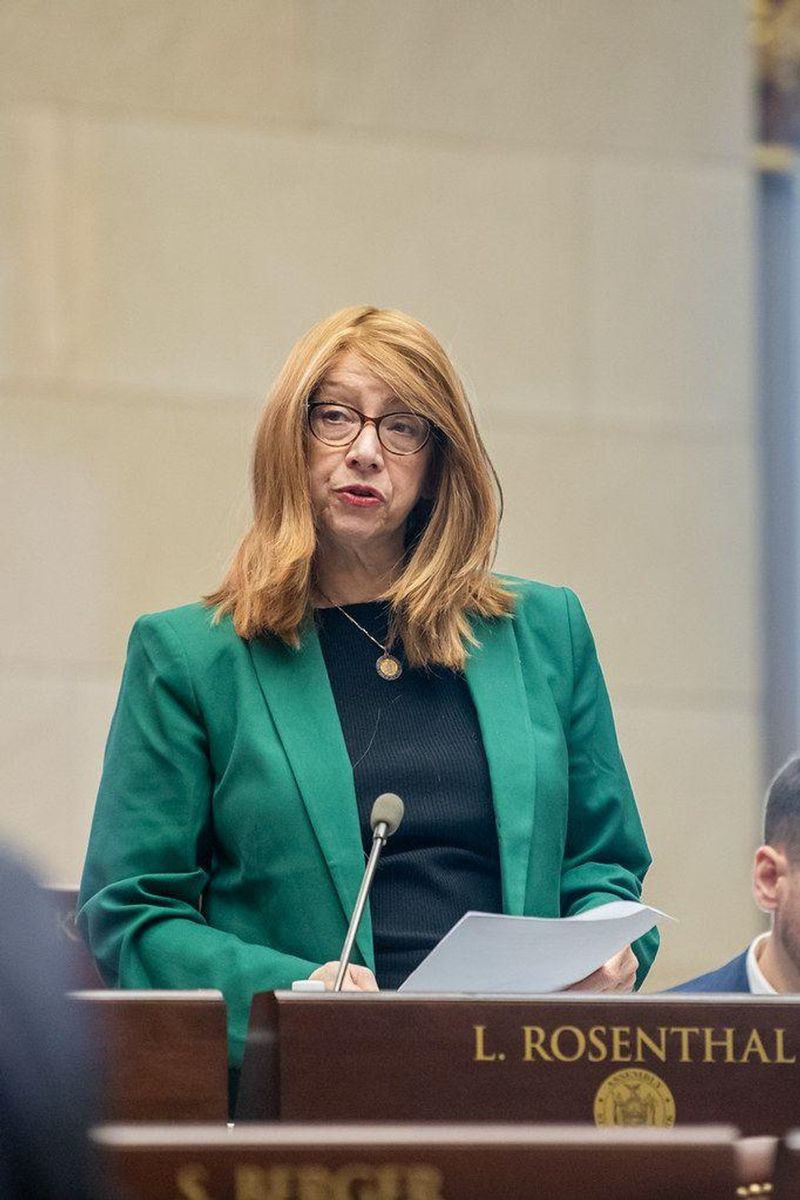
At a press conference Tuesday, Assemblymember Linda Rosenthal, its prime Assembly sponsor, urged lawmakers to pass the bill.
“This is not something that should wait until next year, because people are suffering now,” she said. “People’s cases are going to vanish.”
The 1,600 cases stem from the Adult Survivors Act, a law that temporarily opened the statute of limitations for lawsuits alleging sexual abuse against adults. An earlier law, the Child Victims Act, opened a similar window for people allegedly abused as children. Lawmakers involved with the passage of those bills say they never meant for filing requirements to stymie cases.
In other civil courts — like the state’s supreme courts, where hundreds of women have filed Adult Survivors Act suits against New York City over sexual abuse by Rikers Island jail staff — claimants can initiate cases by providing limited details, then gather more evidence through discovery. But in cases filed against New York state, judges have ruled that they need to share more information at the outset.
“Everything we know about the psychology of sexual abuse and rape trauma is that survivors actively suppress the memories of the abuse, and that they have difficulty recalling small details about it,” said Konstantin Yelisavetskiy, a partner at the law firm Slater Slater Schulman, which represents about 1,200 of the claimants suing the state. It’s also inherently difficult, he said, for any incarcerated person to keep precise track of time in prison.
“When you take those two things and you put them together,” he added, it’s an even greater burden. “So to not remove this harsh, inhumane requirement is effectively blocking their ability to attain justice,” he said.
In a consequential decision last year, the Court of Appeals, New York’s highest court, ordered the Court of Claims to dismiss a case filed under the Child Victims Act because the claimant could not provide a precise date for alleged abuse. The case set the bar for how to apply the strict requirements to the thousands of old cases filed under the two laws.
The proposed state law, which passed the Senate last month by a 57–3 margin, would remove those requirements for pending cases and apply retroactively to cases dismissed under the current filing requirement that are subject to potential appeal.
Last year, Assembly Speaker Carl Heastie’s office expressed concerns over the degree to which the bill would relax pleading standards, and about changing the law in a way that would impact pending cases, according to a person familiar with the discussions. Heastie’s office, which has remained noncommittal about the bill this year, did not immediately respond to a request for comment.
During a court conference last October, attorneys for the Department of Corrections and Community Supervision said the state was planning to ask judges to throw out 500 cases based on the filing requirements, according to Yelisavetskiy and another attorney, who collectively represent hundreds of women in the cases. Attorney General Letitia James’s office, which represents DOCCS, has sought dismissal of cases based on the Court of Claims filing requirements. Her office did not immediately respond to a question about whether she supports the bill.
Hochul’s office said the governor “remains committed to supporting victims and survivors of sexual assault and will review all legislation that passes both houses of the state legislature.”
Meanwhile, DOCCS, a Hochul administration agency represented by James’s office, has sought to use the current filing requirements to its legal advantage.
In one case, for instance, James’s office convinced a judge to throw out a case because the claim included the wrong date of the alleged abuse — a mistake also included in the prison agency’s own records.
In another, James’s office asked a judge to toss a case because DOCCS could not locate a record of an alleged abuser — even though New York Focus was able to quickly locate the record, leading James’s office to withdraw its request.
Last year, the legislature passed a bill relaxing the pleading standard for sexual assault cases going forward. But it did not apply retroactively, so it did not cover cases filed under the Child Victims and Adult Survivors laws.

Albany