Longtime Hawaiʻi Immigration Judge Fired As Trump Purge Continues
Jun 05, 2026 | 6:01 am ET
Description
Photo courtesy of Honolulu Civil Beat
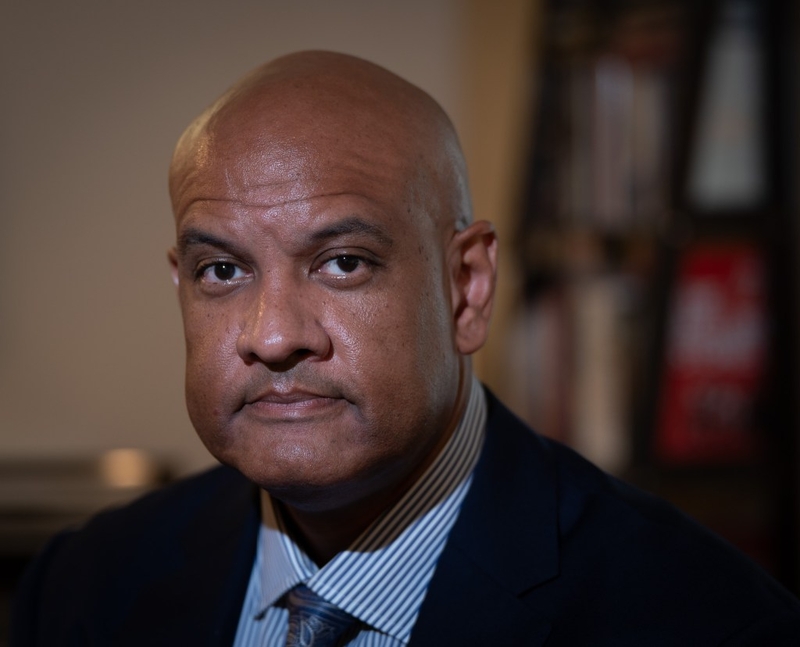
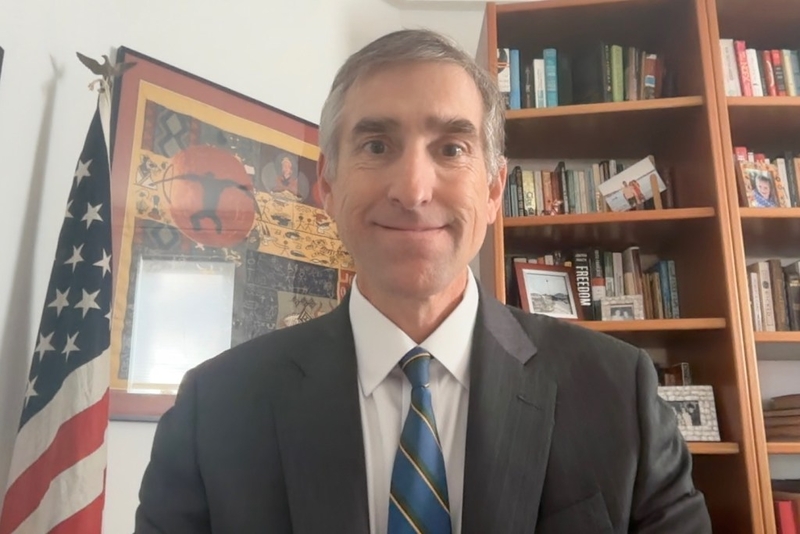
An ongoing purge by the Trump administration has claimed a longtime Honolulu Immigration Court judge, dismaying attorneys who represent immigrants and considered him both fair and experienced.
Judge Clarence Wagner told Civil Beat no reason was given for his May 21 firing. However, he said he and colleagues had been under mounting pressure to get through a deep backlog of asylum and deportation cases more rapidly.
The judge was fired in a three-sentence email that said the acting attorney general — Todd Blanche, who replaced Pam Bondi after she was ousted in April — “has decided to remove you from your position.” He had 16 years on the bench, more than 14 of them in Hawaiʻi.
Wagner said his most recent evaluation, less than a month previously, had been entirely positive. He could not provide a copy of that evaluation, he said, because he had immediately been locked out of his computer.
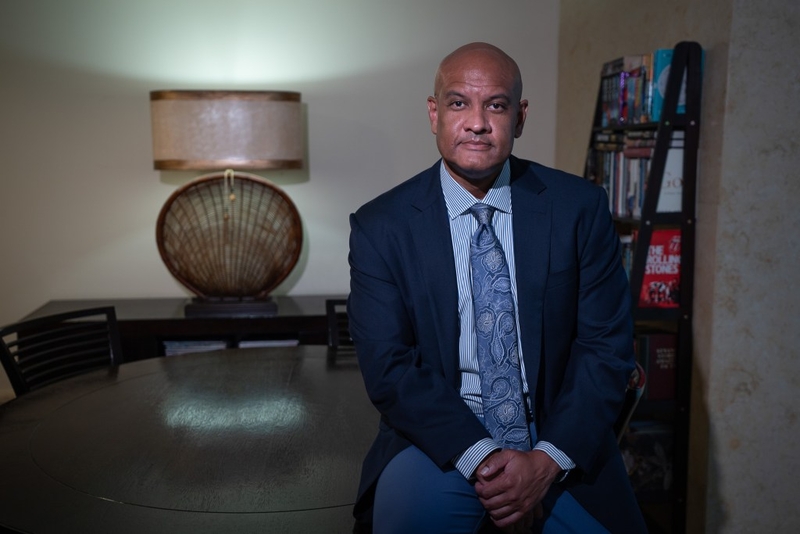
“There's no objective reason why I would have been terminated based upon any manner in which the agency calculates or determines a person's knowledge, skills or ability to perform the job,” he said.
Attorneys who represented clients in Wagner’s courtroom said he would be missed.
“He was fair,” said Kevin Block, a veteran Maui-based immigration lawyer. “I didn't always agree with his decisions, but I felt like his decisions at the end of the day were correct and according to the law.”
As Many 'As Humanly Possible'
Wagner is among more than 113 judges fired by the U.S. Department of Justice since President Donald Trump took office in 2025. The justice department houses the immigration courts, which have been deluged with cases as the White House presses its hardline anti-immigrant campaign.
Immigrant advocates and some of the judges fired across the country have speculated that the administration is cleaning house of judges whose rulings tended to favor immigrants’ claims for asylum and other relief from removal orders.
And Wagner granted asylum requests at a much higher rate than the California immigration judge who has taken his place, Jason Waterloo.
In the first 11 months of the 2025 fiscal year, Wagner granted asylum in 64% of the 334 cases he ruled on, according to Transactional Access Records Clearinghouse, or TRAC, a Syracuse University-based project that analyzes immigration court records.
During that timeframe, Waterloo granted asylum in just 27% of the 221 cases where he issued rulings, according to TRAC.
Immigration attorneys said they were taking a wait-and-see attitude about the change and hoping for the best.
“Any attorney who sees those kind of numbers will be concerned, because asylum comes down to discretion based on the evidence, but I’m going to give this new person the benefit of the doubt, I don’t want to prejudge,” said Honolulu-based immigration lawyer Gary Singh, who praised Wagner for being “fair and strict.”
The docket in the two courts is not at all identical. One striking difference is how many more Hawaiʻi cases involve Chinese immigrants, who represented half of the Honolulu court’s backlog of nearly 1,400 cases in April, compared to 9% at Waterloo’s former courts in West Los Angeles and Santa Ana.
“My numbers of granting cases may be higher than Judge Waterloo’s,” Wagner said, but he noted that the factors judges must consider when ruling on Chinese immigrants’ asylum cases can vary greatly from those involving Mexico and Central and Latin America.
In general, Wagner also said he had never felt pressure to increase the number of his rulings against immigrants and had no indication his firing was related to his asylum grant rate.
“I could not say, in all fairness, that the impetus behind what's taking place is to get more orders of removal,” he said. But he added: “The impetus is definitely to move as many cases as humanly possible.”
Since March, he said the number of cases on his 3-1/2 hour morning calendar where respondents were advised of their rights and asked if they wanted an attorney — the equivalent of entering pleas or being arraigned in criminal court — had doubled, to 30. The time set aside to review those cases had been reduced to half an hour.
The time allotted to trial-like hearings — known as merit hearings — where applications for asylum or other forms of relief are heard and immigrants plead their case and present supporting evidence also was sliced to two hours from what had been a half day, and previously a full day.
“Imagine trying to complete double the amount of cases in that master docket, and then going into a substantive case where someone's claiming that they have a fear of being killed or persecuted if they return to their country,” Wagner said.
“That's what is happening across the country,” he said. “In an attempt to promote efficiency, the court has lost the sense of service.”
The Justice Department’s Executive Office for Immigration Review, or EOIR, which oversees immigration courts, said scheduling changes were made to “ensure cases do not languish” and are completed in a timely fashion.
“Unnecessary delay hurts both aliens with meritorious claims and the American public who wish to see aliens with non-meritorious claims removed as quickly as possible,” the EOIR press office said in a statement attributed to a spokesperson it declined to name. “As it continues to add new immigration judges, EOIR will continue to make scheduling adjustments to ensure all cases are handled in a timely and lawful manner.”
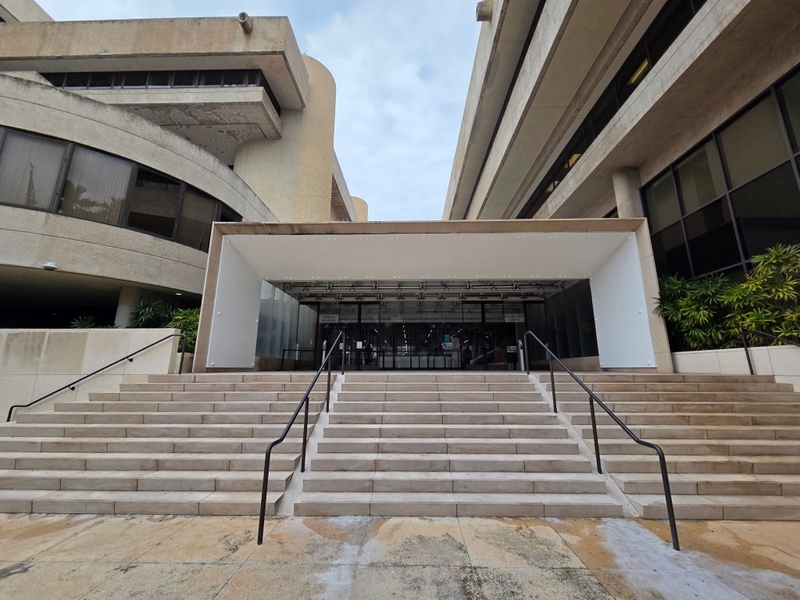
The backlog of pending cases in Honolulu’s immigration court is at its highest rate in 15 years, with 1,390 cases reported through April.
'Soft Pressure' To Deny Cases
The firings of Wagner and other judges come as the Trump administration strains to keep promises it made to deport more than 11 million immigrants.
As immigration arrests multiplied — in Hawaiʻi they quadrupled in 2025 compared to 2024, though based on the most recent data they appeared to be tapering off this February — authorities have turned to the courts to speed deportations and clear the backlog of cases, adding temporary judges and doubling requests for removal orders, according to TRAC data.
A U.S. Army colonel and attorney, Kiley Hyatt, was also assigned to the Honolulu court on the day Wagner was fired, as a temporary judge.
One avenue used to accelerate removals has been a process called pretermission, Wagner said, in which Department of Homeland Security officials ask judges to terminate immigrants’ cases before they receive a full asylum hearing.
Their argument, Wagner said, was that if an immigrant could be removed safely to other countries in Latin America or Africa — including Uganda, Ecuador and Honduras — that had been identified as viable deportation destinations, then they shouldn’t be granted asylum.
Those requests have increased substantially, he said.
While that option was always available, “in the past they opted not to as a matter of discretion,” said Wagner, who was an attorney for the Department of Homeland Security before being appointed to the immigration court by then-Attorney General Eric Holder.
“What's happening now is every tool that they have to utilize, they're utilizing,” he said.
Other changes have included extending new judges’ probation periods to four years instead of two, and increasing the number of performance reviews. Wagner said he was also subject to much greater oversight than before, with supervisors frequently asking him why cases hadn’t been completed.
Taken together, said Jeremiah Johnson, executive vice president of the National Association of Immigration Judges, the changes push judges to deny more asylum applications and issue more removal orders.
“It is much easier to deny a case than to grant a case,” said Johnson, who was appointed to the court in Trump’s first term and fired last November.
“There is soft pressure to not only move through cases quickly, but there is pressure to deny those cases, but no one ever tells you to do so,” he said.
In a statement attributed only to a department spokesperson, the Department of Justice said the Biden administration let “millions of unvetted migrants” into the country and that “reducing the immigration court backlog remains one of the highest priorities for this administration.”
A Call For Independence
Even before the latest Trump administration deportation campaign, there were calls to move immigration courts out from under the justice department’s oversight.
Congressional Democrats have introduced legislation to make immigration courts an independent system — similar to the U.S. bankruptcy or tax courts. Supporters say that would help ensure due process and impartial application of the law whichever way political winds blow on immigration enforcement.
Some Hawaiʻi attorneys have joined that chorus.
“No one knows why he was removed, obviously,” Aparna Patrie, a Maui immigration attorney, said, referring to Wagner.
“But the fact that that's even a possibility when the administration changes in order for the administration to be able to effectuate its own policies is not how a court system should work,” she said. “This is exactly why immigration courts should not be under the executive branch.”
Patrie said she couldn’t speak to whether the White House’s aggressive immigration enforcement policy influenced Wagner’s rulings or those of any other judges.
But, she said, “What I can say is that the fact that that's even a possibility, and the fact that they're not independent and their jobs depend on the executive branch liking what they're doing is to have a cloud over their work.”
As for Wagner, he said he plans to move to Washington, D.C. for a while to spend more time with one of his sons.
“It just so happens that D.C. is the center of all of the controversy that is taking place and I think that would be a great opportunity for me to be more active with the Democratic Party,” Wagner said. “I’m not in agreement with a lot of policies that are being implemented by the Republican Party.”
Honolulu, HI