St. Pete Council OKs study to review costs, benefits of owning its own utilities
Jun 05, 2026 | 12:01 am ET
Description
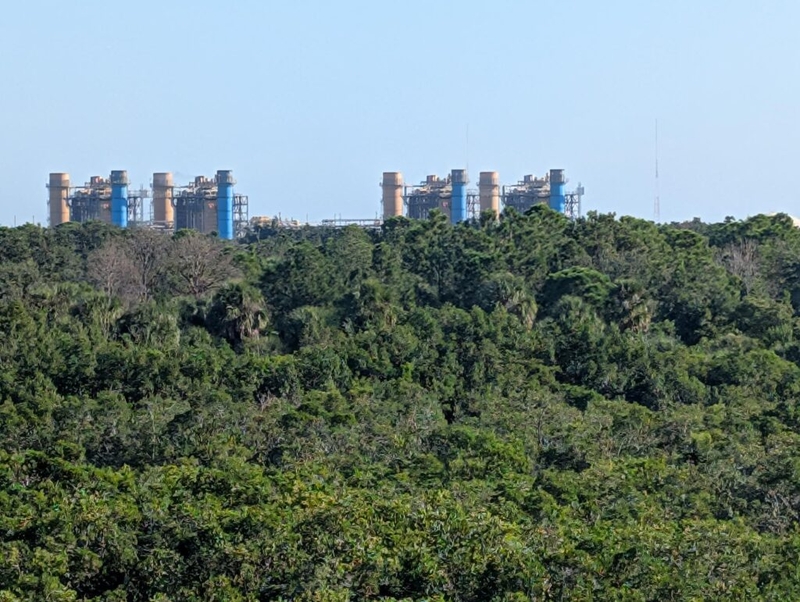
Duke Energy Center as seen from Weedon Island Preserve in St. Petersburg on Sept. 21, 2025. (Photo by Mitch Perry/Florida Phoenix)
Responding to the frustrations expressed by local residents, the St. Petersburg City Council has taken a major step towards potentially jettisoning its longtime relationship with Duke Energy Florida and creating its own city-run electric utility.
The Council voted 4-3 on Thursday to spend up to $590,000 to hire Texas-based NewGen Strategies and Solutions to analyze whether it would be in the city’s best interests to leave Duke Energy and form its own municipal-run utility.
The decision to hire the consulting firm comes as the 30-year franchise agreement with Duke Energy is set to expire on August 1, 2026.
A spokesperson for Duke Energy provided a statement to the Phoenix immediately after the vote.
“Duke Energy believes renewing the franchise agreement offers immediate benefits to our customers and communities we serve,” said Ana Gibbs with Duke Energy Florida Corporate Communications. “We remain committed to providing safe, reliable power and look forward to working with the city of St. Petersburg to renew our franchise agreement.”
NewGen Strategies and Solutions is the same firm the City of Clearwater used for a similar analysis conducted on its behalf last year.
That analysis concluded Clearwater residents could save millions of dollars on their utility bills if the city formed its own municipal-run utility. Mayor Bruce Rector recently told Fox-13 in Tampa the city has not made a decision on its agreement with Duke.
There are currently 33 municipal electric power utilities in Florida, including in Jacksonville, Orlando, and Tallahassee.
Winter Park, just north of Orlando, was the last city to develop form its own utility. That was in 2005.
The debate over public versus private power is nothing new. Higher energy prices in Florida have rejuvenated that debate this election cycle.
A federal report released in April by the U.S. Energy Information Administration showed that utility companies disconnected Floridians electricity more than 2 million times because of unpaid bills in 2024, the second most in the country.
Duke Energy serves around 2 million customers in Florida. It is the second largest investor-owned utility in Florida behind Florida Power & Light.
Majority says ‘dump Duke’
Dozens of members of the public urged the council to approve funding the study.
“Duke Energy is a monopoly, and under the course of its 30-year contract, has made our electricity more expensive,” said Jorge Vazquez. “There is no competition, and they know that. That is why they have continued to raise our rates.”

Susan Glickman, a climate change activist with the CLEO Institute, said the feasibility study would give the council “the rigorous analysis” it needs to better understand it would look like for St. Petersburg to control its own power.
“The proposition is essentially a simple one because investor-owned utilities have a fiduciary relationship to their shareholders to return a profit,” she said. “If St. Pete were to municipalize, the profit motive goes away. And this could allow the city to pursue lower cost ways to meet the community’s energy needs.”
Daniel Collette, an educator, noted how Duke Energy’s settlement with the Florida Public Service Commission in 2024 included a request for a return on investment (ROI) between 9.3 to 11.3 percent. He and others said the company’s bottom line is its shareholders, not the ratepayers.
Now’s not the time
Not all who testified supported funding the study. Several opponents said the city should not be spending the money on the analysis given the pending proposal to reduce the amount of property taxes municipalities can collect.
“Today in the city of St. Petersburg on June 4 ,2026, $600,000 is a lot of money,” said Jason Mathis, the CEO of the Downtown St. Petersburg Partnership. “And it’s worth asking, how will this be materially different than the Clearwater study that was just completed? Can’t we extrapolate from that? Do we need to pay full price for our own St. Pete version? During a time when every penny counts and we may face reduced city services or raising taxes, that’s a legitimate question.”
Chris Steinocher, the president and CEO of the St. Pete Chamber of Commerce, noted a recent Florida TaxWatch report recommended against Clearwater operating its own electric utility.
There were also several Duke Energy Florida employees who attended the meeting and spoke against the city paying for a study.
Crystal Pruitt said she was “super proud” to represent the utility. She said Duke has been a great corporate sponsor for the city, adding that the utility donated more than $2.8 million in St. Petersburg organizations, local charities, educational programs, workplace development initiatives ,and community-based non-profits.
Duke Energy has posted a page on its website touting those contributions.
Which way will she vote?

After hours of public testimony, the Council turned to debate and then a vote.
And the deciding vote was cast by Council Chair Lisset Hanewicz who last year voted against a move to ask the mayor to seek proposals for a feasibility study.
She said this time was different.
For the council to make an informed decision about whether to launch its own utilities it needs more information she said.
“I voted no the first time, but I don’t have the information,” she said. “I’m for going with the feasibility study.”

Tallahassee, FL