Bills to create a separate Upper Peninsula hunting, fishing authority meet opposition in House
Jun 04, 2026 | 12:49 pm ET
Description
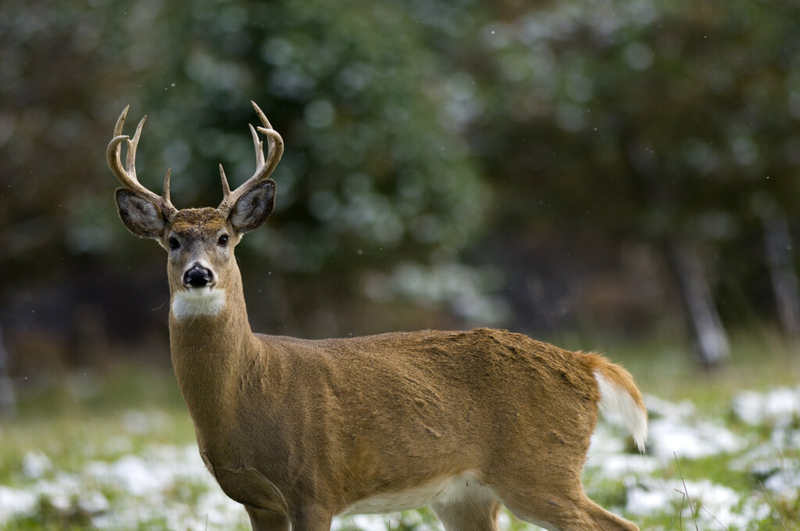
Whitetail Deer | Michigan DNR
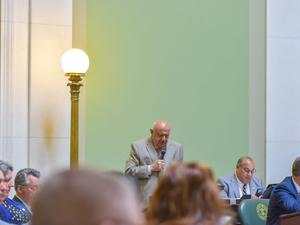
A group of Republican representatives on Wednesday made their case to the House Natural Resources and Tourism Committee for a separate committee to oversee hunting and fishing in Michigan’s Upper Peninsula.
Opposition to the bills, however, drew sharp responses from both committee members and the various bill sponsors.
While the taking of game and sportfish is currently overseen by Michigan’s seven-member Natural Resources Commission, Republican state Reps. Karl Bohnak of Deerton, Greg Markkanen of Hancock, Parker Fairbairn of Harbor Springs and Dave Prestin of Cedar River argued the state would be better served by creating a separate commission with exclusive authority over the Upper Peninsula.
“The Upper and Lower Peninsula are ecologically distinct,” Prestin said while testifying on House Bills 4783–4786. “The U.P. has established populations of wolves, cougars. The lower peninsula does not. The U.P. supports a moose population, while the Lower Peninsula has elk. White-tailed deer are overabundant in much of the Lower Peninsula, but in the U.P., our herd faces chronic decline due to predation pressure. Statewide rulings from a commission that typically only holds one meeting in the U.P. each year often fails to account for these differences.”
While the commission is doing its best, taking a more localized approach would empower both commissions to make the best decisions for their respective peninsulas, Prestin said.
The proposed Upper Peninsula Natural Resources Commission would consist of 10 members appointed by the governor, Prestin said, with members serving for two years – half the amount of time members of the Natural Resources Commission currently serve.
When asked if he foresaw any situation where the two commissions would come into conflict over a rule – like if wolves were to cross between the peninsulas on the frozen straits of Mackinac – Prestin said he did not.
“There’s already duplicative and segregated issues that exist currently due to the differences between the upper and the lower,” Prestin said. “They work well together, and they will continue to.”
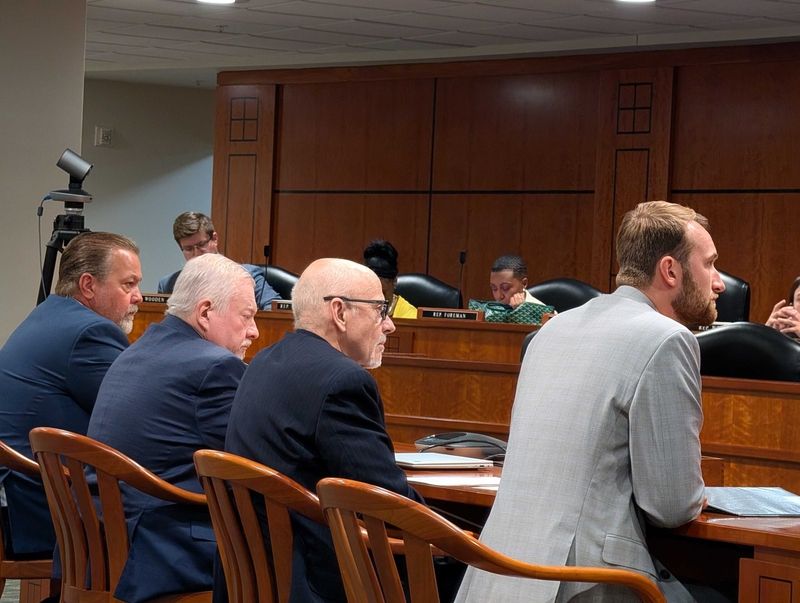
A potential conflict was a concern for representatives from the Michigan Department of Natural Resources, which advises the commission, who testified on Wednesday.
“I think it does open up that door to some confusion for the hunter or the angler, definitely, and that would obviously potentially run into some enforcement concerns,” said Chris Semrinec, the department’s legislative liaison.
Prestin pushed back, arguing that anglers have already shown they can navigate differences in bag limits, season starts, size limits and differences between various bodies of water.
“At the end of the day, I don’t understand why a department, whose duty is to carry forward the things that we agree to pass forward, why you’re even in here taking a position as a stakeholder, because you’re not,” Prestin said. “You guys do what we decide. So I don’t even understand this position, not only from you guys, but in many departments.”
The committee took testimony on the package but did not vote on the legislation.
Several environmental advocacy groups, including the Michigan Environmental Council and the Michigan League of Conservation Voters, submitted cards to the committee noting their opposition to the bills.
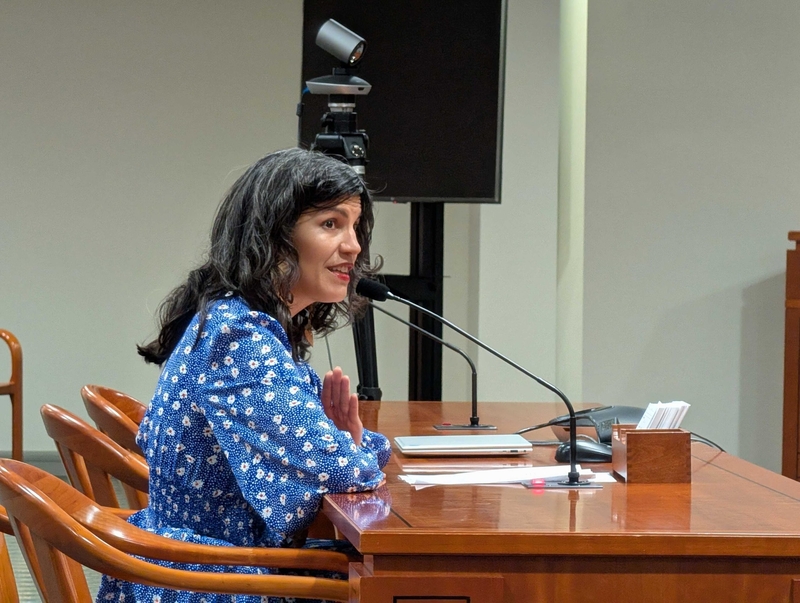
Nichole Keway Biber, an environmental advocate and tribal citizen of the Little Traverse Bay Bands of Odawa Indians, also raised concerns that the bills, in concert with Prestin’s House Bill 6008, would be used to force a wolf hunt.
“This is culturally repugnant to us to hunt the one we call Ma’iingan, that’s our sacred relative,” Keway Biber said. “I don’t need you all to understand that, I don’t expect you to necessarily understand it, but you should respect it and acquiesce to the central critical importance of Ma’iingan to our people.”
Rep. Pat Outman (R-Six Lakes) challenged Keway Biber, arguing tribal nations had hunted wolves. Keway Biber emphasized that Anishinaabe are instructed that they will always be walking parallel paths with Ma’iingan.
“We were not instructed, like, ‘yes, hunt this animal,’” She said.
Committee Chair David Martin (R-Davison) eventually gaveled them down saying “Wolves are not on the agenda.”
In 2013, members of the Bay Mills Indian Community, Grand Traverse Band of Ottawa and Chippewa Indians, Little River Band of Ottawa Indians, Little Traverse Bay Bands of Odawa Indians and the Sault Ste. Marie Tribe of Chippewa Indians challenged the state’s decision to hold a wolf hunt.
In 2021,The Great Lakes Indian Fish and Wildlife Commission, which consists of 11 member tribes including the Bay Mills Indian Community, the Lac Vieux Desert Band of Lake Superior Chippewa Indians, Keweenaw Bay Indian Community, opposed a wolf hunt in Wisconsin.
Lansing, MI