Lombardo backs natural gas pipeline expansion for data centers
Jun 04, 2026 | 8:00 am ET
Description
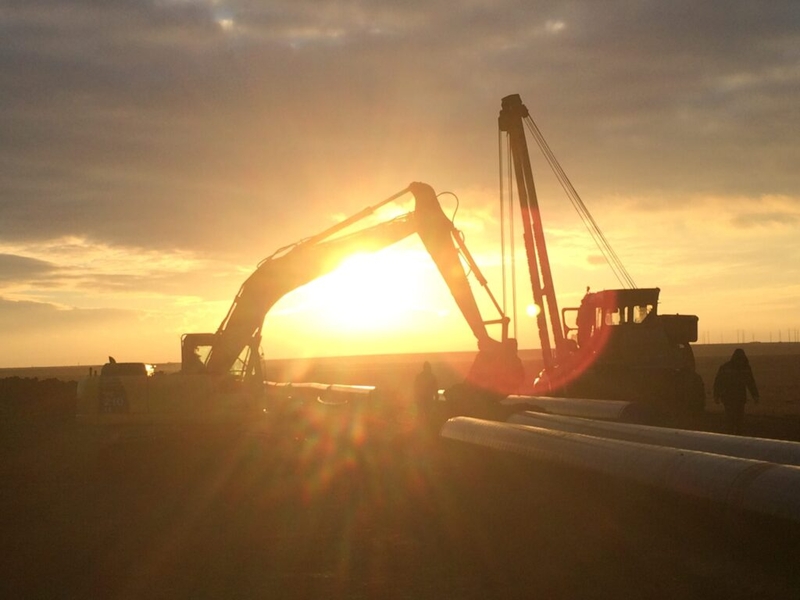
(Stock photo/Getty Images)
Gov. Joe Lombardo is advocating the proposed expansion of a northern Nevada pipeline that would quadruple the flow of natural gas to the region to power data centers.
In a February letter to the Federal Energy Regulatory Commission, Lombardo wrote the proposed project from a subsidiary of Southwest Gas “would add approximately 800 dekatherms of capacity to the 898-mile pipeline system” and will “support both existing customers and future economic development, including data centers.”
The pipeline, which has a current daily average capacity of about 200 dekatherms, stretches from Nevada’s northern border to Reno-Sparks, Carson City, and Lake Tahoe. The application calls for 212 miles of new or expanded pipeline, including expansion to the Tahoe Regional Industrial Center in Storey County.
The letter stands in contrast to Lombardo’s assertion last week that he didn’t intervene in regulatory matters.
Confronted with an allegation from Attorney General Aaron Ford, one of two Democrats hoping to unseat Lombardo in November, that the governor exerted influence on Public Utility Commissioners he appointed regarding a peak demand charge imposed by NV Energy, Lombardo’s campaign responded that the PUC “acts independently and created this new rate design without political intervention from the Governor.”
The governor’s office did not respond in March when asked if he played a role in NV Energy’s application to the PUC to delay implementation of an unpopular peak demand rate from April 1 to Oct. 1.
NV Energy’s request for the delay came the day before the Nevada Current reported the peak demand charge may figure prominently in November’s gubernatorial contest.
“It’s interestingly timed with the election and the fact that the charge probably won’t be as apparent in November when bills come out, depending on how warm it is in Las Vegas in October,” former Nevada Consumer Advocate and federal energy regulator Jon Wellinghoff said at the time of the utility’s request to delay the charge.
Lombardo’s office did not respond when asked this week whether the governor thinks it’s appropriate to intervene in federal regulation, but reiterated his support for data centers “so long as they do not burden Nevada ratepayers or strain our natural resources. The Lombardo administration will not support any data center project that will increase energy costs for the communities they enter.”
The expanded pipeline “is a critical piece of infrastructure that would strengthen Nevada’s energy resiliency and diversify supply options,” Lombardo’s office said.
The governor’s advocacy is drawing criticism from Washoe County Commissioner Alexis Hill, who is running in the Democratic gubernatorial primary.
“I would not have intervened to expand natural gas capacity, especially if the driver is data centers,” Hill said in a statement to the Current. “While it can be appropriate for the Governor to weigh in on needed infrastructure permitting, this is just another example of Lombardo selling his office to billionaires and corporations.”
A campaign official for Ford, who is running against Hill, initially agreed to provide comment for this story but later declined.
Unlike Hill, Ford won’t say if he would support incentives for data centers. A campaign spokeswoman said Ford doesn’t have enough information on data centers to determine whether incentives are working.
Natural gas comeback?
Lombardo’s letter was submitted to FERC by Southwest Gas subsidiary Great Basin Gas Transmission Company.
“Current infrastructure for supplying natural gas in this area is limited and not sufficient to meet the increasing demand,” the company’s Vice President and General Manager Frank Maglietti Jr. wrote to FERC on Dec. 31, 2025. The proposed pipeline, Magletti wrote, “will meet growing gas demands in Northern Nevada with facilities to be constructed in Churchill, Humboldt, Lyon, Pershing, Storey, and Washoe Counties.”
The project calls for installation of 181 miles of new pipeline beginning at Great Basin’s current Opal Valley interconnect with the Ruby Pipeline in Humboldt County, about 20 miles northeast of Winnemucca. It will continue through Churchill, Pershing, and Lyon counties to a point west of Fernley. From there it will run 14 miles to the Tahoe Regional Industrial Center in Storey County. The operation is anticipated to begin Nov. 1, 2028.
While it’s unknown what plants will be serviced by the proposed expansion, an NV Energy generator interconnection request lists three natural gas plants at TRIC that are also slated to begin operating Nov. 1, 2028.
Google, Switch, and Vantage are among half a dozen companies building or expanding facilities at TRIC, according to MIT Technology Hub.
Lombardo’s office dismisses concerns that the massive increase in natural gas capacity will affect Nevada’s ability to meet its legislative mandate that 50% of energy produced by 2030 come from renewable sources.
His office says it is currently working with the Bureau of Land Management and the Department of the Interior “to advance more than a dozen major renewable energy projects that would bring on more than 7.2 gigawatts of power to Nevada’s grid.”
That’s twice the state’s renewable generating capacity from all sources at the end of 2024, according to the Energy Information Administration.
Data centers, Hill says, should have to abide by the state’s Renewable Portfolio Standard, “or possibly a higher one,” a policy she advocates in a plan on her website. “We need to ensure any new electricity is green energy.”
Las Vegas, NV