U.S. Senate debate at Mackinac Policy Conference exposes deeper debate over who gets heard
May 29, 2026 | 5:56 am ET
Description
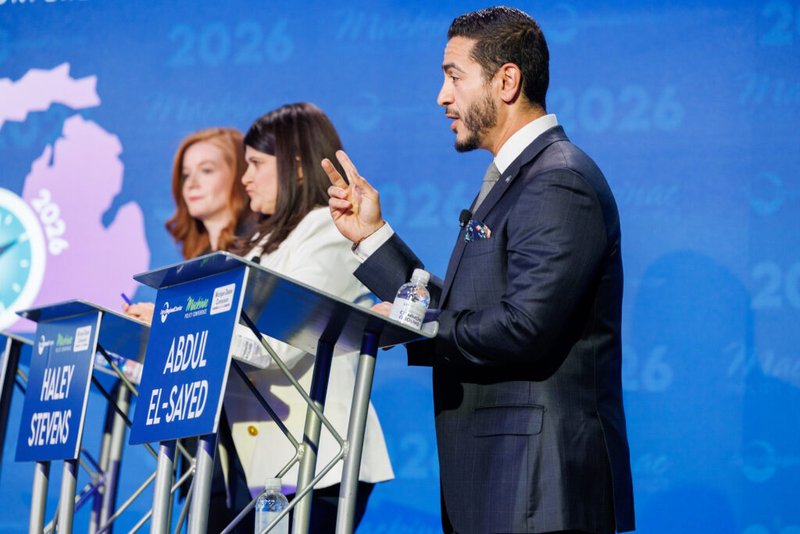
Former Wayne County Health Director Abdul El-Sayed participates in a U.S. Senate candidate debate during the Mackinac Policy Conference on Mackinac Island, Mich., on May 28, 2026. (Photo by Andrew Roth/Michigan Advance)
MACKINAC ISLAND — Debates are the sacred cows of election season for a reason.
In an age of endless scrolling, near-instant communications and viral messaging, a real robust debate on ideas and policies has a unique way of exposing a campaign’s real strengths and weaknesses. It also gives average people a chance to engage with a process they’re typically shut out of until election day.
Thursday’s debate between Michigan’s Democratic U.S. Senate candidates during the annual Mackinac Policy Conference was no exception.
In their respective corners were former health official — and doctor — Abdul El-Sayed, state Sen. Mallory McMorrow of Royal Oak and U.S. Rep. Haley Stevens of Birmingham. Over the past year, the three Democrats have traveled across the Great Lakes State to reach as many potential voters as possible with their disparate messages of how they would help solve the state’s ills and offer a leg up to residents struggling in the second administration of President Donald Trump.
Democrats across the board view the 2026 contest as a change election, and with wind at their backs, some are aiming for big structural transformations in state government.
In a lot of ways, that’s what the policy conference set out to do this year, but some attendees told me that they’re skeptical about the confab for politicians and businesspeople’s ability to do that, calling it all talk and no action.
Despite its flaws, the conference does offer at least a chance at reaching consensus that is all but elusive in the halls of power in Capitol-region Lansing. Our inquiry, however, showed Michigan Advance that the conference has a long way to go if it wants to create policies and ideas that truly affect average, working people.
Uncommon ground in unfamiliar territory
Of all the sessions offered during the past week on Mackinac Island, the most instructive and valuable presentation from a voter utility standpoint was the debate on Thursday between El-Sayed, McMorrow and Stevens.
The race will ultimately decide which Democrat will aim to replace the retiring U.S. Sen. Gary Peters (D-Bloomfield Township).
Each candidate spoke separately with me leading up to the big attraction. I asked them the exact same questions that I had asked others during the conference: Is this year’s theme of seeking common ground a relic of the past, one that ceased to exist in an age of divided government and divided people? And can the gathering really create bold ideas that are applicable in practice once they leave Michigan’s version of Fantasy Island?
For El-Sayed, the answer was no, because average people were inherently shut out of the process. It also clearly made him uncomfortable to be there. Mackinac Island during the conference period was decisively not El-Sayed’s cup of tea.
“It does not work,” he said off the first bat. “I haven’t met with a corporate lobbyist, I haven’t met with a donor. This is not what I do here.”
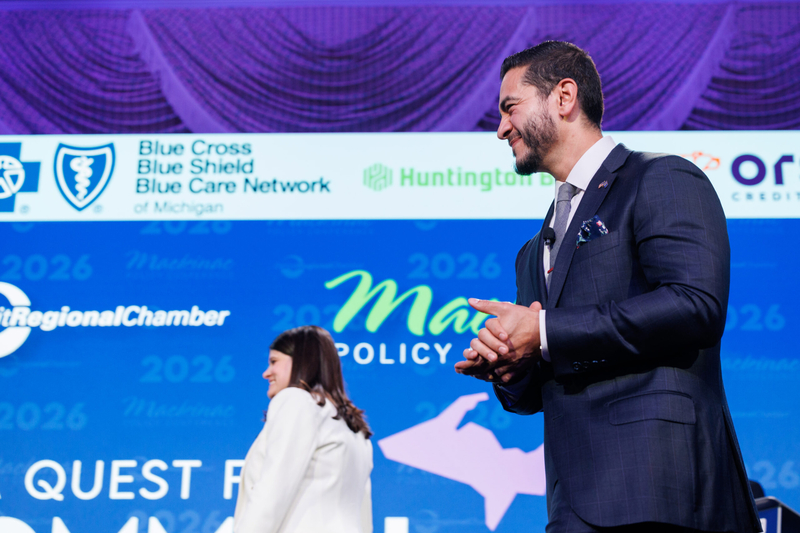
When El-Sayed was asked if he believed the conference results in tangible policies that can better the lives of the middle- and lower-income earners, he again said no.
“It brings home tangible results for the people who are meeting here,” he said. “This is the place where people who have a lot of power or a lot of money come together to figure out how to pick your pocket. The deals that get done here end up in the average person having to pay more for everything, from healthcare to groceries. It’s everything that’s wrong with our system.”
When he looks at the conference, and its location, the effort to renew common ground across business and policy becomes a bit of a joke.
“It’s hilarious to me that we have a conference themed on common ground where literally nobody lives here,” he added. “Should we have to come to a place where nobody lives to have common ground? To me, common ground should be based in the experiences of everyday people and the lives they lead.”
A hedge against division
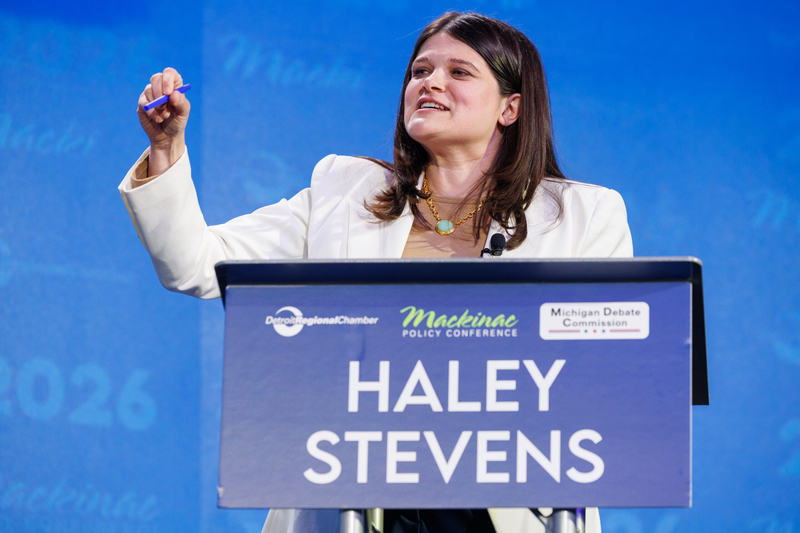
Where El-Sayed felt out of place, Stevens found herself much more at home.
The congresswoman has spent her career in politics seeking to bridge divides, and she’s noted as one of Congress’ most effective legislators. Common ground wasn’t a relic of the past to Stevens, who said she lives and breathes in it. But she also had few negative things to say about the conference as a whole.
“It certainly compels us all to kind of talk about the ways in which we have come together,” Stevens told me. “I’ve been really proud to be fighting for Michigan this year in the House as I run for the U.S. Senate. The Democratic minority has actually taken over the floor of the House to move bipartisan legislation multiple times.”
Working together with Republicans whom the Democratic caucus can pull toward common ground was a big part of that.
“I’m no stranger to rolling up my sleeves and moving things forward, finding that common ground, but I’m also no stranger to calling out abuses to power,” Stevens said. “It’s always a balance. … I am just as frustrated as the average Michigander with the status quo and the abuses of power, and see the need for reforms.”
Old dogs teach old tricks that work
One advantage of the island conference is that it brings out Michigan’s congressional delegation to mix and mingle with their partners in the business community and the state Legislature.
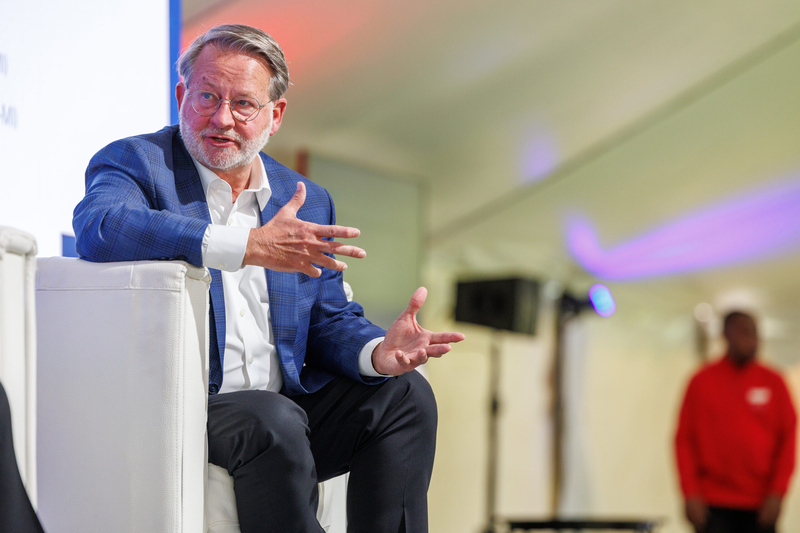
The conference this year was just as much of a swan song for Peters as he gears up to leave office. As we chatted briefly on the big porch of the Grand Hotel where the bulk of the action was happening, Peters told me that he believes the old guard version of common ground still exists.
“I take great pride in working across the aisle and trying to come together to find solutions to some of the tough problems we have,” he said. “I’ve authored more legislation that’s been signed into law than any U.S. Senator during that time, and the reason for that is, I always work with a Republican colleague to work in a bipartisan way.”
That said, Peters acquiesced that common ground is becoming harder to come by in an era of performative politics.
“It’s all about the attention economy,” he said. “Folks who tend to be the ones throwing rocks, who are yelling the loudest on both sides, that get the attention, that behavior is not conducive to trying to find the common ground.”
Peters has not endorsed any of the candidates in the Democratic race to replace him, although his wife, Oakland University Trustee Colleen Ochoa Peters, has endorsed Stevens. The congresswoman also has the support of retired U.S. Sen. Debbie Stabenow, who has become one of her most effective campaign surrogates.
Stabenow joined Stevens during my conversation about the conference and its version of common ground. I asked the former senator the same question: Does common ground as the conference sees it still exist?
“It exists if people want it to exist,” Stabenow told me. “It’s purely a willingness and an attitude. Now, that doesn’t mean you don’t stand up and fight, given all the chaos and corruption going on right now, which is very real, but I do believe that underneath the chaos and corruption of Trump, voters are bought in. Everybody’s yearning. They want to work together, and they’re sick of it, really sick of it.”
A power in deep listening
The debate between the three candidates came and went as expected, with a lot of deep policy discussion, plenty of attacks, and without a clear winner.
It was, however, a hard look at the candidates’ respective mettle. Afterward, I asked David Dulio — the distinguished professor of the political science department and the director of the Center for Civic Engagement at Oakland University — who won.
“The voters,” Dulio said.
I didn’t get a chance to speak with McMorrow about my island themes until after the debate. I noted that McMorrow was playing a dual role as a candidate and a sitting state senator who will need to take something tangible home with her from the conference. Was that possible given the skepticism I observed?
“The first four years that I served in the Senate, I didn’t come to this conference because I had a lot of those same thoughts,” McMorrow said. “After the first year that I came, you realize that it’s trapped people on the island and you can jam up. In one year, I had 37 meetings back to back. You can get a lot done while here, but we have to find ways to expand this to include more people.”
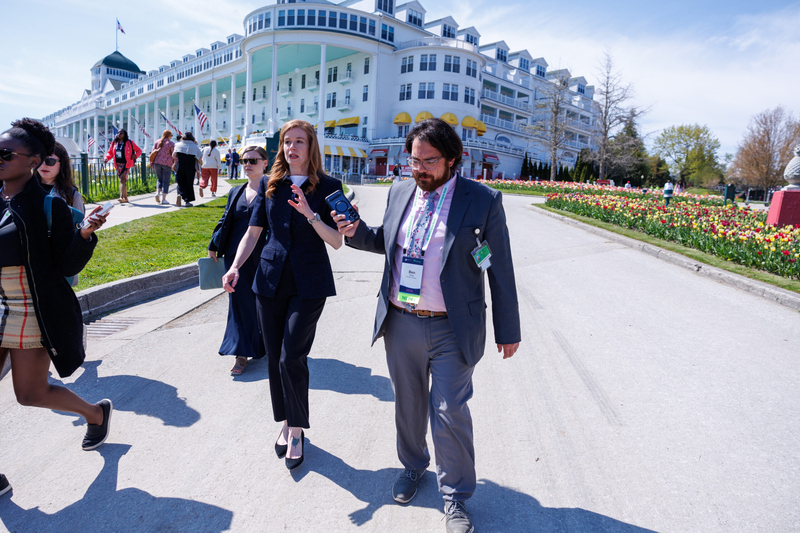
McMorrow said this year, she spent some time off the island and in up north communities to meet people where they are. To their credit, El-Sayed and Stevens both told me that they were doing the same.
When I talked to other legislators, the concept of bringing normal people to the conference for the week so they can see what exactly happens here, and to engage in the discussions, was a common theme. McMorrow landed there without me pressing it.
“Invite regular people, make it free,” she said. “Host panel sessions where you’re talking at people. No offense, but I don’t care what Mike Pence has to say right now. What are we learning from people who are struggling every single day? What do they want to see? You learn a lot when you show up and listen.”
Lansing, MI