Stockard on the Stump: One man picks state rep in Memphis
Sep 11, 2026 | 6:03 am ET

Description
Matthew Szalaj, right, an aide to Memphis Mayor Paul Young, was selected over Kyler Gilkey to replace retiring Rep. Joe Towns of Memphis on the November ballot for House District 84. Gilkey came in second to Towns in the August primary. (Gilkey photo: submitted; Sjalaj: Shelby County Commission)
The term “one man, one vote” is taking on new meaning in Memphis where, in the haste to fill a vacant seat, a lone member of the Shelby County Democratic Party selected the next state representative for House District 84.
You could call it the perfect storm, or you could call it a cluster.
Either way, to replace retired Rep. Joe Towns on the November general election ballot, the party had just one person on its executive committee choose between two candidates: Kyler Gilkey and Shelby County Commissioner Matthew Szalaj.
Szalaj, a special assistant to Memphis Mayor Paul Young, received the appointment this week from Coleman Thompson, officials told the Lookout. Thompson was the only person remaining on the committee from District 84 after party leaders recently discovered two others had moved out of the district.
The appointment, rather than a special election, makes Szalaj the new state rep for two years. After receiving an appointment to the commission in March, he faces no opposition in the November general.
Shelby County Democratic Party Chairman Willie Simon and state Rep. Torrey Harris, who chairs the Shelby County Democratic Delegation, weren’t exactly enthused with the process, but both said this week they followed the rules.
I have really studied this process, and we have to make some changes. I will be very blunt about that, because one individual cannot make a decision, or should not make the decision, for 72,000 individuals in a district.
Secretary of State Tre Hargett and Tennessee Elections Administrator Mark Goins also gave guidance on the process, along with the Tennessee Democratic Party, according to Harris.
Secretary of State’s Office spokesman Ben Hill confirmed that Goins provided a governing statute, which lists who participates in the selection depending on how executive committee members are picked.
Harris acknowledged that vacancies previously were filled through the same process but that changes were made in the last decade or so in how party executive committee members are chosen. That might have led to the small number of decision-makers, creating a bit of outcry among Memphians who follow politics.
Stockard on the Stump: Towns’ departure opens seat for Shelby Dems appointment
“I have really studied this process, and we have to make some changes,” Harris said Thursday. “I will be very blunt about that, because one individual cannot make a decision, or should not make the decision, for 72,000 individuals in a district.”
Gilkey and Szalaj made their case in an executive committee meeting before a group of residents who asked questions, according to Simon. But Thompson, who could not be reached for comment, had the lone vote and went with Szalaj.
But Simon and Harris both said he explained his vote by saying Szalaj called him first and that he promised his support, refusing to renege.
Apparently, cell phone agility is critical.
To say Gilkey was disappointed in the process would be an understatement. He knocked on doors and campaigned all year, only to lose to Towns, who then resigned in late August after capturing the Criminal Court Clerk’s post.
“Ultimately, I think the process has some flaws in it,” Gilkey. “I don’t feel as though one person should be able to decide the representation for 70,000 people in a district.”
Even if three people on the party’s executive committee had voted, it wouldn’t be “indicative of how a democratic process should play out,” he said. Gilkey added that the voices of 1,500 voters who cast ballots for him in the primary “were essentially null and void.”
Gilkey said Thompson didn’t give him a chance to sway him or look at his qualifications “because of basically a pinky promise that he made to his lodge mate and frat brother.”
Szalaj did not return a call seeking comment.
Regardless, the concept of each person’s vote carrying equal weight appears to be slipping in a city that once depended on “one man, one vote” to gain a seat at the table. On the other hand, some people are more equal than others.
We’ll think about it
Tennessee Comptroller Jason Mumpower notified House Democratic Caucus Chairman John Ray Clemmons this week that he would consider taking a close look at the Department of Transportation’s process for selecting a contractor team for the I-24 southeast Nashville toll lane project.
Mumpower said in a letter that his office, including the Division of Investigation and Division of State Audit, “will review and assess the information (Clemmons) provided to determine what action, if any, is warranted, including whether to examine this process as part of our next audit of the Tennessee Department of Transportation, which is scheduled to be released in 2027.”
Clemmons went to the comptroller for help after Attorney General Jonathan Skrmetti rebuffed him, saying his office doesn’t have “general investigative authority” to probe the toll lane contractor selection.
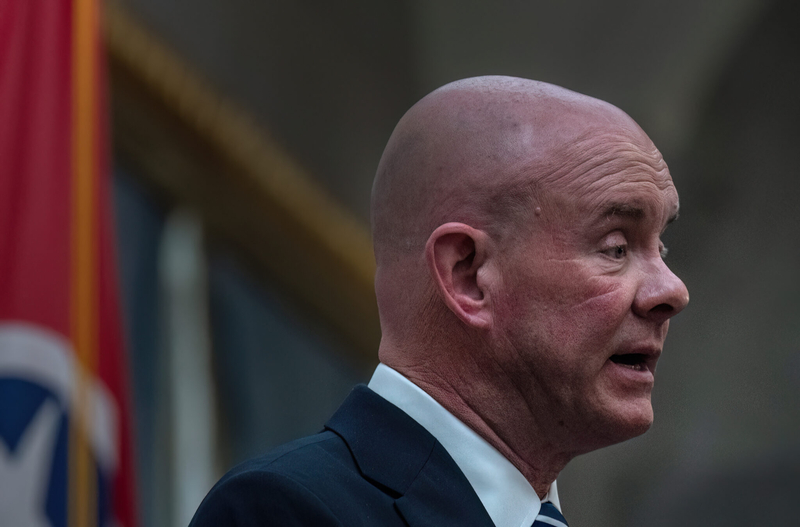
Skrmetti narrowed it down, saying “Instead, it only has authority to conduct investigations into certain matters.” He cited an AG’s opinion from 2005 and claimed it doesn’t allow the type of investigation Clemmons requested.
The state’s Transportation Modernization Board and Gov. Bill Lee caught some folks’ attention when they chose a consortium of companies led by Spain-based Ferrovial to design, build and operate Tennessee’s first venture into toll lanes. The group of six mostly foreign companies called DriveTN offered to build the lanes to Murfreesboro and along I-40 East and I-440 in southeast Nashville for $9.2 billion while promising to pay the state nearly $25 billion in concessions, a tad bit higher than the two next closest bidders who guaranteed payouts of $7 billion-plus.
DriveTN’s upfront costs are expected to be paid during the eight-year construction phase. Eventually, motorists are to be able to jump on these express lanes for a fee based on traffic load.
The bid jumped out at some analysts.
One international bank, UBS, lowered Ferrovial’s stock rating to “neutral” because of uncertainty about the deal, including questions about upfront spending, capital expenditures, the rate of return and the possibility that motorists will be charged high rates to pay the debt.
In a letter to Mumpower, Clemmons said recent news reports “give the impression” the 50-year lease was awarded because of “alleged financial relationships with former Lee Administration officials.” He added that people deserve to know whether the process was handled according to the law.
Transportation officials said last week that former TDOT chief of staff Steve Townsend, who took a job with Ferrovial, was not allowed to participate in its bid after leaving state employment. No doubt, we can all take comfort in that.
Transportation Commissioner Will Reid also said that the fees motorists ultimately pay will be determined by demand and have no connection to DriveTN’s massive payment to the state.
But consider this: Taking an ultra-conservative outlook, if it costs $10 a trip to use an express lane one way each day, that equates to $100 a week, $400 a month, and about $4,000 a year. $20 a trip comes to roughly $8,000.
Only folks with some disposable income will be able to use them, leaving the rest of the unwashed masses to go without meat and curse the bread. (Apologies to Edward Arlington Robinson and “Richard Cory.”)
Wait a minute, man
Democratic Sen. Heidi Campbell of Nashville says she’ll be pushing legislation in 2027 to give local legislative bodies a vote over data centers as public opposition to the facilities grows statewide.
In addition to Metro Nashville, the Don’t Tread on Tennessee Taxpayer site created by Campbell shows multiple counties have paused data centers, including McMinnville, Coffee County, Knox County, Washington County, Johnson City, Jonesborough, Bristol, Grundy County, Cedar Hill, Anderson County and Hawkins County. Most of those send Republican lawmakers to the State Capitol.
Republicans and Democrats sponsored multiple bills this year to put more controls on data centers, which require large amounts of power and depend on gas-powered turbines to function, creating pollution. Only one GOP-sponsored bill passed, even though the others were legitimate efforts.
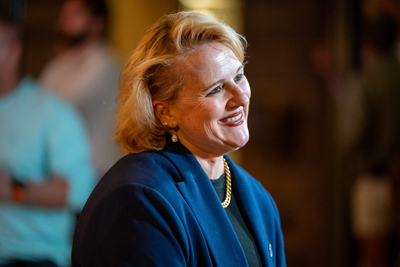
Campbell’s measure would be similar to the Jackson Law that gives locals a vote on landfills, she said, although some groups would like to see that buried under a pile of trash.
“If a company wants to build a facility the size of a small city next to your kid’s school and plug it into your power supply, the people who live there ought to get a vote,” Campbell said in a statement to the Lookout.
With Republicans starting to catch heat over data centers, expect more focus on them when lawmakers return to Nashville in January (Gee, we can hardly wait.) It will take a herculean effort, though, by Campbell to move her bill out of the first committee. Such is life in the superminority.
The same with Democratic Rep. Aftyn Behn who wants to shine more light on the tax exemptions Tennessee gives data centers.
A break here, a break there, and pretty soon you’re break dancing. Well, maybe in 1984.
“Get, get, get, get, get on the dance floor, baby”*
* “More Bounce to the Ounce” — Zapp
Nashville, TN