GOP candidates for SC attorney general exchange barbs, disagree on marijuana
May 28, 2026 | 7:30 am ET

Description
Sen. Stephen Goldfinch, Solicitor David Stumbo and Solicitor David Pascoe argue why they should each be the next attorney general at the SCETV studio in Columbia, S.C., on Wednesday, May 27, 2026. (Screenshot of SCETV livestream)
COLUMBIA — Accusations of lying and not being enough of a Republican flew during an often-contentious debate among GOP candidates for attorney general Wednesday night.
Sen. Stephen Goldfinch and 1st Circuit Solicitor David Pascoe frequently exchanged barbs during the hourlong debate, while 8th Circuit Solicitor David Stumbo stayed out of the fray.
The candidates often agreed at least broadly on issues. The biggest divides came from questions about legalizing medical marijuana.
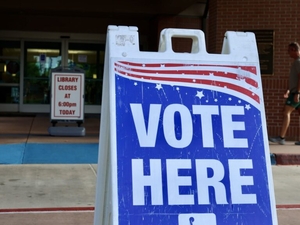
Early voting for the June 9 election to replace Attorney General Alan Wilson, who is running for governor, started Tuesday and will continue weekdays through June 5. The winner will face the only Democrat to file, Charleston attorney Richard Hricik, in November. The debate was hosted and broadcast by SCETV.
Personal attacks
Pascoe accused Goldfinch, a Murrells Inlet Republican who worked as a prosecutor within the National Guard, of not having enough experience. Goldfinch accused Pascoe, who lives in St. Matthews, of remaining close friends with the state’s best-known Democratic trial attorneys, including former state party chairman and Sen. Dick Harpootlian.
Pascoe’s switch to the Republican Party last year followed two decades of being elected as the Democratic solicitor overseeing prosecutions in Calhoun, Dorchester and Orangeburg counties.
Pascoe campaigns as the anti-corruption candidate, pointing to his expansion and prosecution of a Statehouse investigation that ultimately brought down a GOP powerbroker and six Republican legislators, though only one went to prison.
But Goldfinch brought up payments Pascoe’s office received as restitution from five businesses and state agencies to avoid prosecution during the yearslong probe, which the state’s highest court questioned in 2020.
“That’s corruption, y’all,” Goldfinch said. “That’s corruption.”
Pascoe responded that he had to accept the $325,000 and gave it back to the state to investigate other ethics cases. In turn, he repeatedly referred to Goldfinch as “stem cell Steve,” referencing accusations Goldfinch faced in 2013 over an employee of a company he owned misbranding stem cells. Goldfinch was never indicted, and the federal charges against him were dropped in 2017, according to court records.
“He has no prosecutorial experience other than when he was indicted for harvesting stem cells,” Pascoe said. “He is not qualified to be attorney general.”
Goldfinch, first elected to the House in 2012 and Senate in 2016, didn’t directly address those accusations Wednesday night, though he did defend his experience as a military attorney and repeatedly accused Pascoe of telling lies — an accusation Pascoe threw back at him.
“There he goes again,” Goldfinch said repeatedly in response to Pascoe’s accusations, emulating Ronald Reagan’s famous line used in a 1980 presidential debate against Jimmy Carter.
Pascoe noted the similarity, then added of his opponent, “He is no Ronald Reagan,” calling him a RINO, an acronym for Republican in name only.
Issues mostly aligned
Despite their heated attacks, the two generally agreed on the actual issues. As did Stumbo, chief prosecutor for Abbeville, Greenwood, Newberry and Laurens counties, who stuck to answering the questions and never used the 30-second rebuttal allowed when one candidate attacked another.
All three wanted to quickly re-try Alex Murdaugh, whose convictions for killing his wife and son were overturned earlier this month by the state Supreme Court. After the ruling, due to what justices called “shocking jury interference” by the court clerk, Attorney General Alan Wilson vowed to retry the case, but that job would almost certainly fall to his successor.
Pascoe said he and Stumbo could try Murdaugh “in our sleep,” pointing to their experience prosecuting murder trials as solicitors. Goldfinch said he would “pursue that case as zealously as any other case,” and again pointed to Pascoe’s friendliness with Harpootlian and Jim Griffin, Murdaugh’s attorneys.
All three said they wanted stricter enforcement of people who entered the country illegally. They agreed on how they would run the office, including pushing back on what they saw as federal overreach, limiting how many cases they send to private law firms, and taking over cases from local solicitors only when dealing with a backlog or in emergency situations.
And all three candidates said they wanted to see a different process of selecting the state’s judges, though only Pascoe said he’d be open to a popular election to keep judges in office.
Corruption was another unifying issue. The candidates all said they felt corruption existed in South Carolina and they would go after any public official doing wrong, including legislators, local council members and sheriffs.
Marijuana and hemp
The clearest dividing line came over a question about whether the candidates would support legalizing medical marijuana.
The Senate has twice passed legislation allowing cannabis to be used medicinally for certain illnesses. Both bills died in the House without a floor vote — thrown out in 2022 on a technical ruling as floor debate began and in 2024 in committee as the clock ran out on the session. But the issue is likely to return after the federal government in April loosened restrictions on medical marijuana products in states where they’re legal and set hearings this summer for rescheduling the drug.
Senate approves keeping some THC hemp products legal for adults in SC
Pascoe questioned why the federal government took so long to change the drug’s classification in the first place.
“I can tell you, it absolutely does help children with seizures. It does help cancer patients, because we all know them in our lives,” Pascoe said. “So, I applaud the Department of Justice for that rescheduling.”
Stumbo disagreed.
The state already legalized growing hemp, which naturally lacks enough THC to get people high. There’s no reason to do anything more, he said.
“I believe the medical marijuana bill now is just a Trojan horse for recreational use, and I oppose it,” Stumbo said.
Goldfinch voted for the “Compassionate Care Act” in both 2022 and 2024. It would have allowed people with debilitating medical conditions to eat, vape or topically apply cannabis products under heavy regulations.
But on Wednesday night, he didn’t give a yes-or-no answer on medical marijuana. First, he said, legislators need to address THC-infused drinks and gummies effectively legalized by a 2018 federal law that left a lot of gray area.
“Whatever your position is, honestly, I think it’s a moot point at this point, because it is ubiquitous in South Carolina, and it’s a real problem, especially the stuff that’s unregulated,” Goldfinch said. “It needs to be regulated.”
Legislation limiting sales of the intoxicating hemp products could still become law this year.
A compromise between differing versions passed by the House and Senate could be worked out when legislators return next month to finish work on the state budget. But agreement on where to draw the line could be difficult.
They’ll essentially be weighing three possibilities: Earlier this year, a separate bill banning most hemp products got returned to committee amid a chaotic divide among Republicans on the House floor. The House GOP never settled the intra-debate, instead sending two options to the House-Senate negotiating committee.
Editor’s note: This article has been corrected to reflect that a federal case referenced by Solicitor David Pascoe in criticism against Sen. Stephen Goldfinch was dismissed in 2017. He was never indicted in the case, which was filed in Texas in 2013.

Columbia