The power grid doesn’t work in pieces, and we shouldn’t plan it that way
May 28, 2026 | 6:50 am ET
Description
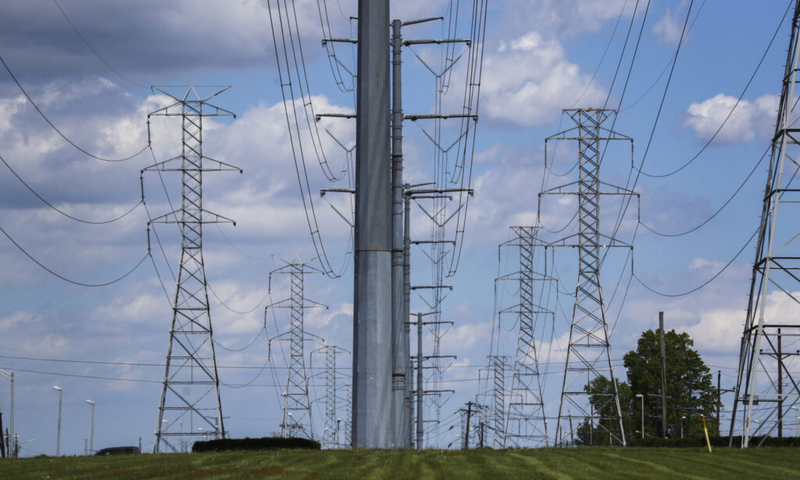
(Dana DiFilippo/New Jersey Monitor)
Most of the systems we rely on every day receive attention only when something breaks.
We don’t talk about roads when traffic flows, or water systems when the tap turns on. These systems fade into the background because they work. But behind that reliability is something we rarely think about: careful, coordinated planning.
Our electric grid is no different. But increasingly, we’re talking about it as if it is.
Today’s energy conversation is loud and fragmented. We debate generation, what to build, where to build it, and how quickly. We debate demand, especially as new industries like data centers drive unprecedented growth in load. We debate affordability and reliability.
But too often, we talk about these pieces separately.
Yet the grid functions as a single interconnected system.
Electric systems operate as a single, integrated network where generation, transmission, and demand must be planned together to deliver reliable and affordable power. When one piece is planned in isolation, the system becomes less efficient, more expensive, and harder to manage.
This isn’t theory. It was clearly reinforced in recent testimony before Congress, where grid experts stressed a simple reality: the lowest-cost, most reliable outcomes occur when transmission planning is aligned with generation and load growth, not treated as an afterthought.
Transmission is not just the “wires in between.” It is the system that allows generation decisions to work in the real world. Without it, even the best generation plans cannot deliver power where and when it’s needed. And without knowing future demand, neither generation nor transmission can be sized correctly.
Think of it like building a highway system.
You don’t decide where to pour concrete without knowing where people live, where they work, and how traffic will flow. You don’t build lanes first and hope destinations figure themselves out later. You plan the system as a whole.
Energy should be no different.
When planning is integrated, the benefits are significant: power can be sourced from the lowest-cost sources, bottlenecks are avoided, reliability is sustained even as demand rises, and customers save by avoiding inefficient decisions that increase costs over time.
When planning is disconnected, the opposite happens. Transmission is built too late, or in the wrong place. Generation is added without the ability to deliver it efficiently. Demand shows up faster than the system can respond. The result is a grid that constantly reacts rather than prepares.
And reaction is expensive.
Missouri has long benefited from a practical, well-rounded approach to energy policy. That includes strong state oversight and an emphasis on long-term affordability. It also recognizes that infrastructure decisions are not isolated; they are interconnected.
That matters now more than ever.
Load growth is accelerating. Not just from new industries, but from electrification, economic development, and developing consumer demand. At the same time, generation resources are changing, and the grid is becoming more dynamic.
This is not a moment for siloed thinking.
It is a moment for disciplined, integrated planning, where transmission is considered alongside generation from the start, and where both are aligned with realistic demand projections.
Missouri’s economy depends on getting this right. Missouri also understands something important about infrastructure: it works best when it is built with communities, not simply through them.
Transmission lines cross real places, family farms, working land, and communities where people have often invested generations of care and stewardship. That is why utilities and landowners alike benefit from approaching these projects with openness, communication, and the mindset of neighbors working toward a shared long-term goal.
Strong infrastructure and strong communities are not competing interests. In Missouri, they have long depended on one another.
Reliable and affordable energy is vital to advanced manufacturing, logistics, and agriculture, helping secure jobs, investment, and economic progress. These are not short-term investments; they’re long-term commitments supported by a grid built to last.
Transmission may not make headlines. There are no ribbon cuttings or grand openings.
But it is what allows everything else to work.
Let’s commit to planning the grid as the integrated system it truly is.
Because that’s the way the grid works.
And it is how Missouri can continue building an energy future that is reliable, affordable, and ready for growth.

Jefferson City, MO