New York’s Beds for Unaccompanied Immigrant Children Evaporate as Feds End Contracts
May 19, 2026 | 11:04 am ET
Description
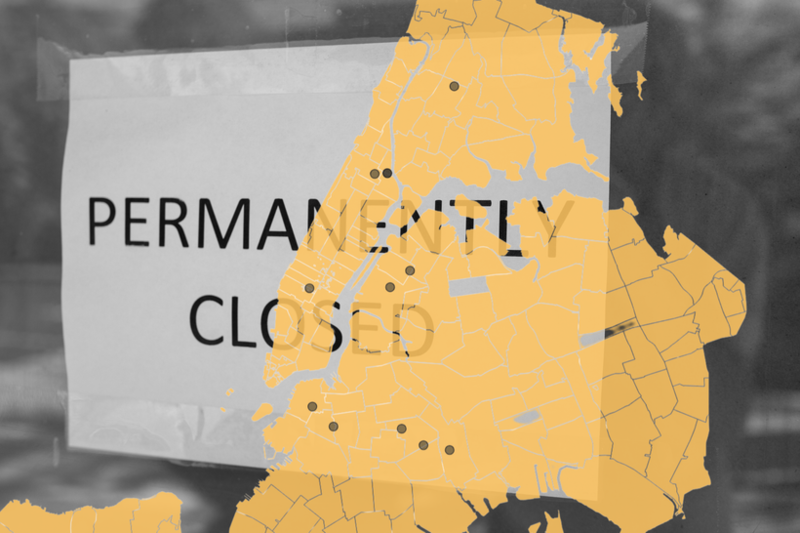
The shuttered New York programs have notified the Department of Labor that they plan to lay off a total of about 1,000 people, according to a New York Focus analysis of state data. / Photo: Tom Smith/Getty Images; Map: Leor Stylar/Flourish | Illustration: Leor Stylar
The Trump administration has eliminated funding to at least five New York nonprofits that collectively took in more than $600 million over the past five years to house unaccompanied immigrant children. That means fewer beds in New York for children who cross the border into the United States without their families or are otherwise apprehended inside the country alone.
The cuts were part of a larger wave of funding reductions affecting facilities across the country, as the number of unaccompanied children in federal custody has fallen from nearly 7,000 at the end of 2024 to about 1,800 in recent days.
The placements are overseen by the Office of Refugee Resettlement, which houses children in shelters or foster homes while they wait to be released to relatives or other sponsors. The number of beds in New York was cut by about half, according to a person with knowledge of ORR’s shelter capacity and a New York Focus analysis of state data. That was among the steepest reductions in any state in the country, though many providers in Michigan, California, and Illinois lost funding as well.
Those cuts have slammed nonprofit organizations in Westchester County and New York City. Affected organizations have notified the Department of Labor that they plan to lay off a total of about 1,000 people.
The cuts are also making life harder for children in ORR custody. Some have been forced to separate from foster parents they had lived with for months or move out of the facilities that housed them. While children with family or guardians in New York were moved to other facilities still operating in the state as their sponsors seek custody, others were transferred to jurisdictions considered more hostile for immigrants fighting removal.
Inside New York immigration courts, the moves have led to confusion and communication issues. Earlier this month, Chuck Kress, an attorney with Kids in Need of Defense, appeared virtually in Judge Lisa Ling’s courtroom in Manhattan to represent a pair of siblings. But there was a problem.
“We haven’t been able to contact the children in the last few weeks as their prior shelter shut down and they were moved,” said Kress, whose organization represents many unaccompanied children. He had been able to track down their case manager only the day before, he told the judge.
The federal Administration for Children and Families, which includes ORR, said in a statement that it was ending the contracts because the number of children in its custody has drastically declined from a peak of 22,000 in early 2021. Only 16 percent of 1,958 beds for unaccompanied children in New York — about 300 — were occupied in December 2025, according to the most recent census published by the state agency overseeing them.
“ORR is closing and consolidating unused facilities as the Trump administration continues efforts to stop illegal entry and the smuggling and trafficking of unaccompanied alien children,” the statement said.
The agency declined to provide information about which contracts ORR ended and where it transferred children.
In recent months, many unaccompanied minors in New York were sent to facilities in Texas, sources told New York Focus, where there is no state oversight of the shelters, unlike in New York and most other states.
In the future, the cuts could also force children with family members in New York, or who are detained in New York and then turned over to federal custody, to be sent hundreds of miles away from their relatives.
“It means there are fewer placements in the state for them,” said Abena Hutchful, an attorney for the Young Center for Immigrant Children’s Rights.
Across administrations, slightly more than half of the beds for unaccompanied children have been located in Texas. A very small proportion of existing shelter space in Texas was closed recently, likely increasing the concentration of ORR-funded shelter beds there, according to the source with knowledge of the program, who declined to be named for fear of government retaliation.
In New York and most other states, facilities housing unaccompanied children are licensed by state child welfare agencies. Texas stopped licensing such facilities in 2021 to protest the Biden administration’s immigration policies. ORR, which does its own routine monitoring of facilities, developed a new process to investigate reports of abuse and neglect that Texas officials had previously handled.
Advocates for children in federal custody say that isn’t enough oversight to adequately protect children in Texas. “Do you want someone who works for Kathy Hochul looking over your shoulder? Or Greg Abbott?” said Jonathan White, who ran the unaccompanied children program during part of the first Trump administration and is now running for Congress as a Democrat in Maryland. “I think that is part of the calculus.”
Hutchful said that moving more kids into Texas, where courts are backed up with immigration cases, could ultimately make it harder for them to get released.
Since Trump took office last year, kids’ average length of stay in ORR custody has skyrocketed, reaching more than 200 days in April, up from around 30 in 2024, according to federal data. Attorneys are increasingly turning to federal lawsuits to challenge the lengthy detentions and force the government to release children to their families.
“What does it mean if all of those [lawsuits] are coming in in Texas, where the federal courts are already inundated with habeas petitions?” Hutchful said.
Mark Greenberg, a former official with the Department of Health and Human Services who worked on the unaccompanied children program during the Obama and Biden administrations, said that the Department of Homeland Security has generally preferred to house children in shelters close to the southern border, near where they’re picked up. Leaders at ORR, on the other hand, have historically wanted to contract with facilities spread around the country so kids can be placed near their sponsors. They have also preferred to use state-licensed facilities to increase safeguards for children.
“The fact that the number of children in custody is so low right now is certainly an argument for reducing capacity,” Greenberg said. “But it also could be an opportunity for ORR to shift to making much greater use of state-licensed care. It has been a problem that such a large share of ORR facilities were in Texas, and Texas refused to license those facilities.”
NPR reported in March that ORR is placing all pregnant girls in its custody at a single shelter in South Texas, a move officials said was unprecedented.
The cuts in New York impacted some of the longest-standing and largest providers in the ORR system. One was Cayuga Centers, which had capacity to house 500 kids in foster homes in December 2025, according to the state census.
Cayuga was running a deficit before it began housing unaccompanied kids in 2014 and quickly grew to become the largest provider of foster homes for such children in the country, The New York Times reported. In fiscal year 2024, the organization’s revenue was up to $120 million, about three-quarters from programs for unaccompanied children. During the same time period, the salary of its now-former CEO, Edward Myers Hayes, rose from $180,000 to $700,000, according to tax filings.
A recent audit, first reported by the Auburn Citizen, found that the organization had improperly spent federal money intended for housing unaccompanied children on other costs.
Cayuga Centers declined to comment for this story.
Rising Ground, Inc., which had housed unaccompanied immigrant kids in New York since 2014, is laying off 257 employees — more than 10 percent of its staff — after losing its contract to house unaccompanied children, CEO Alan Mucatel said in a statement to New York Focus. Its work serving other populations will continue, and the organization is trying to find new positions within the organization for the laid-off employees.
Lutheran Social Services of New York, which has also housed unaccompanied kids since 2014, lost its ORR funding last month. Those federal grants had comprised 30–40 percent of the organization’s budget, said Cecilia Aranzamendez, executive director for community services.
By the end of its contract in late March, only a handful of Lutheran Social Services’ kids were still in custody, and ORR tried “really hard” to move them to facilities in states of their choosing, she said. Even so, the goodbyes were “fraught.”
“I think it’s a hard decision to put on their shoulders,” she said. “What ends up happening sometimes is you give them this choice of where they want to go, but what they want to do and where it will be best for them to be, let’s say for their legal status, are maybe different.”
Some of the affected nonprofits in New York had shifted their focus away from caring for kids in state custody, and are now having to rethink those changes. Lincoln Hall, founded in 1863 to care for Civil War orphans, had exclusively housed unaccompanied immigrant kids in the last few years. Now that its funding from ORR has been cut, the facility in Somers is sitting empty and its leadership is undertaking a “comprehensive strategic planning process,” according to an email its executive director sent to the town supervisor of Somers, who shared it with New York Focus.
Robert Scorrano, the town supervisor, told New York Focus that Lincoln Hall is allowing Somers’s youth athletic programs to hold practices on the vacant campus’s sports fields.
Albany