Advocates push for independent Department of Corrections watchdog
May 18, 2026 | 8:17 pm ET
Description
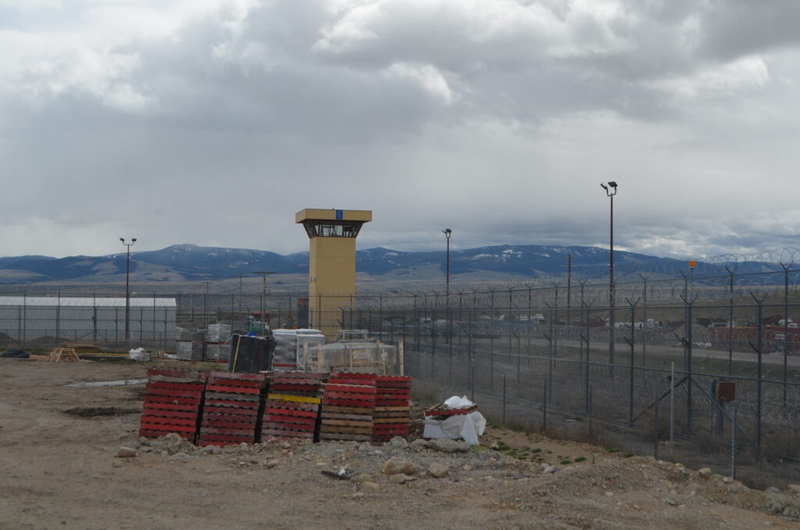
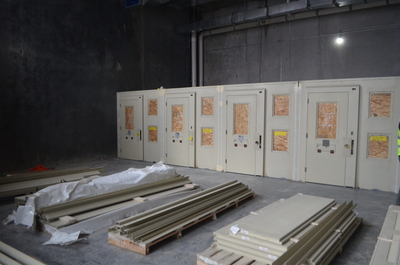
A watchtower and construction materials are pictured at Montana State Prison on Wednesday, April 15, 2026. (Jordan Hansen / Daily Montanan)
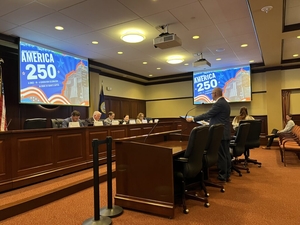
Lawmakers and advocates for incarcerated Montanans discussed the possibility of adding an independent watchdog for the Department of Corrections, potentially through an ombudsman, during meetings of the Interim Law and Justice Committee this month.
Following requests from prison rights advocates, the Interim Law and Justice committee added an ombudsman panel to their agenda for May 7. The idea had previously also been discussed in a Criminal Justice Oversight Council meeting earlier this spring.
The ombudsman and out-of-state prison transfers were both taken up at the interim Law and Justice meeting, and legislators heard panel discussion from prison oversight officials in Iowa and Michigan.
Rep. Katie Fire Thunder, a Bozeman Democrat, said she’d be supportive of an ombudsman program, too, adding she’s asked for draft language on the program.
“I think an ombudsperson would be able to give us non-biased, outside perspective and clarity on what is actually happening,” Fire Thunder said in an interview with the Daily Montanan. “Not just for the families, but for the DOC and for us as legislators.”
Creating a new department or office could take a legislative act and as the 2027 session nears, interim committees are looking to finalize legislation they’ll introduce.
Some advocacy groups, including Catalyst Montana, pointed to how an ombudsman could help navigate situations like the recent out-of-state prison transfers.
“This situation would be another good reason for this committee to consider the ombudsman proposal,” Nicole Gomez-Patalano, the director of criminal legal policy at Catalyst told the interim committee. “A coordinator designated to interface with families to address their concerns and improve communication, would be really helpful at a time like this.”
‘A complicated system’
An ombudsman is not a new concept and in fact Montana has several, including the Department of Justice’s Office of the Child and Family Ombudsman (established in 2013 after Legislative action) and the Mental Health Ombudsman, which is housed in the Governor’s Office.
As far as correctional ombudsman programs, that’s not a new concept nationally, either. Both Iowa and Michigan have had those offices since the 1970s and about 20 states have a corrections ombudsman in some capacity.
They were created partially in response to prison instability and riots in the 1960s and 1970s, said Keith Barber, who helms the Michigan Office of Legislative Ombudsman.
“It has been my experience over the years that a lot of folks, incarcerated individuals, as well as their loved ones, don’t necessarily trust what they’re being told by corrections,” Barber said. “It may be gospel truth, but they seem to trust it many times from an outside source.”
Barber added they were a “safety relief valve of a certain type.”
The offices in Iowa and Michigan have slightly different roles, but essentially provide oversight to prisons in those states.
They operate as a tool of the legislature and have limited power, but do provide an outlet for complaints and a resource to direct families to.
The Montana Department of Corrections is not inherently opposed to the idea, DOC director Eric Strauss said during the May 7 meeting, saying he was “pretty agnostic” to the concept.
“We earnestly do address these concerns to the best of our ability and do provide changes to our system when things are legitimately brought to our attention,” Strauss said following the panel and public comment. “So I don’t know that the ombudsman in that regard would provide a lot of value, but having said that, if they were constituted and were put into place, I think we’d be happy to work with them and try to provide some more transparency to the system overall.”
On Monday, Sen. Laura Smith, a Helena Democrat and former federal prosecutor who has served on both the House and Senate Judiciary Committees said it was an “idea worth looking into” and said she was thinking about how to build it in a meaningful way. Trust between families of those incarcerated at the state’s prison system and the agency is an issue, Smith noted, adding Strauss has been “thoughtful” on the topic.
“I don’t think it ever hurts to have an independent entity looking at a complicated system, looking into cases,” Smith said. “Second, I think it’s an idea worth looking into because of how many individuals are now out of state.”
‘Who to call, who to email’
Amanda McKnight, an advocate whose husband, Josh, is currently incarcerated at Montana State Prison, originally brought the idea of an independent ombudsman to oversee complaints and issues regarding the Department of Corrections, to both the interim Law and Justice Committee and the Criminal Justice Oversight Council earlier this year.
It’s a trust, communication and transparency issue, McKnight has said, something she feels an ombudsperson could help address. She hears a lot from families that connect with her through the advocacy organization she runs, 406Revolutionized, and has looked to address those concerns with state leaders.
“I’m trying to be neutral and see both sides, but it’s hard when there’s so many families reaching out to me on a daily basis, just trying to figure out how to navigate the system, who to call, who to email,” McKnight said in an interview, adding “Or (family members) being transferred 1500 miles away with no notice.”
McKnight, and others that have spoken at legislative committees and councils, have asked for more transparency from the Department of Corrections and a better complaint process.
One of her main frustrations centers on her husband’s welfare — Josh has a health condition, needs medication and it sometimes can be delayed, she said.
She’s filed complaints with DOC, which McKnight said they respond to, but it can take time.
“When serious concerns arise, families are often forced to seek answers from the very same system they are concerned about in the first place,” McKnight told the interim committee on May 7. “As a result, many families feel powerless, unheard, and unsure where to turn for help.”
The Department of Corrections currently handles complaints through its Constituent Services department.
One person is assigned to that department, though receives support from other areas, Department of Corrections spokesperson Carolynn Stocker said in an email.
“Employee workloads are monitored as part of daily operations at the DOC. At this time, Constituent Services has not been flagged as an area that requires additional resources,” Stocker wrote in response to a question regarding workload capacity. “While one position is dedicated to Constituent Services, that staff member receives assistance from the department’s administrative support staff and the Communications team to manage constituent calls and responses.”
Stocker added last week they’ve received 717 constituent calls since Jan. 1.
“This number represents logged constituent calls with some of those being repeat callers,” Stocker wrote. “Constituent Services responds to numerous other calls that don’t rise to the level of complexity that requires documentation (eg. inmate location information, referrals to cor.mt.gov.)”
Constituent Services deals with a wide range of requests, DOC deputy director Natalia Bowser told the committee. This includes wellness checks, medical care, housing, placement, visitations, finance, discipline and reentry.
The DOC also gets requests outside of its purview — including anything related to parole, which is handled by the Montana Board of Pardons and Parole. Additionally, certain medical information protected by HIPAA cannot be released, Bowser said, which is one common source of calls, as is information regarding transfers.
“If we’re transporting inmates there are some things that we need to just kind of keep under our belt for security and safety, and so we have to explain to folks why that is,” Bowser told the committee. “Response times, of course, can vary depending on what the complexity is of the request that’s coming in, but we certainly work hard to make sure that we’re addressing them.”
‘We do not want people placed out of state’
Some of those calls and concerns have been about prison transfers and this spring: All Montana prisoners serving sentences out of the state were consolidated to Tallahatchie County Correctional Facility in Mississippi, which DOC has said will increase access to services and opportunities for inmates.
The agency publicly announced the move after it was completed and, like all prison transfers, was done with security in mind, Strauss said during the interim Law and Justice meeting.
Montana, dealing with prison overcrowding, has transferred hundreds of prisoners out of state to multiple facilities since 2023 due to capacity limitations at secure state facilities.
The state is building more inmate capacity at Montana State Prison in Deer Lodge following hundreds of millions appropriated to fix the problem by the legislature and, additionally, wants to build a controversial psychiatric facility in Laurel, but it could still take until the end of the decade for those new or upgraded facilities to be fully online.
Some legislators who serve on that committee, including Fire Thunder, also expressed concern about prison conditions outside of the state and is pushing for a Mississippi trip by legislators. Rep. Steven Kelly, a Kalispell Republican and retired sheriff’s captain, also expressed interest in seeing the Mississippi prison for himself.
“We’ve been getting quite a few emails and messages about families concerned about what is going on in Mississippi,” Fire Thunder said.
Members of the public spoke about their own difficult experiences with family members being incarcerated out-of-state at the Criminal Justice Oversight Council on May 8.
Valynda Holland, a Democrat running for Senate District 11 in Great Falls, said during the CJOC meeting that her incarcerated brother’s placement out of state was “devastating” to her family.
“Many families simply cannot afford the cost of travel, phone calls, commissary, or maintaining regular contact with loved ones who are incarcerated far from home,” Holland told the council. “At the same time, Montana taxpayers are carrying a significant financial burden through out-of-state placements and private prison contracts, while families are left struggling emotionally and financially.”
Visitations can be cancelled quickly and without notice. Some of the problems center on staffing, DOC said, but there are other things that can go wrong with visitation scheduling.
“Correctional officer callouts do affect whether visitation may proceed as scheduled. Because visitation staff members are correctional officers, they may be reassigned to other, critical posts if staff levels dip on certain days due to employees using sick leave or personal time,” Stocker said in an email. “The DOC is evaluating alternative options for staffing visitation. In the past year, visitation has also been cancelled due to water issues, power outages, and other issues.”
Family members of those incarcerated relayed stories of traveling hundreds of miles, only for them to be turned away at the prison. The issue is compounded for the roughly 600 prisoners housed out of state.
The situation is not ideal for the Montana Department of Corrections, either, and Strauss said a State of Montana contract compliance employee is sent to the facilities for one week per month.
“We can all agree that we do not want people placed out of state,” Strauss told the interim committee. “Anyone that suggests otherwise is misguided. If we had the beds in the state, we would return those individuals to us as quickly as we could.”
Helena, MT