Kimberly Yee says Tom Horne’s voucher program is ‘complete chaos.’ Horne says Yee backed DEI.
May 15, 2026 | 4:45 pm ET
Description
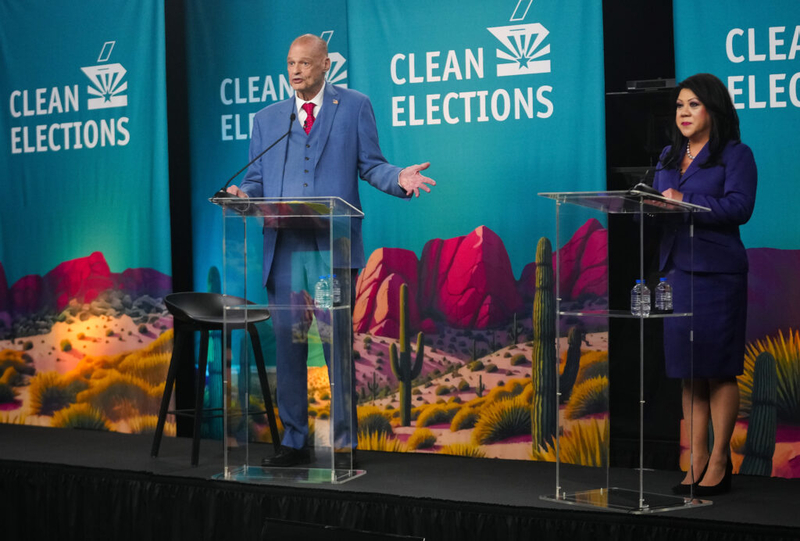
Incumbent Arizona Superintendent of Public Instruction Tom Horne answers a question during a May 14, 2026, Arizona Clean Elections Republican primary debate against challenger Arizona Treasurer Kimberly Yee. (Pool photo by Patrick Breen/Arizona Republic)
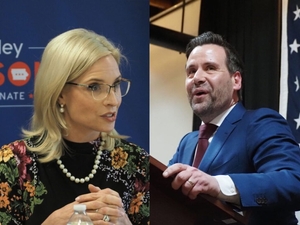
Arizona Superintendent of Public Instruction Tom Horne and his challenger in the Republican primary, Arizona Treasurer Kimberly Yee, came out swinging during a Arizona Clean Elections Commission debate on Thursday.
Yee accused Horne of heading a department whose school voucher program was “complete chaos,” while Horne alleged that Yee wanted to allow parents to purchase Rolex watches with taxpayer money — and that she was part of a diversity, equity and inclusion committee.
Each vehemently denied the other’s claims.
Horne and Yee both have a long history in public office. Horne was a state legislator from 1997 until 2001, superintendent of public instruction from 2003 to 2011 and was state attorney general from 2011 to 2015. An independent investigation later found that Horne improperly used staff in the attorney general’s office in his unsuccessful 2014 reelection campaign.
He began his second stint as schools chief in 2023.
Yee also served in the legislature from 2010 until 2018, when she was first elected treasurer. Prior to that, she was a top aide to then-state Treasurer Dean Martin.
Horne and Yee were the only two Republicans elected to major statewide offices in Arizona in 2022, when Democratic candidates were elected governor, secretary of state and attorney general.
After parents who use the state’s universal school voucher program, called the Empowerment Scholarship Account program, became frustrated with Horne’s restrictions on purchases, leader of the far-right Arizona Freedom Caucus, Sen. Jake Hoffman recruited Yee to challenge Horne in the primary.
During the debate, Horne repeated many of the same talking points from his 2022 campaign, namely that he was fighting against critical race theory and diversity, equity and inclusion in Arizona schools.
“I am the only one in statewide elective office who’s fighting for the normal, against left-wing, woke craziness,” he said.
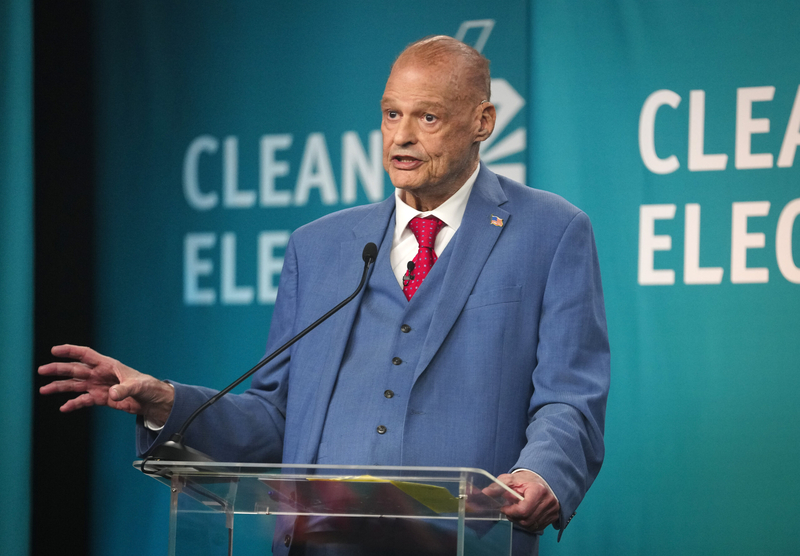
He directed viewers to therealkimyee.com, a website his campaign created that accuses Yee of being a member of the National Association of State Treasurers’ diversity, equity and inclusion committee. Diversity, equity and inclusion has become a boogeyman for Republicans and largely serves as a stand-in for opposing policies that recognize social and racial inequity in America.
Yee adamantly denied that she was ever a member of a DEI committee.
“I believe that an individual should advance based on their skills, on their experience, on their merits,” she said. “And I have pushed forward, with our Republican majorities in the state legislature, bills that would ensure that we don’t use these types of DEI policies to advance state employees for hiring, training or promoting.”
Yee was listed as a member of the National Association of State Treasurers DEI committee from 2022 until March 2026, according to internet archives. By May 14, it had been removed from her profile.
In turn, Yee went after Horne’s management of the universal voucher program, which provides taxpayer funding for any K-12 student to attend private school or to be homeschooled. Since its expansion to all Arizona children in 2022, the program has grown to serve more than 100,000 students at an annual cost of more than $1 billion.
A report released earlier this week by the Arizona Auditor General showed that the Arizona Department of Education, which Horne leads, is not properly auditing purchases, allowing parents to buy things like planter boxes for $1,666 and gym equipment for $1,400.
“The ESA audit did show that there is complete chaos in the Department of Education with respect to the management of the ESA program under Tom Horne,” Yee said.
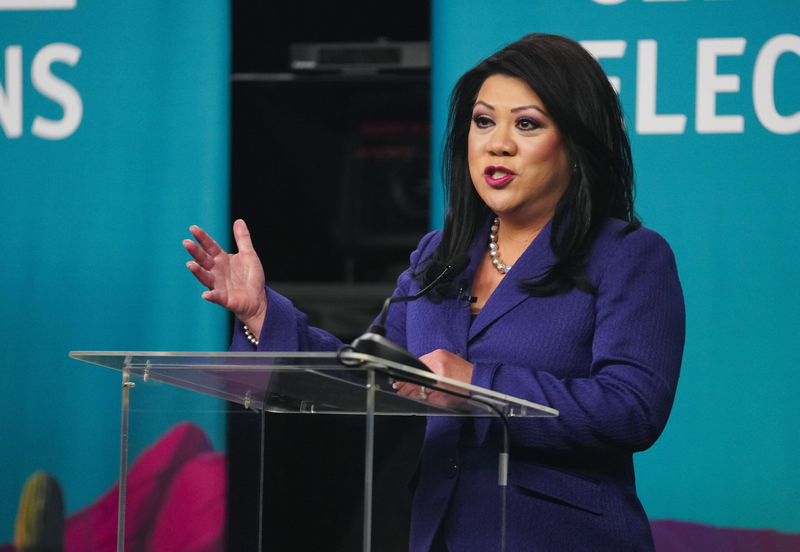
She promised that, if elected, she would update the ESA program’s vendor contract, currently with ClassWallet, to upgrade its platform or to find a new vendor that would use artificial intelligence and other technology to streamline the approval process for purchases.
Yee said that her updated purchase platform would ensure “clear accountability on what those purchases are, so that they will flag what is defined as educational versus what is not.”
Horne’s Department of Education disagreed with most of the problems identified in the auditor general’s report, and accused the office of misrepresenting the facts or using inaccurate data.
“We’re working very hard toward perfection,” Horne said.
He added that ADE is working to implement AI oversight of ESA purchase approvals.
“We’ve had to use risk-based auditing, but we will reach perfection, and we’re working very hard on artificial intelligence to do that,” he said.
Horne said that the biggest issue blocking “perfection” in ESA oversight was inadequate staff. The program has a staffing level meant to oversee the program as it existed in 2021, when there were just 11,000 students enrolled, not one that has ballooned to serve more than 100,000 students.
He claimed that Hoffman recruited Yee to appease ESA parents who were angry about their purchases being denied, and that she would allow parents to buy anything they wanted, including luxury items.
Yee said that wasn’t true, though she accused Horne of limiting purchases in a way that state law doesn’t allow.
“So, the legislature defines the law, they pass those laws, and the role of the state superintendent is to administer those laws, not overstep it and create policies on his or her own,” she said.
Both Yee and Horne agreed that private schools that receive taxpayer money via the ESA program should not be held to the same standards, or have the same oversight as public schools.
They also agreed that lawmakers should ask voters to extend Proposition 123, a K-12 school funding measure that brought in $300 million annually by increasing the amount of money set aside from the state’s land trust for public schools. Prop. 123 was approved by voters in 2016 and expired last year.
Republican lawmakers, who have been unable for three years to craft an extension that will be palatable to voters, told Democratic Gov. Katie Hobbs in March that a Prop. 123 renewal was off the table this year.
The candidates also agree that they support putting more police officers in schools.
Yee and Horne also concurred that social emotional learning and DEI don’t belong in Arizona classrooms, and that English language learners should be taught via full-English immersion instead of dual language instruction.
Teacher pay
Horne said he would continue to advocate for money to be moved from paying for administrators, into classrooms. He said he attempted to lobby the legislature to cap administrative spending at 5%, but was unsuccessful.
Yee acknowledged that decisions on teacher pay are made by the district governing boards and said she would work with those boards to educate members about how to build effective budgets.
Test scores
To deal with Arizona’s 4th grade reading scores, which are below the national average, Yee said she planned to bring phonics-based reading curricula back to schools.
Horne argued that a 2008 law already mandated phonics-based teaching in Arizona schools, and challenged Yee to point out a single school in the state that doesn’t teach phonics.
“I know for a fact that there are schools who might not be following the law,” Yee said. “And we can see that, because they have kids who are not reading.”
Phoenix, AZ