Senate President Smith wants to keep his power position; election results mean troubled waters ahead
May 15, 2026 | 4:41 pm ET
Description
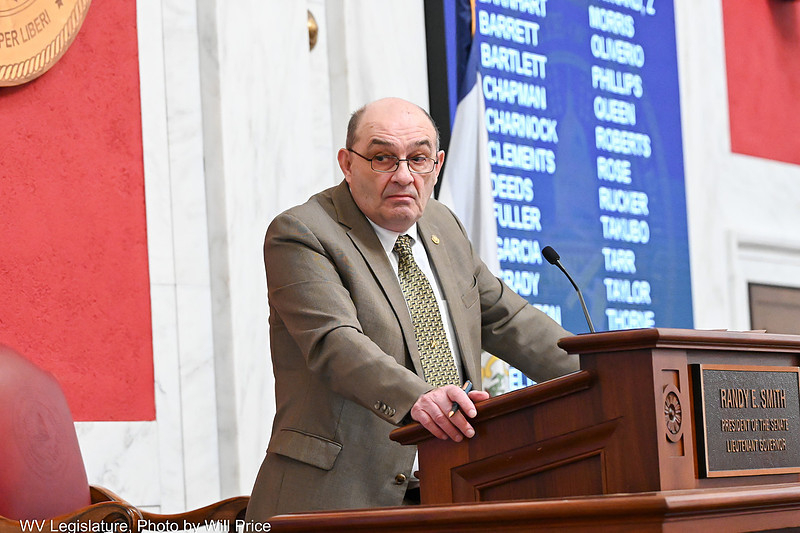
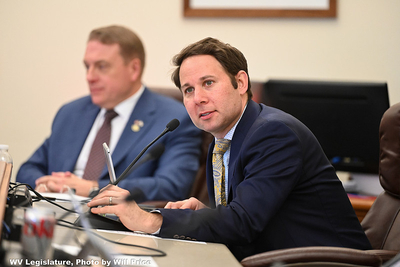
Senate President Randy Smith, R-Preston, will seek a second term as Senate president. His first election resulted in a deep divide in the West Virginia Senate. (Photo by Will Price/West Virginia Legislative Photography)
The primary cycle was particularly turbulent in the Republican-heavy state Senate, and fallout will continue in the coming months leading up to a Senate president election.
Current Senate President Randy Smith said in a phone interview that he’ll seek re-election in January ahead of the next legislative session for the top role. In West Virginia, the Senate president also serves as lieutenant governor.
“I’m the sitting Senate president. I’m going to run again,” said Smith, R-Preston. “I think I did a good job trying to bring people together. And, you know, some people don’t want to be brought together.”
“I really felt good about what I was able to do until, you know, we got close to this election,” he added.
Election results did little to move the needle for either of the Senate’s two factions — one led by Smith and another by Sen. Tom Takubo, R-Kanawha. Republicans hold 32 of 34 seats in the Senate.
“It’s split very similar to what it was — just different people after this election,” said Sen. Eric Tarr, R-Putnam, who won a three-way primary on Tuesday.
Smith recognized the divide as he seeks re-election. The particularly brutal and expensive GOP primary has further polarized the two sides. An added layer of drama came after Gov. Patrick Morrisey involved himself in the races by backing a lineup of candidates aligned with Smith while vocally opposing Takubo and other Republicans he felt had been roadblocks to his agenda.
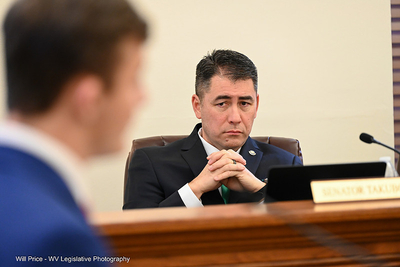
“You hear the governor talk about how we can’t have the status quo, but then what was elected was the status quo, and the status quo has really done very little over the past two years,” Takubo said. “The governor wants to control all three branches of the government … I just think the governor has done more to hurt the Republican Party than any Democrat in my lifetime.”
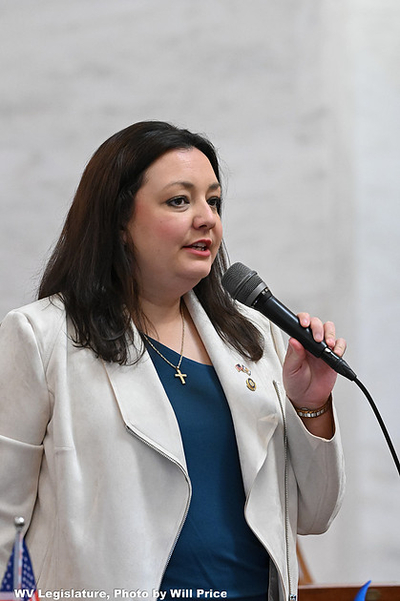
In an interview, Sen. Laura Chapman, R-Ohio, didn’t align herself with either faction but has been strongly supported by Morrisey. She left her role as Senate Health Committee Chair in January after criticizing Smith’s leadership.
“The Senate president race is actually very important, because it really does set the trajectory of where we are headed,” Chapman said. “Heaven forbid that person becomes governor, we need to make sure that we elect someone who the voters support and he will move the state forward. I think President Smith has done a fine job. I don’t think that he’s gotten all the credit that he deserves.”
Tarr said pending November general election results could impact the Senate president race.
“I would just like to see us get a consensus around somebody that will lead, but with a strong leadership team around them,” he said. “I’m talking about actually leading, but we’ve not been able to do well in the Senate — for lack of communication, for lack of bringing people together, and for the history of divisive tactics. You can’t get any in-depth legislation. Everything’s superficial.”
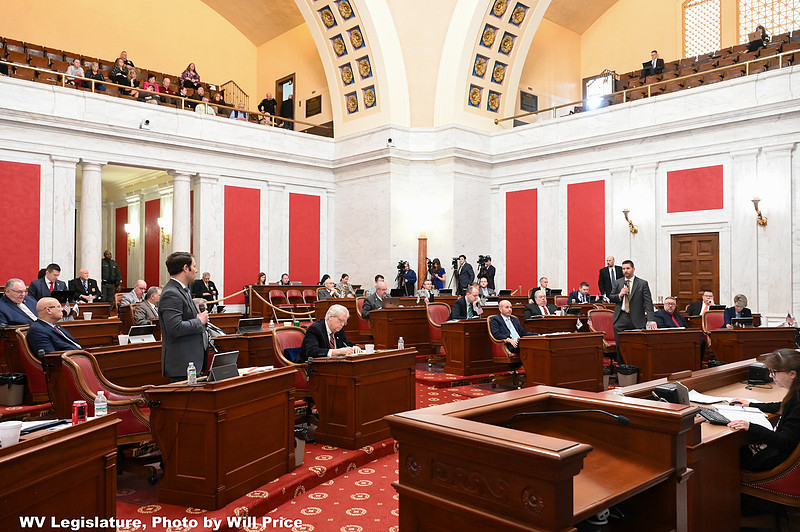
Smith faction holds on to key seats
Smith, a former coal miner, won a three-way race against Takubo and Tarr to secure the Senate president role in 2024; the fallout from the competition split most of the Republican senators into factions between Smith’s supporters and those who had backed Takubo.
Smith’s faction held onto a number of key seats Tuesday night. Outside spending targeted people on both sides, Smith noted.
MetroNews reported in March that a political action committee associated with Smith produced political messaging against Takubo.
“There’s nothing negative that came out against anybody from the Senate caucus pact — that’s what I was in charge of,” Smith said. “I did help raise funds for some of the organizations that were supporting my people, and I don’t back down from that because we (were) attacked. My job as president is to protect our members who support me, and that’s what I did.”
My job as president is to protect our members who support me, and that's what I did.
Takubo, a doctor, handedly won his primary race Tuesday night after an onslaught of mailers and massive spending from groups connected to Morrisey and Smith. He hasn’t committed to running for Senate president again.
Nineteen Senate seats were on primary ballots around the state on Tuesday. While Takubo won, a slate of candidates recruited by him and his allies who challenged incumbents didn’t fare well on election night; his faction doesn’t have an easier path to challenging the Senate president.
“I think if the voters were loud and clear that the group that was trying to take out the true conservatives failed, and so honestly, they didn’t pick up any seats,” said Chapman, who won over a Takubo-backed challenger Joe Eddy in the primary. “I think that we will continue to see a conservative Senate … And, I think that this is a warning sign for Republicans … perhaps listen more to what the constituents are saying about issues that they care about.”
“I think it’s absolutely clear that I’m a conservative, and I have made it clear that I won’t support the liberal agenda where we were passing things like hormones and puberty blockers for children. I will always stand against that,” she added.
Chapman will face Democratic challenger Shawn Fluharty in the general election in what is shaping up to be a high profile race. Fluharty currently serves in the House of Delegates.
In the Takubo faction, incumbent Sen. Bill Hamilton, R-Upshur, won against challengers Jack Reger and former Sen. Robert Karnes. Sen. Vince Deeds, R-Greenbrier, one of the governor’s top targets, easily won.
Raylee’s Law vote ‘still stewing’
With the election in the rearview mirror, Deeds said the Senate needs “to come together.”
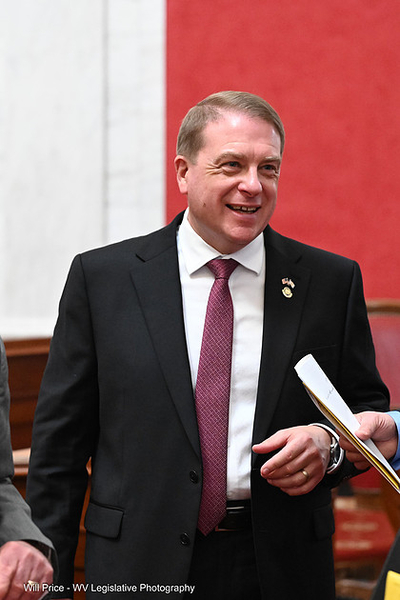
“I hope that we can come together and have a clear path, have a clear agenda about our job opportunities or economic opportunities and (on) education,” said Deeds, a pastor. “Let’s just not be afraid to talk. We may get in the room and not necessarily agree with each other, that’s part of the process.”
Takubo said, “They don’t elect us to be friends with everybody.”
“They like us to do good things for West Virginia. So, I don’t have to agree with people’s ethics or their morals. I have to look at the legislation in front of us and determine, do I think this is good for West Virginia or bad for West Virginia,” he said. “That’s what I’ll continue to do.”
Tarr noted that a Senate vote on Raylee’s Law, a high-profile child abuse prevention measure, in March has also played a role into dividing the Senate. Some members of the Smith faction broke away to support the bill after Sen. Ryan Weld, R-Brooke, successfully led a charge to overrule Smith to get the measure up for a vote.
“I think it is still stewing,” Tarr said. “Then, you add on top of that, how divisive this primary election cycle was for the Republicans.”
Smith told West Virginia Watch he’ll focus on economic development and supporting small businesses.
“I’m a big proponent of small businesses. I think we’ve left promoting our small businesses and helping our small businesses who employ most of the people in the state,” he said.
Sen. Joey Garcia, D-Marion, is the only guaranteed Democratic senator returning in 2027. Minority Leader Mike Woelfel, D-Cabell, is retiring after more than a decade of serving. Democratic candidates across the state will challenge Republicans in the general election on Nov. 3.
“The Republican candidates who won on Tuesday are even more extreme overall than the current makeup of the West Virginia Senate. But even so-called moderate Republicans voted for policies that are destroying our public education system, increasing energy costs, and prioritizing the wealthy over the working class,” said Garcia, who wasn’t up for re-election this year. “In November, voters will have the opportunity to change course and elect Democrats who will prioritize these issues in almost every state senate race on the ballot.”
Charleston, WV