Data centers part of rationale to investors for power merger, record shows
May 13, 2026 | 8:51 pm ET
Description
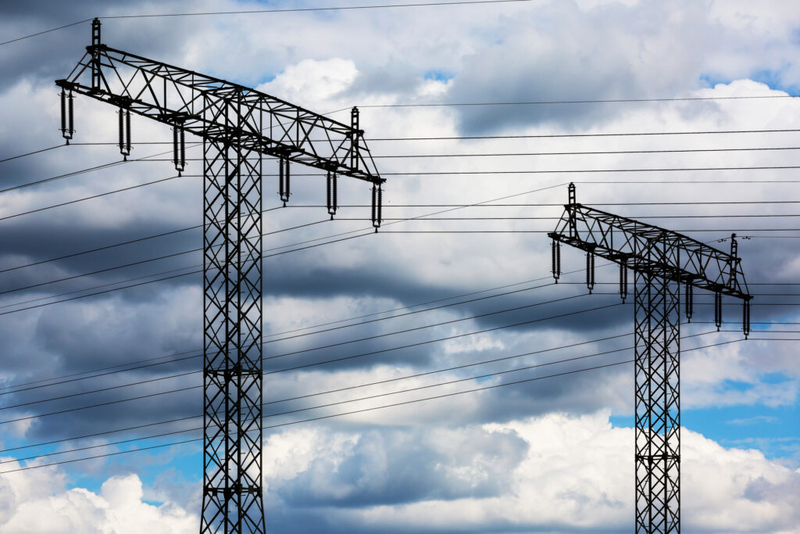
Electricity pylons (Photo by Getty Images).
NorthWestern Energy officials have said data centers aren’t relevant to the utility’s proposed merger with Black Hills Corp — but data centers are part of their discussions with investors and a rationale for a merger.
Data centers have been controversial in Montana, with proponents pushing for potential economic development benefits, such as jobs, and opponents raising concerns about higher rates and impacts on water.
In August 2025, NorthWestern and Black Hills announced the proposed $15.4 billion merger, and a hearing with the Montana Public Service Commission is taking place this week.
Officials from NorthWestern have said data centers are not a relevant part of the merger, but Wednesday, the second day of the hearing, a lawyer quizzing the CEO showed the “large load customers” are a factor given statements in an earlier investors call and recent financial report.
Wednesday, NorthWestern CEO Brian Bird took the stand, and under questioning from lawyer Monica Tranel, Bird agreed he had discussed data centers as an opportunity for NorthWestern with the possible merger.
But Bird said the merger offers other opportunities for growth too, not just from data centers, but also from transmission and generation, and he said the benefits for shareholders will, over time, accrue to customers as well — but the merger needs to take place.
“There ultimately could be reduced costs to customers,” Bird said.
Tranel, however, also asked if NorthWestern had a study that outlined the rate impacts of the merger on residential customers, “positive or negative,” and NorthWestern CFO Crystal Lail said it did not have one.
However, utility officials did have an estimate the merger would increase profits for shareholders — in a call with investors, they estimated the earnings per share would go from 4-6% to 5-7%.
In separate filings with the Public Service Commission, NorthWestern has blacked out most of the information about data centers, and at the hearing, the utility’s lawyer objected to questions about them — including one about how they might be used to help residential customers.
Commissioner Randy Pinocci said NorthWestern has had significant success in one community in particular, Winifred, and helped lower rates there and improve operations.
But he said he didn’t believe it could do the same with the merger, partly because NorthWestern already delivered “top drawer” performance.
“When you do this merger, I don’t think we’re going to see any improvements,” Pinocci said.
Bird, though, said the companies could learn from each other, and in doing so, become even more efficient; save money, such as by paying just one CEO instead of two; and reduce inevitable cost increases.
“We’re going to be able to provide the same great service,” Bird said. “I believe we’re going to be able to provide it at a lower cost than we would otherwise on a standalone basis.”
But Pinocci also said he had many calls about data centers, and he didn’t want to “beat a dead horse,” but he also had an idea to address the concern that rates for residential customers would go up as a result.
“Why don’t we charge them (data centers) a higher rate, and that higher rate offsets the rate to the homeowner? Is that a possibility?” Pinocci said.
NorthWestern lawyer Sarah Norcott, however, objected to the question based on “relevance to this merger docket.” PSC Vice President Jennifer Fielder, leading the hearing, agreed the discussion would be more appropriate in a separate docket, but not the merger.
A similar exchange took place when Tranel, representing 350 Montana and the Montana Farmers Union, asked Bird if NorthWestern intended to use some of its newly acquired shares at the coal fired plant in Colstrip to serve data centers in the state.
“That is a possibility,” Bird said.
Tranel tried to follow up and ask if NorthWestern had discussed the possibility with Quantica Infrastructure, which has a project outside Billings, but the utility’s lawyer objected to that question, too.
Some of the documents in the merger aren’t available to the public because they’re filed under protective orders, to shield information the companies consider competitive, for example. Wednesday, part of the hearing about information considered private took place out of public view.
NorthWestern earlier said it was in talks with at least 11 entities about data center development. In its first quarter earnings report for 2026, it said three agreements are signed, including with Quantica, which is increasing demand from roughly 500 megawatts to 1.1 gigawatts.
“We continue to see quite a bit of demand,” said the report from NorthWestern, posted on Investing.com. “We actually increased our data center request queue from six to eight since the last time you’ve seen this page.”
NorthWestern officials also have said they expect the Montana Public Service Commission will approve the merger, and they will close on the deal later in 2026. Already, four settlement agreements are approved.
In questions to Bird, Tranel asked if NorthWestern would agree, as a condition of the merger, to freeze customer rates for 10 years, but Bird said no.
Commissioner Annie Bukacek wanted to know more about executive compensation, and Bird confirmed he wouldn’t earn a $16 million salary as part of the merger; rather, he would earn $16 million if the merger goes through and he doesn’t have a job, a “golden parachute.”
Bukacek also wanted to confirm the money for those golden parachutes wouldn’t be paid by customer rates, and Bird agreed that was the case.
The merger also requires approval from regulators in Nebraska and South Dakota. The hearing in Montana will resume 8:30 a.m. Thursday.
Helena, MT