Montana Congressional delegation quiet on proposal for taxpayers to help fund ballroom project
May 07, 2026 | 5:17 pm ET
Description
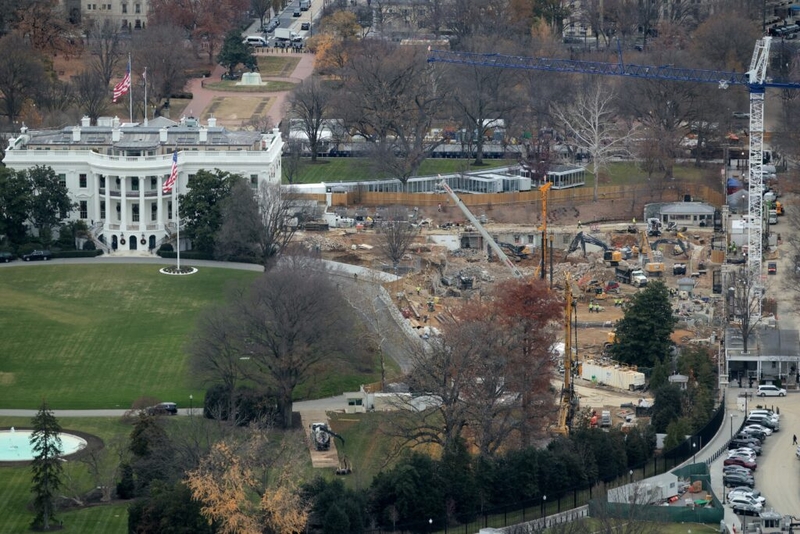
Demolition work continued where the East Wing once stood at the White House on Dec. 8, 2025 in Washington, D.C. President Donald Trump ordered the 123-year-old East Wing and Jacqueline Kennedy Garden leveled to make way for a new 90,000-square-foot ballroom that he says will cost around $300 million and will be paid for with private donations. A U.S. Senate Republican bill released May 4, 2026, asks for $1 billion in taxpayer funds for security for the project. (Photo by Chip Somodevilla/Getty Images)
After an assassination attempt at a journalists’ dinner in Washington, D.C., U.S. Sen. Tim Sheehy of Montana said he’d push legislation to fund a White House ballroom – the pet project of President Donald J. Trump.
“It is an embarrassment to the strongest nation on earth that we cannot host gatherings in our nation’s capital, including ones attended by our President, without the threat of violence and attempted assassinations,” Sheehy said, right after the event.
Sheehy wasn’t alone. A sizable group of Republican lawmakers expressed support for the idea, with several drafting proposals to fund the project, which was pegged at $400 million.
While many elected leaders had supported the ballroom before the shooting, what changed was the funding source.
In more than a dozen instances prior to the dinner, Trump pledged that the project would be funded by private donations – without taxpayer funding, even as the price tag for the project rose from $200 million to $400 million. Nearly 40 different individuals and groups have been identified as donors.
But after the dinner, Republicans in the United States Senate put a $1 billion funding provision of taxpayer money to go toward the project. And it’s likely there will be nothing Congressional Democrats can do to halt the funding, even as the ballroom construction may be paused or delayed because of legal challenges that claim the demolition of the East Wing for the ballroom may not have been properly completed, and plans for the ballroom may not have been properly approved.
The funding for the project would come from Congress’ funding for immigration through the Department of Homeland Security. Funding for the DHS had stalled for months because of an intractable disagreement between Republicans and Democrats about the techniques Immigration and Customs agents are using to track and prosecute undocumented immigrants, as well as the treatment of American citizens.
Republicans in Congress have chosen to use a budget process known as “reconciliation” for the ballroom project and funding DHS. That process only requires a simple majority from both the House and Senate to gain approval, meaning that the $1 billion project could be approved without any support from Democrats, even though Democratic Sen. John Fetterman of Pennsylvania said he would support the measure.
The $1 billion in funding is a portion of the overall $70 billion funding, and some GOP supporters have pointed out the funds can only be used for security in the new ballroom structure.
The Daily Montanan reached out to all four members of the Montana Congressional delegation – all Republicans – on Wednesday to gauge their concerns or support for the project. As of Thursday afternoon, it had received no response from any of them.
The Daily Montanan submitted these seven questions to each member (the questions below were sent to Sheehy, but modified for each member personally):
- Does Sen. Sheehy support using taxpayer funding for the ballroom project? Why or why not?
- In announcing his plans for the new ballroom, President Trump repeatedly said that there would be no public funds used in the project (we can find at least a dozen of these). Does Sen. Sheehy expect the Trump administration to honor that pledge?
- Preservationists and others have raised questions and filed lawsuits because of how the project was pushed forward and the East Wing toppled. Do you have any concerns with the process used so far to accomplish the ballroom plans?
- In your opinion, what is the proper role of Congress as it relates to oversight of monuments like the White House?
- Cost of living, inflation and gas prices are just some of the most pressing issues facing Americans currently. If you support the plan to fund the ballroom project using taxpayer dollars in part, how would you explain the support to Montanans who are struggling just to afford every day necessities?
- Is building a billion-dollar ballroom while Americans are struggling and we’re engaged in a war, sending the wrong message about the Republican Party’s priorities?
- A number of polls have shown that the ballroom project doesn’t enjoy a lot of public support; in fact, polling suggests the ballroom is deeply unpopular. Given that, if you support the project, how would you justify that support when the idea seems like the American public doesn’t want it?
- As we begin looking ahead to the 2026 elections, there have been a number of polls suggesting that voters are dissatisfied with the President and many of his policies. Given that people are struggling with the cost of living, do you worry that the GOP’s support of projects like this will only end up hurting the party in the not-so-distant future elections?
Helena, MT