Ohio Gov. DeWine plans to commute more death sentences before leaving office
Nov 16, 2026 | 3:50 am ET
Description
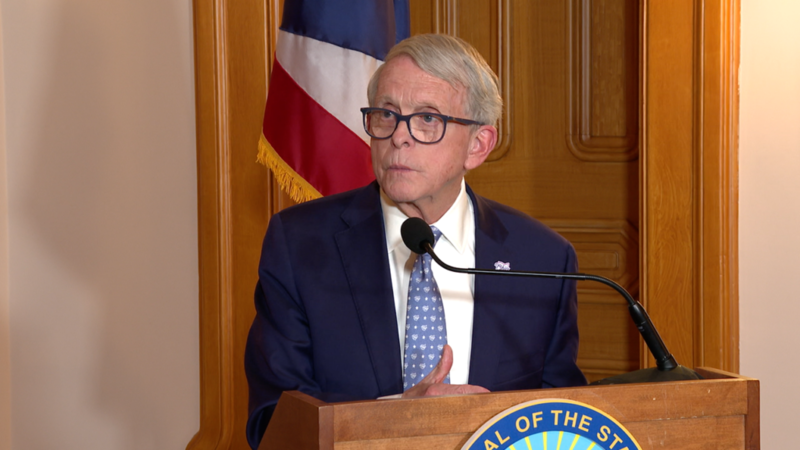
Ohio Republican Gov. Mike DeWine. (Photo by Morgan Trau/WEWS)
Ohio Gov. Mike DeWine said he is reviewing death row cases that may have gone awry in the legal process. The anti-capital punishment Republican said he is using one of his last acts as governor to save lives.
There are currently 104 inmates on death row, but some may get to walk back into life without parole.
“The power of a governor to commute a sentence, to do something, goes back to the beginning of this country,” DeWine said.
With DeWine in charge, Ohio has had an unofficial pause on capital punishment.
On Monday, we asked him if he is planning on any forms of clemency for death row inmates. He explained he is reviewing the state’s cases, seeing who to commute to life in prison without the possibility of parole.
“It’s power to be exercised very carefully, and that’s what I’m trying to do now as I go through these cases,” he continued.
As a former prosecutor and attorney general, the governor said that lawyers and a jury can think a case has been ruled correctly, but that may not be accurate.
“The governor has additional authority to look at that and maybe see something else that is in there with that individual or with that particular case that maybe the jury legally couldn’t have looked at or the judge legally couldn’t have looked at,” DeWine said.
In the spring, DeWine commuted the sentence of a man with intellectual disabilities from death row to life in prison with no parole.
There have been five other removals from death row since January, according to Ohio Department of Rehabilitation and Corrections reports. Three were resentenced to life by courts and two others died, which goes back to another one of the governor’s points.
“The odds of the death penalty actually being carried out are very low,” he said in June.
That fact is also why some Republicans want to restart capital punishment.
“You look at some of the most heinous, reprehensible cases that we see that wind up with somebody being placed on death row, and they say in those circumstances, ‘How are you going to deny that kind of punishment?'” Senate President Rob McColley (R-Napoleon) said.
McColley, unlike more outspoken supporters of the death penalty, sits in the middle of the debate: knowing in some cases it is warranted, but worrying about making sure all the evidence is there.
House lawmakers, like state Rep. Phil Plummer, R-Dayton, have been trying to find ways to restart the lethal injection process. He proposed legislation to allow for nitrogen gas to be used to kill inmates.
But incoming governor Dr. Amy Acton is following in DeWine’s footsteps.
“I will be continuing the moratorium,” Acton said in October.
DeWine added that he doesn’t plan on doing a blanket commutation for every inmate, like California Governor Gavin Newsom did this month.
If he commutes, the governor will likely start with Ohio Parole Board recommendations.
In August, the Board recommended clemency for Tyrone Noling, citing that there was too much uncertainty in his case. The board found that other suspects weren’t investigated, and all the co-defendants who blamed Noling recanted.
Follow WEWS Statehouse reporter Morgan Trau on X and Facebook.
This article was originally published on News5Cleveland.com and is published in the Ohio Capital Journal under a content-sharing agreement. Unlike other OCJ articles, it is not available for free republication by other news outlets as it is owned by WEWS in Cleveland.
Columbus, OH