Budget committee funds data center ban, dozens of other measures during weekend meetings
Apr 12, 2026 | 8:50 pm ET
Description
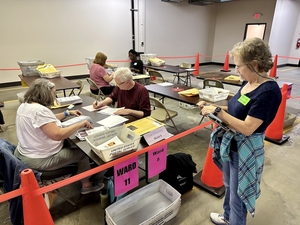
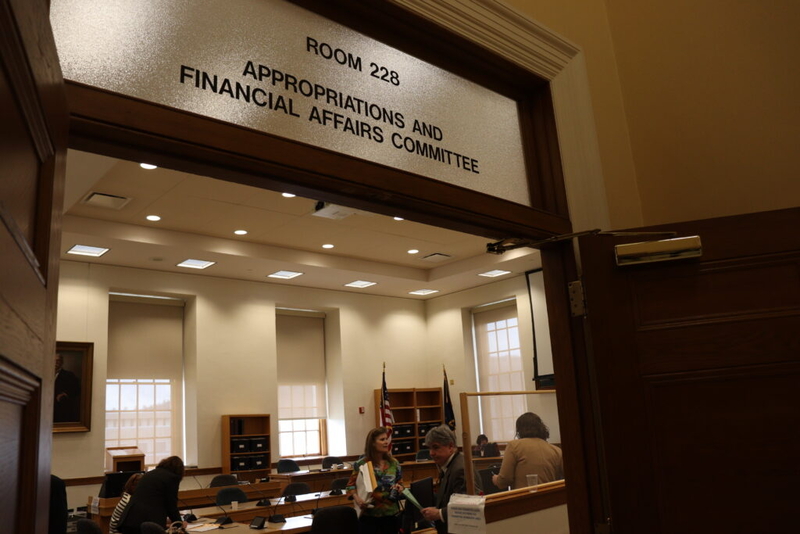
Legislative staff prepares for Appropriations and Financial Affairs Committee work in Augusta. (By Emma Davis/ Maine Morning Star)
Over the weekend, the budget committee made the majority of its decisions on which legislation to fund this year outside of the budget, including a first-in-the-nation ban on large data centers.
“We’ve pretty much done the bulk of the work that we have to do,” said committee co-chair Sen. Peggy Rotundo (D-Androscoggin) as the committee wrapped its work around 12:20 a.m. Sunday.
The Legislature’s Appropriations and Financial Affairs Committee voted about 60 of the 253 bills off of what’s called the “appropriations table,” where bills not otherwise funded in the budget — which the governor signed Friday — are put to vie for remaining dollars.
Many of those votes were partisan, including the decision to fund the data center moratorium.
Republican budget lead Rep. Jack Ducharme of Madison made his opposition to the underlying policy clear.
“We are a state that is looking for opportunities where we can have investment,” Ducharme said, “and by doing this, we are putting up a closed sign on the big green bridge in Kittery. I fear that this is just one more business that will find another place to locate.”
Some decisions had the support of both parties, including a measure to allow the judicial system to borrow for renovations and construction for court facilities in four counties — Cumberland, Franklin, Penobscot and Sagadahoc.
List of bills that still need funding grows as end of session nears
Lawmakers amended most of the bills they moved off the table, often reducing or stripping them of appropriations entirely, which means that in the coming days they’ll need the approval of both the Maine House of Representatives and Senate.
While lawmakers didn’t change the judicial system measure, they did change the funding source for the data center ban.
Along with banning centers larger than 20 megawatts until November 2027, the bill would convene a council to provide input and coordinate state planning for data center opportunities. The measure originally called for $95,000 from the general fund but the committee changed that to an account maintained by the Maine Public Utilities Commission instead.
In other cases, the committee reduced how much the state would contribute to various proposals, such as a grant program to help houses of worship and other nonprofits improve security in an attempt to address heightened attacks and uncertain federal funding. The legislation initially sought $1.5 million but the committee reduced that to $200,000.
A bill to increase county jail funding initially sought ongoing funding, but the budget committee amended it to a one-time appropriation of $4 million, which will be paid for using interest from the Budget Stabilization Fund, otherwise called the rainy day fund.
Lawmakers also amended legislation that initially sought to increase retirement benefits for former state employees, teachers and their beneficiaries by raising the cap on cost-of-living adjustments.
But the version the committee passed would only create a fund but not put money into it — aside from the needed $500 to start the fund.
“Why not just adjust the cap?” Rep. Ken Fredette (R-Newport) asked.
Committee co-chair Rep. Drew Gattine (D-Westbrook) responded, “Because the one-time cost of doing that is just very expensive right now,” explaining that it’ll cost over $1 billion. “This is something I think can only be addressed by building up enough money.”
Another bill the committee amended was a proposal to ensure the already required curricula of Wabanaki studies is taught in Maine schools.
The funding that bill initially sought to continue employing a Wabanaki Studies specialist was included in the supplemental budget, so the version the committee passed reduces the cost and only includes the policy component, requiring the state board of education to adopt rules that require a Wabanaki studies component for teacher certification.
Bills that the committee voted off the table without any changes will only head back to the Senate, where they’re awaiting final enactment before they can reach the governor’s desk.
That includes a bill to expand death benefits to the families of Department of Transportation workers after two employees were killed on the job in January, and a proposal to provide Indigenous people free access to state parks, which lawmakers placed on the table last year.
Even with these decisions over the weekend, most of the bills that have been placed on the table still sit there.
For example, the committee has yet to touch a bill that would prevent immigration agents from entering public schools, state libraries and hospitals without a judicial warrant.
Augusta, ME