New court venue law draws constitutional challenge from youth climate lawsuit
Mar 18, 2026 | 8:07 pm ET
Description
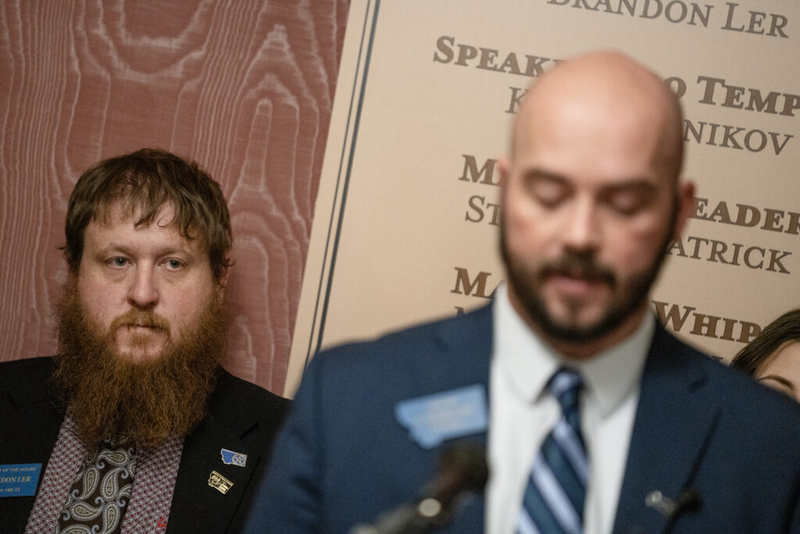
Speaker of the House Brandon Ler, R-Savage, listens to Sen. Wylie Galt, R-Martinsdale, during a press conference on MEPA legislation, Wednesday, Feb. 12, 2025.
In a first for a new court venue law, Speaker of the Montana House Brandon Ler is trying to move a controversial youth climate lawsuit from district court in Helena to a court in Sidney — seven and a half hours away, by interstate.
When the Montana Supreme Court declined to take up a court case by a group of young Montanans challenging three climate-related laws passed in 2025, the plaintiffs and their attorneys refiled the suit in the state’s First Judicial District Court.
Held v. Montana II was filed in Broadwater County, which along with Lewis and Clark County comprises the First Judicial District, where the initial Held v. Montana trial took place. The new suit challenges three laws passed last year — House Bills 285 and 291, as well as Senate Bill 221.
But Ler, a Republican from Savage, is using a new 2025 law to try and move the lawsuit to the Seventh Judicial District, which covers five counties on the eastern side of the state, where his legislative district is.
In a motion filed on March 3, Ler, who filed as an intervenor in the lawsuit last month, filed the joint motion with the State of Montana requesting to transfer venue to Richland County.
“Intervening bill sponsors have a statutory right to transfer venue in cases challenging the constitutionality of statutes or session laws,” the brief supporting the motion states. “Montana law recognizes that venue is not a substantive right of the plaintiff, but a personal privilege belonging to the defendant.”
Nate Bellinger, a lawyer for the plaintiffs, said the change of venue motion is a way to muddle up the process before a case can actually be heard on its merits.
“It’s really frustrating that we have to spend time just trying to get before a judge, and the Legislature has put up all these hurdles to really try to restrict the plaintiffs’ access to courts,” he told the Daily Montanan.
Lawyers for the youth plaintiffs filed their opposition to the change of venue on Tuesday, and simultaneously notified Attorney General Austin Knudsen they are challenging the constitutionality of the new venue law, Senate Bill 97.
“This effort to handpick the court where constitutional cases are adjudicated is irreconcilable with what the convenience of the litigants, the ends of justice, Montana’s venue statutes, and Montana’s Constitution require,” the plaintiffs’ opposition states. “… Plaintiffs ask this Court to declare those provisions of SB 97 unconstitutional, if necessary to avoid a transfer.”
Held v. Montana II is a followup lawsuit to Held v. Montana, a landmark climate change lawsuit a Lewis and Clark District Court in 2023 ruled established that Montanans’ constitutional right to a “clean and healthful environment,” includes a stable climate system.
The Montana Supreme Court upheld the district court verdict in late 2024, agreeing some prior environmental laws, including one limiting analysis of greenhouse gas emissions by the state, were unconstitutional. As a direct result of the Supreme Court ruling, the Legislature passed the three laws challenged in the latest suit, seeking to implement new changes to the state’s environmental laws.
In response to the Supreme Court’s decision, incoming Speaker Ler and incoming Senate President Matt Regier, R-Kalispell, issued a joint statement panning the ruling and telling the court to “buckle up” for the 2025 legislative session.
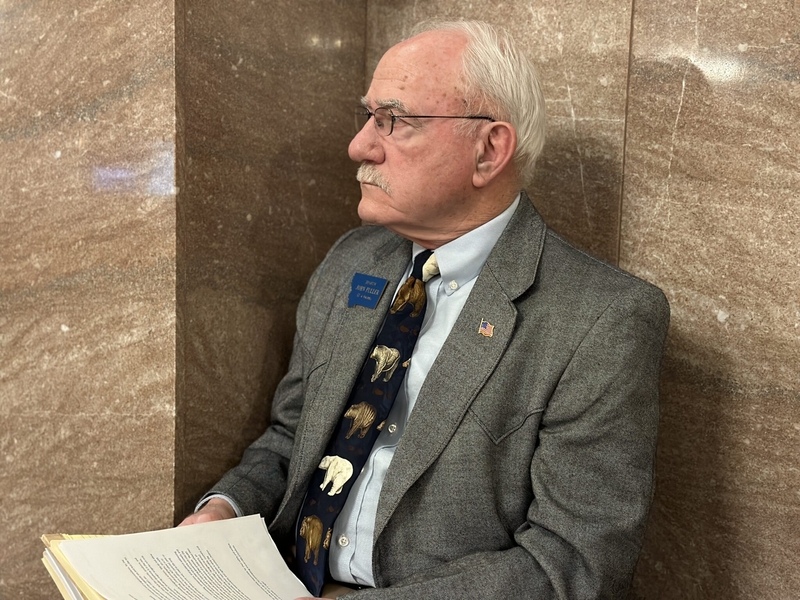
Despite the stated goal of “judicial reform” by the GOP-dominated legislature, few of the package of bills introduced made it into law, but Senate Bill 97, introduced by Sen. John Fuller, a Kalispell Republican, did.
In a January 2025 hearing before the Senate Judiciary Committee, Fuller introduced his bill as a way to prevent plaintiffs from judge shopping — filing a lawsuit in a court that might be most favorable to the cause — by tying the court to the bill’s sponsor.
Fuller said if a bill survives the extensive process of becoming a law — committee hearings, floor debates, legal reviews, and governor approval — “to challenge such a law, then, I think it would be prudent to change the court of original jurisdiction.”
No one spoke in favor of Fuller’s bill in the committee hearing, but multiple groups opposed it, including Western Native Voice, the Blackfoot and Rocky Boy’s Tribes, Montana Environmental Information Center, ACLU of Montana and the Montana Trial Lawyers, as well as one individual.
John Marshall, an individual from Hot Springs, called the bill a “slap in the face to every Montanan.”
“For example, if I thought there was a possibility a law was unconstitutional and I wanted to challenge it, but the sponsor was all the way over in Wibaux County, I’d have to go all the way across the state to spend my money and my time to do something that I should be able to do in my own legislative district,” Marshall told the committee.
Patrick Yawakie, representing the two Montana tribes, and Keaton Sunchild, with Western Native Voice, both said the bill had outsized impact on individuals living on reservations who often have hurdles to traveling long distances such as bad road conditions in winter or access to reliable transportation.
In a hypothetical example, Derf Johnson with MEIC presented a case where the Legislature might make tweaks to subdivision laws and family transfer exemptions. If a group of landowners in Helena are concerned with a family transfer and filed a suit against the changed law, it would make the most sense to make that challenge in the county where the issue occurs.
“But if this particular legislation were to happen and you wanted to bring that claim, you may end up in Ekalaka rather than in Helena, for example, where it would be more appropriate,” Johnson said.
Fuller defended his bill saying it would be an “improvement in the justice system,” in the state of Montana.
Ultimately, Fuller’s bill passed through both chambers on party lines with Republican majorities in both chambers, and was signed by the governor last May.
In a brief phone call on Wednesday, Fuller told the Daily Montanan that he is “not surprised” his law has been challenged.
“They’re obviously trying to judge shop,” Fuller said. “But the law is the law, so the case must first be tried in the judicial circuit where I reside.”
Questions to the Attorney General’s Office, which defends the state in cases alleging unconstitutional laws, about the process of changing the venue of the complaint did not get a response by press time.
In the motion opposing the change of venue, attorneys for the youth plaintiffs with McGarvey Law in Kalispell and Our Children’s Trust in Oregon argue the suit was filed in the correct venue, but could be moved to Lewis and Clark County, where the defendants reside.
Of the three bills challenged, House Bill 285 was sponsored by Ler, House Bill 291 was sponsored by Rep. Greg Oblander, R-Billings, and Senate Bill 221 was sponsored by Sen. Wylie Galt, R-Martinsdale.
Galt’s senate district covers part of Broadwater County.
“Broadwater County and Lewis and Clark County are centrally located making them most accessible to youth Plaintiffs, who have an interest in, and constitutional right of access to, open courts,” the brief states. “Plaintiffs chose a forum that complied with all applicable venue statutes (supra I) and was the most convenient and efficient location for all parties.”
Meanwhile, the brief states Ler and the State did not make an argument they would experience inconvenience or hardship due to the case being argued in Broadwater and Lewis and Clark court.
“Indeed, all Defendants are located in Helena, as are all defense counsel, including counsel for Speaker Ler,” the brief states.
The brief also argues Lewis and Clark County is historically the “proper venue for actions against the State,” with the court having expertise in cases where the State and state agencies are defendants, and in questions of constitutionality.
The lawyers for the plaintiffs argue the court could also declare SB 97 unconstitutional if necessary, arguing it violates the state’s separation of powers doctrine, due process rights of the plaintiffs, and the right and access to open courts.
If the only alternative is to transfer the case to Richland County, the brief requests that the lawsuit be split up and only the challenge to HB 285 be transferred.
In an emailed statement to the Daily Montanan, Speaker Ler said: “The legislature has clear authority to set venue laws, and we are confident the law is constitutional.”
In addition to opposing the change of venue, the plaintiffs filed a motion opposing a partial motion to dismiss by the state of Montana.
In the original complaint, the youth plaintiffs requested three remedies including a court order requiring the Department of Environmental Quality “satisfy its clear legal duty to develop a comprehensive plan to prevent, abate and control Montana’s greenhouse gas pollution,” which the state is seeking to dismiss.
The plaintiffs argue the court order is a specific form of relief and the state’s motion to dismiss “does not defend the constitutionality” of the challenged law.
Helena, MT