Maine’s property tax task force releases initial recommendations to reduce burden
Feb 19, 2026 | 10:47 am ET
Description
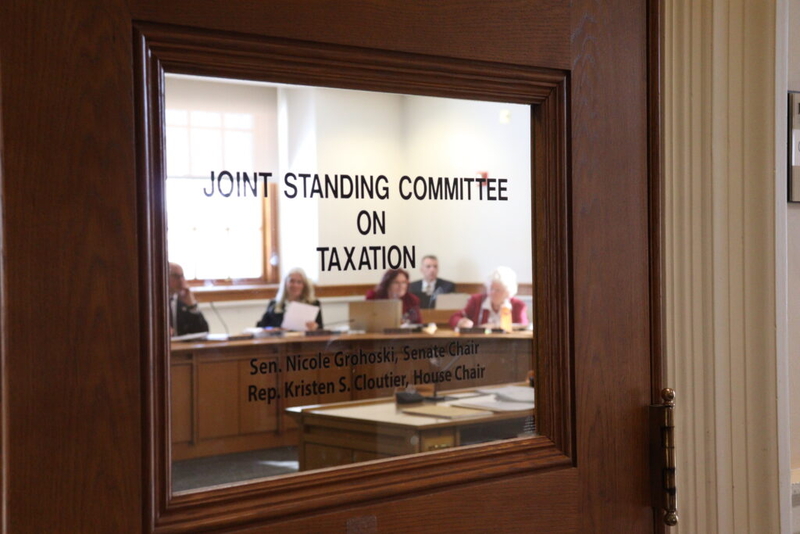
The Legislature's Taxation Committee hears public feedback on bill proposals in Augusta. (Photo by Emma Davis/ Maine Morning Star)
While there is bipartisan agreement that Maine’s property tax burden is too high, legislators from both parties last year decided to hold off on substantial reform until a task force they convened could look holistically into the issue and advise on the best solutions. That task force released its interim report Wednesday, including ten initial recommendations ranging from which existing tax credits lawmakers should focus on when considering changes to encouraging statewide partnerships for efficiency in administering local services.
While the group’s work will continue throughout this year, its initial guidance for the Legislature’s Taxation Committee will be considered during the current session, which is slated to end April 15.
The task force, which is composed of legislators, municipal and county leaders and business representatives, began its work in September and has held six meetings so far. Its final report is due by Dec. 15.
The state has made several changes to try to address the property tax burden over the years, including taking on that responsibility in the budget by meeting its requirement to fund 55% of public school costs, which have been rising.
The state has also added new assistance programs, though some not for long.
In 2024, lawmakers expanded eligibility to the Property Tax Fairness Credit — which provides refunds for property taxes or rent paid. The cost of this credit to the state has gone from $15 million in 2018 to a projected $100 million in this fiscal year, according to Allen.
That expansion, as well as the creation of a Property Tax Deferral Program, in 2024 was meant to soften the blow from the short-lived Property Tax Stabilization Program that allowed older Mainers to freeze their property taxes. The Legislature repealed that program after just one year in effect, following skyrocketing cost projections.
Lawmakers considered a host of changes last year, including several Republican proposals to reinstate the stabilization program, which were ultimately rejected. Others were not resolved and will again be taken up this year, including expanding the Property Tax Fairness Credit, expanding property tax assistance for veterans and their survivors and increasing the state’s tax exemption for homeowners.
Interim task force recommendations for the Taxation Committee:
1.Submit legislation to explicitly authorize the task force to hold up to six additional meetings in 2026.
2. Identify burdens and streamline the process for municipalities to allow taxpayers to make monthly real estate property tax payments directly to the municipality. Task force members believe more frequent payment options could be more manageable, after hearing presentations such as one from the Lincoln Institute of Land Policy — a Massachusetts think tank focused on improving quality of life through taxation and other means — which showed budgeting challenges when large bills are due in a lump sum. However, the task force recommends getting feedback from municipal representatives first as administrative challenges may arise with changing payment schedules.
3. Consider methods to increase information for taxpayers about property tax relief programs, such as informational inserts in real estate property tax bills, as well as information to renters and other eligible individuals who may not receive a property tax bill. While the state and municipalities already offer several property tax relief programs, “relief programs, however, are only effective if taxpayers use them,” the report reads. The task force found many people unaware of programs’ existence.
4. Any immediate changes to existing property tax relief programs should focus on the Property Tax Fairness Credit as the most targeted tool to provide such relief, with specific consideration for allowing a taxpayer’s income tax credit to offset their property tax bill. “Because the credit provides a refundable income tax credit to taxpayers, including renters, subject to income and other limitations, the members believe that it is the most targeted tool to provide relief to taxpayers who are struggling,” the report reads.
5. Any immediate changes to the Homestead Property Tax Exemption should increase the current exemption to account for inflation. The task force agreed this exemption is a good policy tool for providing broad relief. Currently, the Homestead Property Tax Exemption provides a reduction for property tax purposes of up to $25,000 from the value of a home for those eligible. Unlike the Property Tax Fairness Credit, it’s only available to permanent resident homeowners, not renters, and it doesn’t have income restrictions.
6. Submit legislation to create working groups to review property tax exemptions and current use programs to evaluate whether they meet their intended purposes and are efficient to administer at the local level. Municipal representatives shared concerns about the costs and administrative challenges of programs and provided suggestions for refining them, but the task force doesn’t feel it could address all of those items itself given limited time and availability.
7. Beyond the Taxation Committee, the task force recommends the Legislature enact a law that encourages continued inter-local, regional and state-wide partnerships to improve efficiency in administering local services and reduce municipal and county costs. According to the Lincoln Institute, most other states’ property tax assessments are conducted at the county level, whereas municipal assessments are primarily a New England phenomenon. As an example, the task force said municipalities could consider sharing equipment to reduce acquisition and maintenance expenses and sharing staff could help address hiring and retention challenges.
8. Consider the recent reports of the Maine Education Policy Research Institute and County Corrections Professional Standards Council when making policy decisions, because the issues considered in these reports influence real estate property taxes. Property tax relief cannot be meaningfully discussed without also considering factors that increase municipal budgetary needs and how to reallocate municipal budget costs among taxpayers, task force members agreed.
9. If the committee submits legislation to increase the homestead exemption, it should provide 100% municipal reimbursement for the difference between the current homestead exemption and the increased amount. Current law requires the state to reimburse a municipality for 76% of the taxes lost from the exemption, with the remaining loss accounted for in that municipality’s budget.
10. Beyond the Taxation Committee, the task force recommends the Legislature enact legislation to increase funding for county jails and to encourage regionalization of services. Jails are holding more people for longer periods of time, which means staffing and medical care costs are increasing. Although increased funding from the state doesn’t address cost drivers directly, a majority of the task force believes immediate steps to relieve the cost burden will help in the long-term, in addition to other policy changes that the group plans to discuss as it continues to meet.
Augusta, ME