Sully County, home to SD’s largest data center, would welcome more with ‘open arms,’ official says
Jan 30, 2026 | 2:08 pm ET
Description
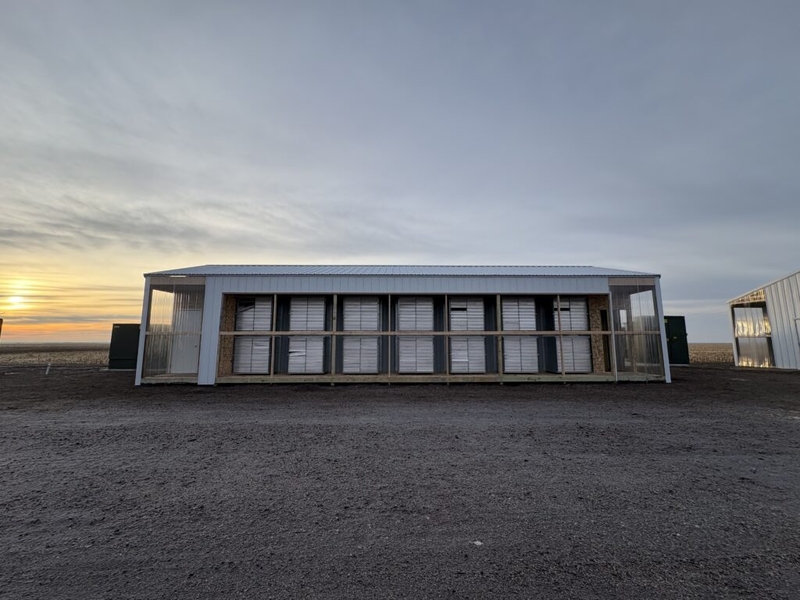
A portion of a data center owned by Big Watt Digital north of Pierre, pictured on Dec. 23, 2025. (Photo by Meghan O'Brien/South Dakota Searchlight)
Citizens crowded county commission meetings and city council rooms in recent months, expressing concerns about potential data centers near Sioux Falls and the small South Dakota town of Toronto.
Three years ago, residents of Sully County did the same when a 30 megawatt data center was proposed near the hydroelectric power generated by the Oahe Dam on the Missouri River, Sully County Planning and Zoning Board Chair Austin Gross told state lawmakers last winter.
“The meetings we had with the data center on the agenda were some of the highest attended meetings publicly that we’ve had since I’ve been on the board,” Gross said.

A South Dakota Searchlight series examining the impact, barriers and concerns regarding efforts to build data centers in the state. Read more >
The Sully County facility is now the largest data center in South Dakota. It’s expected to expand to 300 megawatts in the coming years.
Running near continuously, that would be the same amount of energy as nearly 209,000 South Dakota residential customers, based on an estimate from South Dakota Public Utilities Commission Utility Analyst Darren Kearney. For comparison, Sioux Falls, the state’s largest city, has 92,477 housing units, according to the city’s Planning and Zoning Department.
Rooms or buildings full of computer servers have been storing cellphone pictures, emails and social media accounts for years. What’s new are 100- to 1,000-acre warehouses full of servers for cryptocurrency and artificial intelligence. Those massive data centers with 30- to 1,000-megawatt loads consume the equivalent amount of energy as 29,000 to 800,000 South Dakota residential customers.
South Dakota has none of the vastly larger data centers that have proliferated elsewhere. Some of South Dakota’s elected officials question whether the state should incentivize the industry as many other states have, due in part to the massive energy demands of large data centers and the potential impacts on the availability and cost of electricity for other customers.
The Sully County facility is for cryptocurrency mining, which uses continuously running computers and other digital infrastructure to record transactions and solve complex numerical problems that “mine” new digital currency. The facility is located about 23 miles north of Pierre and is owned by Big Watt Digital, which is based in Pierre. Big Watt Digital employs less than 20 people. Gross said the company’s planned expansion in Sully County could lead to 100 full-time jobs and another 300 construction jobs.
That may be small to other communities, Gross said, but growth is the biggest challenge for the state’s fifth least-populated county.
“The opportunity to combat these issues are ever-fleeting,” Gross said. “You almost never find something like this to help a small town and community like ours.”
The new jobs also contribute to “Main Street spending,” County Commissioner Caleb Shepherd told lawmakers last year.
“Any additional data facilities we can attract to South Dakota will be met with open arms in Sully County,” Shepherd said.
Substantial wind and hydroelectric power are accessible at the site, in addition to plenty of rural land for expansions. The new load from the data center, Oahe Electric CEO Jordan Lamb told South Dakota Searchlight, helps retire old energy generation assets more quickly than if the co-op only served homes, small businesses and agriculture operations.
That ultimately benefits ratepayers because the co-op can pay off its existing equipment more quickly, Lamb added. For example, Big Watt paid to have a substation adjacent to the operation rebuilt.
The data center has become a major revenue source for the local school district, providing around $850,000 a year in gross receipts taxes, Lamb added.
The new revenue effectively turns the data center into a source of property tax relief, said Agar-Blunt-Onida Superintendent Jeremy Chicoine.

The district dropped its capital outlay request, which is a property tax fund for equipment and building upgrades, by $600,000 last year. That’s nearly 13% of total education property taxes paid in the district in fiscal year 2024.
The school district plans to reduce its general fund mill levy later this year if gross receipts revenue from Oahe Electric and Big Watt Digital continue to bring in such large revenues.
As the geographically largest school district east of the Missouri River, Agar-Blunt-Onida qualifies for sparsity funding from the state, with less than 250 students enrolled in the district. The school district, Chicoine said, would sacrifice roughly $85,000 in sparsity funding – since sparse school districts have to set their general fund mill levy at their maximum rate.
The reduction would provide continued property tax relief for residents while still meeting needs of the students, Chicoine said.
“We’re a fat school district for our enrollment size,” he added.
Agar-Blunt-Onida offers several programs normally not available at such small, rural schools because of the sizable gross receipts tax revenue, including career and technical education programs and music, physical education and art for all grade levels.
He added that the school district will start a public school preschool program with the extra funding next school year. The decision is in response to a local private preschool closing.
The school district is one of six in South Dakota that doesn’t rely on state funding, since its budget is covered entirely by local tax collections — property taxes, gross receipts and other taxes.
“We’re not out there to fleece tax dollars,” Chicoine said. “We’re trying to invest in our kids and community in a responsible fashion that doesn’t rake the taxpayer over the coals.”

Pierre, SD