Plans underway for a second new gas-fired power plant in SC
Jan 08, 2026 | 7:00 am ET
Description
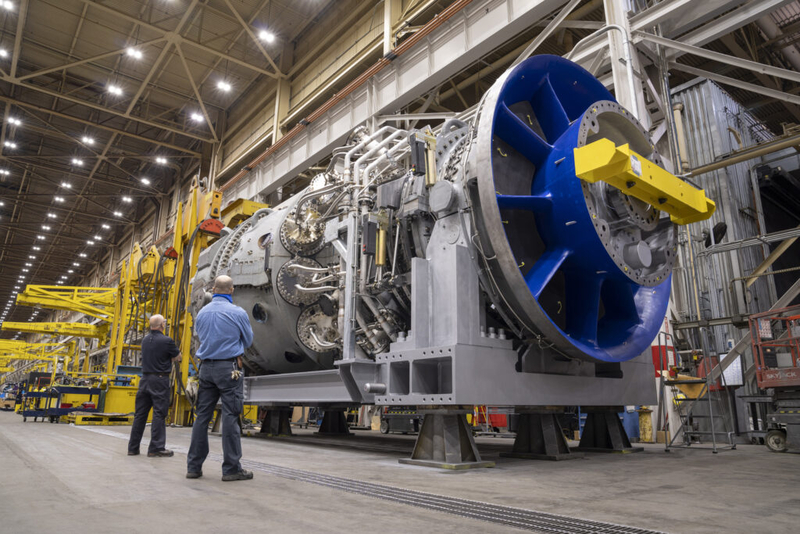
GE Vernova, a General Electric spinoff, assembles gas-fired turbines in South Carolina’s Upstate. The company has a deal with Duke Energy for 11 new turbines, including those that will be used in a planned new gas plant near Anderson, South Carolina. (Photo courtesy of GE Vernova)
While a natural gas power plant proposed for the site of a former coal plant in South Carolina’s Lowcountry has dominated recent headlines, there’s another gas-fired project in the works in the Palmetto State.
Duke Energy is in the process of seeking regulatory approval for a new, $3.2 billion plant in the Upstate.
“We’re at a critical juncture in preparing for South Carolina’s reliable energy future,” Duke’s regulatory chief, Heather Shirley Smith, wrote in an application making the company’s case to state utility regulators.
“Swiftly expanding our generation capacity is essential to keep pace with the state’s booming development and economic success,” Smith added.
The company is scheduled to go before the state Public Service Commission on Feb. 25 as it makes its pitch for the 1,400-megawatt plant that will employ 35 full-time workers just south of Anderson.
A final decision is expected near the end of April.
If the project receives all necessary approvals — which includes multiple permits from Anderson County, the U.S. Army Corps of Engineers, the state environmental agency, the U.S. Fish and Wildlife Service, and the State Historic Preservation Office, in addition to the Public Service Commission — construction could begin in mid-2027 with operations targeted for as early as January 2031.
A different plant
There are several differences between Duke’s proposal and the joint project on the banks of the Edisto River near Canadys that’s under pursuit by Dominion Energy and state-owned utility Santee Cooper.
For starters, it’s about 800 megawatts smaller than the joint build and is projected to cost nearly $2 billion less.
Dominion and Santee Cooper faced criticism after announcing the price tag for the Canady’s project had doubled — to $5 billion — from early estimates.
One of the major drivers behind the jump is increased demand for the gas-fired turbines that produce the power. As utilities worldwide race to build these plants, costs for parts have skyrocketed.
How a Greenville turbine factory earned a White House shoutout
“We are not the only utility building generation — states all around us are also experiencing growth and are meeting it by adding new natural gas generation capacity to the mix,” Smith wrote.
In the U.S., between 2024 and 2028, companies are expected to build 65 new natural gas generators, Duke executives wrote in their testimony. Surrounding states, including Georgia, Virginia, Florida, North Carolina and Tennessee, all have projects pending.
But Duke has already locked in a deal with GE Vernova in April to buy 11 turbines from the company’s Greenville factory. That’s on top of eight other turbines the utility said it had recently acquired.
The Duke project also won’t require construction of a new interstate pipeline to carry the gas needed to power the plant. The Transcontinental Gas Pipeline already runs through the Upstate less than a mile from the 193-acre power plant site.
Santee Cooper and Dominion’s proposed plant is contingent on approval of a $431 million dollar pipeline under development by Kinder Morgan to bring gas up from Georgia. Some environmental groups have raised concern about that pipeline’s proximity to the ACE Basin, a 350,000-acre undeveloped estuary named for the Ashepoo, Combahee, and Edisto rivers that feed it.
About the Duke site
Pipeline could impact 185 SC landowners on route to proposed new gas power plant
Duke’s plant will only take up about a quarter of the total land at the site. The nearly 4 acres of wetlands and 7,400 feet of streams there won’t be disturbed.
There are also existing power lines, though they’ll likely have to be upgraded to handle a heftier electric load.
Duke had considered building at its existing W.S. Lee power plant site, also in Anderson County, rather than using previously undeveloped pastureland. However, that would have required 5 miles of large new transmission lines.
And the plant will be largely air-cooled. Rather than the 9.5 million gallons of water per day needed to cool the power-making equipment in a traditional gas-fired plant, this one will use a little more than half a million per day.
While Duke will be the main owner of the plant, five of South Carolina’s Upstate electric cooperatives plan to take a 7% ownership in the facility, buying about 100 megawatts of the power it produces. Cooperatives in North Carolina are striking a similar deal.
In exchange for the investment, Duke plans to ask Anderson County officials for a break on its property tax bill. How much the incentive package will reduce taxes is unknown. But the company, in its regulatory filing, wrote it expects to pay $16.7 million on average in annual property taxes for the first 10 years of operation.
Duke, according to its website, will hold an open house from 4 p.m. to 6:30 p.m. on Jan. 26 at the Anderson Civic Center for residents seeking more information about the project.
A week later, on Feb. 2, the Public Service Commission will hold a public hearing at the same location. That event starts at 6 p.m.
Editor’s note: The date when Duke Energy will appear before state regulators to publicly make its case has been corrected to Feb. 25. A meeting scheduled for later this month is a procedural gathering between lawyers.

Columbia