How police discretion has contributed to immigration arrests, and how that’ll change
Dec 18, 2025 | 4:47 am ET
Description
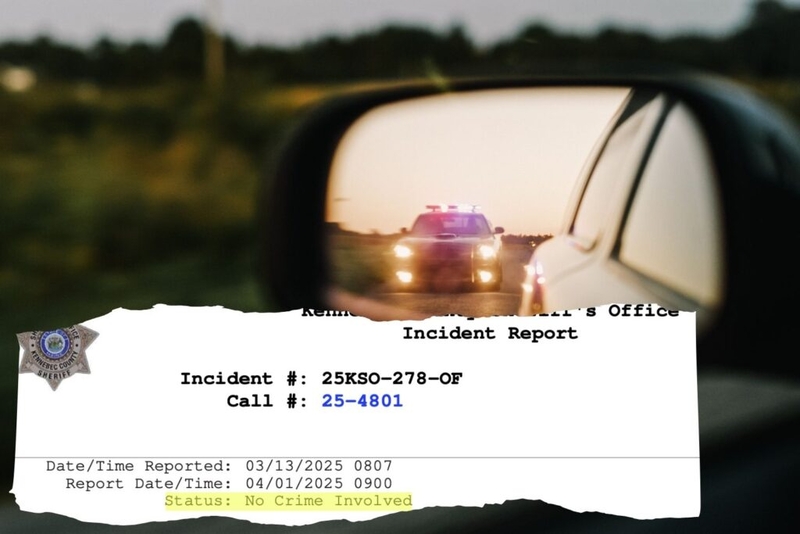
Public records reviewed by Maine Morning Star show routine traffic stops have resulted in immigration arrests across Maine. (Photo by gorodenkoff/ Getty Images; Text via Kennebec County Sheriff's Office)
Speeding. An overdue inspection. A crack on a windshield. Police cited these reasons, among others, for traffic stops in Maine that ultimately led to drivers, passengers and people who later arrived at the scene being detained for alleged immigration violations.
These are the types of instances that a forthcoming law aims to prevent.
Almost a year into President Donald Trump’s second term, it is clear that Maine is part of the apparatus holding up the president’s mass deportation agenda, with jails housing detainees and federal authorities reporting record arrest numbers, citing collaboration with local and state police as a key factor.
But unlike many other states, in Maine that support does not come from formal partnerships. Decisions to loop in federal authorities during routine work have long been left up to officer discretion.
The stakes of those decisions have changed as federal immigration authorities under Trump have taken increasingly aggressive tactics and disregarded due process while trying to meet arrest quotas, mostly detaining people on civil offenses after the administration said it would focus on deporting violent criminals.
Explaining that she could not ignore how Trump has “weaponized” federal agencies, Gov. Janet Mills earlier this week announced her intention to allow hotly debated legislation to become law. Though it won’t take effect until later in 2026, the new law will set specific restrictions to ensure Maine officers and agencies are enforcing state law, not federal immigration law.
Local police are not required to and generally do not have the authority to enforce immigration laws. The Trump administration revived a program called 287(g), which deputizes local police officers to detain immigrants. Maine doesn’t have any such agreements after the Wells Police Department, the only local agency that had entered into such a contract, canceled its agreement this fall following public opposition.
Police departments, sheriff’s offices and Maine State Police currently do not have written policies or procedures for when to loop in federal immigration authorities, though a few law enforcement leaders sent out letters with guidance to their teams since Trump’s reelection, agencies confirmed with Maine Morning Star.
The new law bans state and local law enforcement from investigating, detaining or searching people solely for immigration purposes. But it also has exceptions, such as allowing local authorities to share information about suspected criminal activity and participate in federal task forces as long as the sole purpose is not immigration enforcement.
Law enforcement leaders and Republican lawmakers in Maine argue the new restrictions will create obstacles for upholding public safety and could jeopardize federal funding due to concerns about retaliation from the president. Civil rights groups and Democrats argue the rules are necessary to ensure rights aren’t violated, though they caution the law is not a total remedy.
The bill creates obligations, but it doesn’t specify consequences for failing to abide by them, leaving enforcement up to those wrongly detained seeking justice in court, said Michael Kebede, policy director at the American Civil Liberties of Maine, who helped write the bill. Given how quickly people are often moved around in detention, including across states, Kebede said that will logistically be difficult.
“Ultimately, as with any law that regulates public officials, there’s going to be a lot of training necessary and a lot of reliance on oaths,” Kebede said.
How routine police work becomes a federal immigration matter
When Kennebec County Detective John Bourque was on patrol in Litchfield on March 13, he saw a van pass him on Richmond Road that had an expired inspection sticker and a crack across the windshield, so he pulled the van over and requested the driver’s information, according to the police report.
The report notes that, while the driver gathered his information, Bourque also asked for the passenger’s identification. Bourque said he noticed someone in the van’s rear cargo area and found more people after inspecting the back of the truck. The detective asked for the identification of all of those passengers, who had photos of their passports but not physical documents. The police report notes that the incident involved juveniles.
“I was assured by the driver all in the van were workers and not in the country illegally,” Bourque wrote in the report. But the detective contacted U.S. Border Patrol, which “advised these men were likely not legally in the United States” and said agents would come to the location to assist. Ultimately, Border Patrol took all of the people in the van into custody.
There was no crime involved, according to the report, which labeled it an “assist other agency” event.
Kennebec County Chief Deputy Chris Read described the actions taken as standard procedure, which is also how he classified two other incidents this year where sheriff’s office personnel called in immigration authorities to a traffic stop.
“If we come across somebody like that, that we can’t verify who they are, where they’re from, and sometimes it’s a language barrier that we can’t understand, we ask for help,” Read said of contacting federal authorities.
Local law enforcement will be banned from using federal immigration officers as interpreters under the forthcoming law, a change the Maine Chiefs of Police Association said was among their members’ concerns in a recent letter to Mills calling for her to veto the bill.
The association’s president, Brunswick Police Chief Scott Stewart, also wrote that the restrictions may confuse officers. “The bill’s complexity alone creates unnecessary risk of missteps and unintended consequences,” Stewart wrote.
Also in Kennebec County a few days after the incident with the van, on March 20 a sheriff’s office deputy pulled over a car for speeding in China and asked both the driver and passenger for identification. According to the police report, they provided Ecuadorian identification documents and said they were going to work. The deputy relayed this information to a federal agent who told him they were “interested” in both people and ultimately took both men, and a third later found in the back of the vehicle, into custody.
While the officer pulled over the car for speeding, there is no charge for speeding in the incident report, which again labels the event as an “assist other agency” with no crime involved.
People are afraid to leave their homes. They are afraid to go to work. They're afraid to be on the roadways. They are afraid to send their children to school.
Up to now, police leaders say contacting immigration agents, or collaborating with any type of federal agency, has been left up to officer discretion.
“Even before Trump won the election and started his nationwide initiatives, we’re following the same practices we’ve always had,” Androscoggin County Sheriff Eric Samson said. “Nothing’s changed.”
The same is true if an immigration agency calls for help, Samson said.
“We’re gonna go and assist them because it’s officer safety, much like any agency available,” he said. “I guess some people might have a problem with that, but that’s just the right thing to do. And, I try to avoid the politics of it. I’ll tell you the truth.”
But Anahita Sotoohi, staff attorney for the American Civil Liberties Union of Maine, said just because it’s the way something has long been done doesn’t mean it is right. “I wouldn’t really consider that a rebuttal,” she said, “so much as an admission, to be honest.”
Sotoohi said traffic stops that result in immigration detentions always run the risk of violating the Fourth Amendment, which protects against unreasonable searches and seizures, given that people are being held on the side of the road for a reason unrelated to the traffic stop.
While many of these cases differ in their specifics, they often begin with minor offenses, which Sotoohi said raises concern about racial profiling. In the March 13 and 20 incidents, the ethnicities of the men detained are all listed as Hispanic in the police reports, with their place of birth listed as unavailable.
In other cases, the people detained arrived at the scene after the traffic stop. In Waldo County in March, an officer stopped a car for speeding and called in Border Patrol, whose agents ended up arresting a passenger in the vehicle as well as a relative of the driver who showed up afterwards to drive the men home.
Sotoohi questioned why traffic stops warrant requesting identification from passengers, while Read said it’s typical practice to try to identify everyone in a car.
Passengers generally have more rights than drivers during traffic stops and only have to identify themselves under certain circumstances, including if they’re suspected of a crime or if the officer wants to write them a ticket for something like not wearing a seatbelt.
That was the case during a traffic stop in Gardiner on Aug. 1. Police officer Michael Caputo was parked when he noticed a Subaru with three men approaching. According to the police report, as the car started to pass him, the man in the back seat “ducked his head down and covered his face with his hand.”
Gov. Mills OKs restrictions on local involvement in immigration enforcement
Caputo pulled out behind the car and started following it. After it entered a 25 mph zone, he took down the car’s speed: 45 mph.
According to Caputo’s account, he pulled the car over and as he spoke with the driver and passenger, he noticed that the rear passenger didn’t have a seat belt on, which is subject to a fine under Maine law. The officer requested the identification of that passenger, Dieusoir Britus, who provided a social security card, a U.S. employment authorization card and a Haitian passport.
Caputo said he contacted U.S. Immigration and Customs Enforcement to check Britus’ status, which authorities told him was revoked. That dispatcher transferred Caputo to Maine Border Patrol, which advised him to detain Britus and transport him to Kennebec County Jail.
When asked why the officer requested identification from the passenger, Chief Todd Pilsbury said, “It’s a pretty simple answer. He was asked for his ID because he didn’t have a seat belt on.”
The police report lists revoked immigration status as the offense in this case. It’s unclear where Britus is now, as his records do not show up in ICE’s detainee lookup system. He was not charged for the seatbelt infraction. When asked about this, Pilsbury said it was his understanding that the officer “didn’t want to lump everything on.”
Frequency
Federal agencies have cited the support of state and local law enforcement as key to their increased arrests.
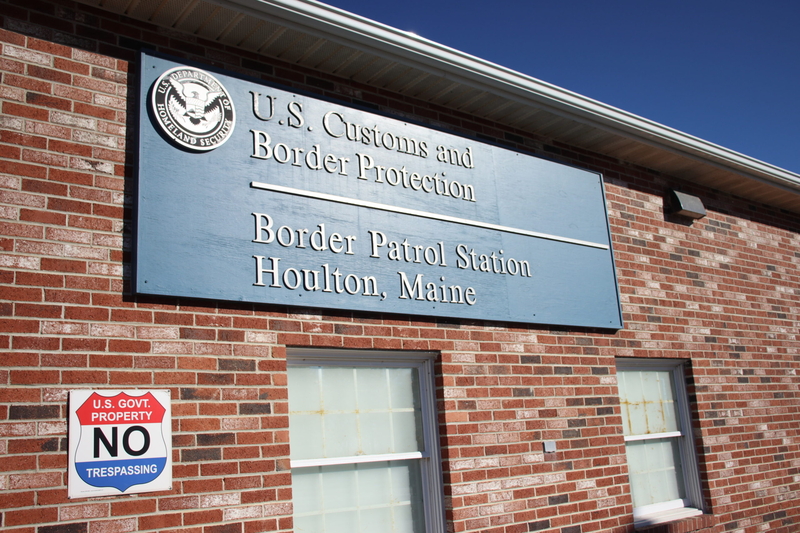
U.S. Customs and Border Protection did so last month when announcing their agents have apprehended 725 people in the state as of Oct. 1, exceeding the prior record of 685 apprehensions set in 2001.
ICE has arrested 230 people in the state through mid-October, which amounts to a 73% increase compared to the year prior, according to figures released from the Deportation Data Project earlier this month. Only about 20% were people convicted of a crime.
It remains unclear how frequently traffic stops have led to immigration arrests in Maine. Several agencies said it’s not something that happens often, maybe a few times a year. For example, the one involving the Gardiner officer was the only for that small department since December 2024.
Since March, the Immigrant Legal Advocacy Project, Maine’s only statewide immigration legal services organization, has tracked 22 traffic stops from which more than 50 Maine residents and workers were handed over to immigration officials by state and local law enforcement based on suspected immigration status.
“But I truly believe that is just the tip of the iceberg of what’s happening in our state,” said the organization’s policy director Lisa Parisio. The legal group has received other reports of traffic stops resulting in detentions but could not verify enough information to include those in their tracking, because of challenges keeping in touch with people in detention and others fearful of speaking out, she said.
When the Maine Office of the Attorney General proposed rules for law enforcement to collect traffic stop data in 2023, the Immigrant Legal Advocacy Project requested that data include whether law enforcement contacted immigration agents or authorities as an outcome of the stop — a proposal that did not make it into the final rule. Parisio said the organization continues to believe a rule to that effect would help provide a better picture of enforcement.
911 calls also not off limits
Traffic stops are not the only interactions with local agencies that have led to detentions. There have also been instances in Maine where 911 calls about unrelated issues result in immigration arrests.
On June 14, someone called 911 to report a drowning on Papoose Pond in Waterford. Pedro Quizhpi was unresponsive after his canoe capsized. Quizhpi, who was originally from Ecuador, was pronounced dead at 9:20 a.m., with records from the Maine Warden Service characterizing his death as an accident.
But the incident prompted a statewide search involving four local agencies that led to the detention of 14 men, including Quizhpi’s brother.
Sotoohi said this incident is the most egregious she’s aware of in Maine. “This is somewhat unusual,” she said, “but it’s only unusual in its scale.”
In another incident on Oct. 25, Monmouth-Winthrop Police Department received a 911 call from someone who didn’t speak English and could not explain their situation beyond requesting help, but the police report indicates that the caller was likely one of the three people that federal authorities eventually detained after police contacted them.
These examples demonstrate, in Sotoohi’s view, the risks of local involvement in federal work: expending local resources on a federal job and deterring people from calling 911.
The Immigrant Legal Advocacy Project has heard this fear from clients firsthand.
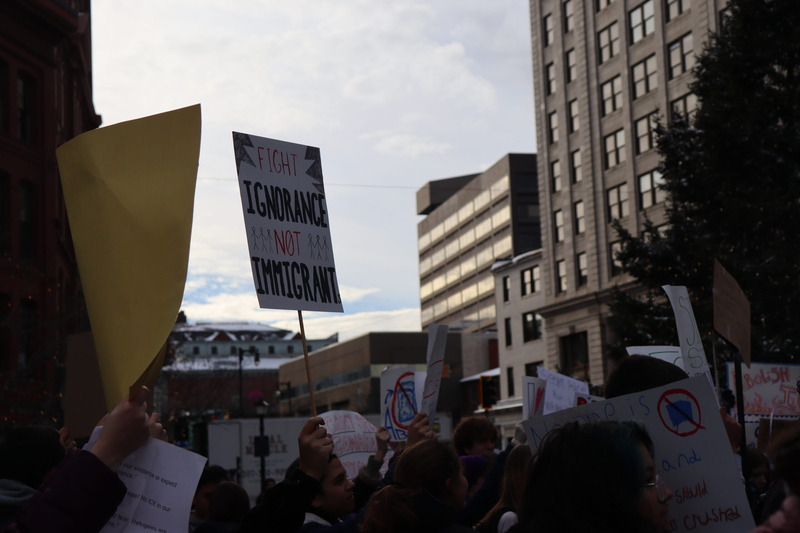
“People are afraid to leave their homes. They are afraid to go to work. They’re afraid to be on the roadways. They are afraid to send their children to school,” Parisio said. “They’re afraid to call the police for help in any situation, whether that’s protection from domestic violence, coming forward about labor exploitation and trafficking, serving as witnesses in criminal cases.”
Lack of policy
Before the governor’s announcement, more than a dozen local agencies said different variations of officer discretion being at the core of all cooperation with federal authorities. There were a few exceptions.
Portland Police Department is banned from inquiring about a person’s immigration status under city code. “We do not cooperate with ICE, nor would we ever call them to a scene,” said the department’s Public Information Officer Brad Nadeau.
Earlier this month, Rockland also prohibited its city employees and departments from assisting or cooperating with federal agencies on immigration enforcement, except when required by state or federal law or court order. This ACLU of Maine also helped draft this ordinance, which has many of the same exceptions as the state legislation.
But, for the most part, it has been as Penobscot County Sheriff Troy Morton put it: “Deputies utilized their knowledge and training when it came to requesting assistance from any agency.”
Shannon Moss, public information officer for the Maine Department of Public Safety, described coordination with law enforcement partners as a routine part of Maine State Police’s duties that varies based on circumstance. That’s why the agency doesn’t maintain written policies for its communications with any federal, state or local agencies, she said.
Some agencies have issued guidance and expectations since Trump’s reelection.
Cumberland County Sheriff Kevin Joyce advised his officers in a February letter to act on state law and then make a referral to ICE if the officer suspects someone to be in the country illegally. Meanwhile, Lincoln County Sheriff Todd Brackett wrote in a letter to his staff in October that if an officer has charged or has probable cause and plans to charge someone with a crime, they can contact any federal agency to assist if they “feel it is appropriate given the circumstances.”
While public records of traffic stops show some departments contact federal authorities when someone’s identity is in question, the Lewiston Police Department doesn’t run routine license checks through federal partners, according to the department’s public information officer Lt. Derrick St. Laurent.
However, similar to Brackett’s guidance, St. Laurent said, “when we encounter someone suspected of a violent offense whose identity is in question, we may request their assistance.”
St. Laurent added, “We owe it to our community to use every resource available to protect innocent people.”
The forthcoming law distinguishes between criminal and civil matters, still allowing police to execute warrants and share information about suspected criminal activity.
Brackett, the Lincoln County sheriff, had also sent a letter to his staff in February relaying information from the National Sheriff’s Association, which noted local authorities may come across more people with immigration arrest warrants during daily work since the Trump administration issued roughly 700,000 of these civil warrants at the start of the president’s second term.
Only departments deputized under the 287(g) program could serve or arrest someone on these warrants alone, the association noted, as they don’t constitute a federal or state crime.
But if someone is arrested on a state or local charge and transported to jail, the association’s memo read, “the normal process of identifying ICE should occur.”
But as recent events show, that “normal process” differs, not only between agencies, but in each scenario.
Augusta, ME