Forecasters set deliberately cautious estimates, state revenues are meeting them
Dec 08, 2025 | 8:00 am ET

Description
(Photo: Getty Images)
Amid economic uncertainty, the panel charged with estimating Nevada state government revenues kept projections modest earlier this year.
It appears their caution was warranted.
On paper, Nevada’s revenue appears to be exceeding its forecast by 6.7%. But that number is artificially inflated by administrative anomalies, state legislative staff told the Economic Forum on Friday.
True performance, after accounting for anomalies that created one-time windfalls, is around 2% above the deliberately cautious forecast.
“We were purposefully being conservative” when finalizing the biennium revenue forecast earlier this year, said forum member Marvin Leavitt, “and it looks like that’s fairly close to what’s actually been happening.”
Expecting the dramatic shift in U.S. economic policy following the election of Donald Trump to a second presidential term — policy that has been rubber-stamped by the Republican-controlled Congress — the Nevada Economic Forum approved a conservative revenue forecast in December 2024. Then, they nudged that forecast down in May 2025 in response to the first few months of the new administration, including the so-called “Liberation Day” tariffs Trump had announced a month earlier.
A bumpy rollout of the state’s tax collection system, combined with a massive cyberattack on the state, led to around $80 million in commerce tax revenue being collected in the first quarter of the current fiscal year when it should have been collected during the previous fiscal year. Another unique accounting matter stemmed from the Legislature shortening the timeframe for businesses to transfer money categorized as unclaimed revenue to the state, accounting for a one-time revenue boost of $120 million.
Excluding those anomalies, sales tax revenue is slightly underperforming and commerce tax revenue is basically flat.
“The forecast right now is holding,” said top state fiscal analyst, Michael Nakamoto. “I think that all things considered, it is doing quite well right now.”
Sales tax is by far the largest generator of state revenue, comprising close to a third of general fund revenue. Trump’s re-election sparked alarms among economists about the impact of tariffs and a global trade war.
Among the state’s other major sources of revenue, the insurance premium tax is performing best — 10.3% above forecast after one quarter of tax collections.
Gaming revenue, the second largest revenue generator for the state, is 8.7% above its forecast after five months of tax collections, but Nakamoto cautioned against interpreting that as anything but “we’re doing okay right now.”
Annual visitor volume to Southern Nevada is down 7.6% as of October, according to the Las Vegas Convention and Visitors Authority. Flights in and out of Harry Reid International Airport were down 8.2% in October 2025 compared to October 2024, and down 5.1% year over year.
Gaming revenue is trending downward in Clark County if you remove baccarat, according to Nakamoto. Baccarat is dominated by a small number of high-end players who spend “a whole lot of money.”
“Sometimes they are lucky, and sometimes they are not,” said Nakamoto. “I think the easy way to explain this is: The houses have gotten very lucky from a (small) number of people, and because baccarat is effectively, statistically, a coin flip, that could very easily swing the other direction.”
Nevada’s live entertainment tax (LET) is currently 1.3% below its forecast, though there is a stark difference in performance when broken down by gaming and non-gaming properties.
LET from events not associated with gaming venues — like The Sphere, T-Mobile Arena, or Allegiant Stadium — are up 44.7% after three months of tax collections. LET from events at venues inside a casino property are down 23.9% after four months of tax collections.
Two other revenue streams categorized as “major” by the forum are both underperforming against their forecasts after one quarter of tax collections. Modified business tax is down 4.3%, and real property transfer tax is down 4.8%.
Non-major revenue sources are down by 14.5% year to date.
Notable among those: Nevada’s transportation connection excise tax, which captures taxis and rideshare services, is down nearly 40% in the first three months of collections.
Similarly, revenue from short-term car rentals started out the fiscal year badly — down 30% after four months.
While not major revenue sources, those revenue streams are often seen as indicators of tourism strength.
The Economic Forum did not make any adjustments to the state forecast on Friday.
The forum is expected to reconvene in June for another check in on Nevada’s economy and state revenues.
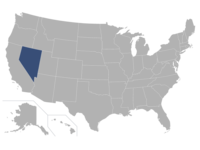
Las Vegas, NV