Undeterred by tight timeline, Wyoming lawmakers charge ahead with election reform
Nov 06, 2025 | 6:27 am ET
Description
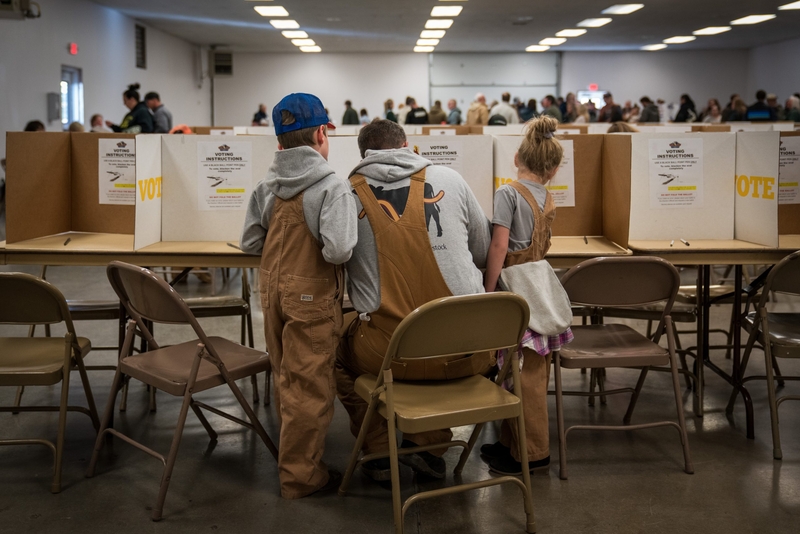
Photo courtesy of WyoFile
Wyoming lawmakers will once again consider a slate of bills to remake the state’s election system when the Legislature convenes in February.
In the legislative off-season, lawmakers in two committees voted to sponsor 14 bills tied to elections. The legislation ranges from restricting how ballots can be returned to county clerks, limiting acceptable voter identification, banning ballot drop boxes, mandating automatic hand recounts in certain instances and upping the campaign filing requirements for independent candidates.
Most of the legislation comes from the Joint Corporations, Elections and Political Subdivisions Committee, which held its last off-season meetings Monday and Tuesday in Cheyenne. Elections were the committee’s top priority ahead of the 2026 session.
While the scale of the legislation pales in comparison to the 45 bills lawmakers filed during the 2025 legislative session earlier this year — only a fraction of which made it into law — local election officials are concerned about having enough time to implement changes ahead of next year’s elections.
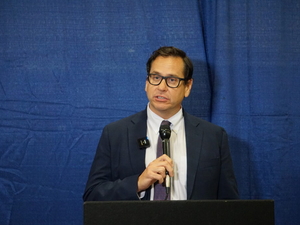
“In a moment of bearing our soul a little bit, there is a lot of anxiety amongst county clerks about the number of bills passed in the last session and have the potential to pass in this session,” Platte County Clerk Malcolm Ervin told the committee. “And some of them have an easier administrative burden, some a significant administrative burden. And so I would ask both sides of this committee really think about that.”
Wyoming’s primary elections aren’t until Aug. 18, but county clerks’ work begins months before that, as the committee was informed in great detail via presentation during a May meeting in Lander.
“Realisitically, when these bills are being heard in the session, we’ll be in the first quarter of the football game,” Ervin said Monday. “And it’s hard to change those rules as the game is underway.”
As such, the Wyoming County Clerks’ Association made several suggestions to the committee, including delaying effective dates and forming a working group to study audit-related reforms. The committee, however, charged forward with the encouragement of Secretary of State Chuck Gray.
“I’m thrilled that these election integrity bills have passed to be sponsored by the Joint Corporations committee in the upcoming 2026 legislative session,” Gray said in a statement. “They include common sense election integrity measures like requiring photo identification for voter ID. I’m going to continue working to pass these bills through the legislative process, just as we worked to pass proof of citizenship for registering to vote and other election integrity bills in the 2025 Session.”
In August, Gray and the Wyoming Freedom Caucus backed the Trump administration’s plans to stop states from using voting machines and mail-in ballots. The exact details of Trump’s plans remain to be seen since no executive order has yet been issued.
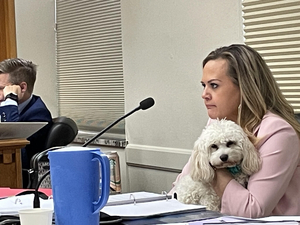
Speaker of the House Chip Neiman, R-Hulett, a member of the Freedom Caucus, reiterated that position in October to a subcommittee charged with investigating the actions of Weston County Clerk Becky Hadlock, who has come under fire for her role in an election miscount last year.
“Paper ballots and a hand count would have stopped all this and would have never even got out of the gate,” Neiman said.
Neiman ran unopposed for reelection to House District 1 last year, and found himself at the center of an election snafu when a suspiciously high number of voters appeared to have left their ballots blank in his race. It was soon discovered that Hadlock had used a combination of the correct ballots and misprinted ones. A hand count ultimately resolved the results.
Since then, however, Hadlock submitted a post-election audit with false information and then failed to appear before the subcommittee at a meeting in Casper, despite being subpoenaed to do so. Gov. Mark Gordon is now tasked for the second time with investigating Hadlock’s actions.
Jill Kaufmann, a Wheatland resident, pointed to the fallout in public testimony she delivered to the Corporations Committee.
“The one question of all these wonderful bills that we worked through, which one would have stopped Weston County? Not one,” Kaufman said. “We need to get really serious about the purity of our vote.”
In response, Jackson Democratic Rep. Mike Yin asked Kaufman, “Do we need to pass any of these bills if they don’t actually fix the problems that we’re actually facing in Wyoming?”
Without getting rid of the state’s electronic election equipment — which Kaufman encouraged the committee to pursue — she said the legislation was necessary to address “some of the periphery of the problems that we have.”
In October, the Management Audit Committee voted to sponsor three bills directly related to elections in response to Weston County.
Two of those bills dealt with the post-election audit process while the third would expand the process for submitting a verified complaint against a county officer to the governor in instances of election code violations.
The committee also voted to sponsor a fourth bill to stiffen the penalties for ignoring a legislative subpoena, but that would not be limited to situations related to elections.
The 2026 budget session starts Feb. 9.
Cheyenne, WY