Ex-Rep. RJ May failed to pay income taxes for years, SC House Ethics investigation finds
Oct 14, 2025 | 8:00 pm ET
Description
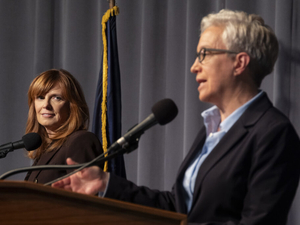
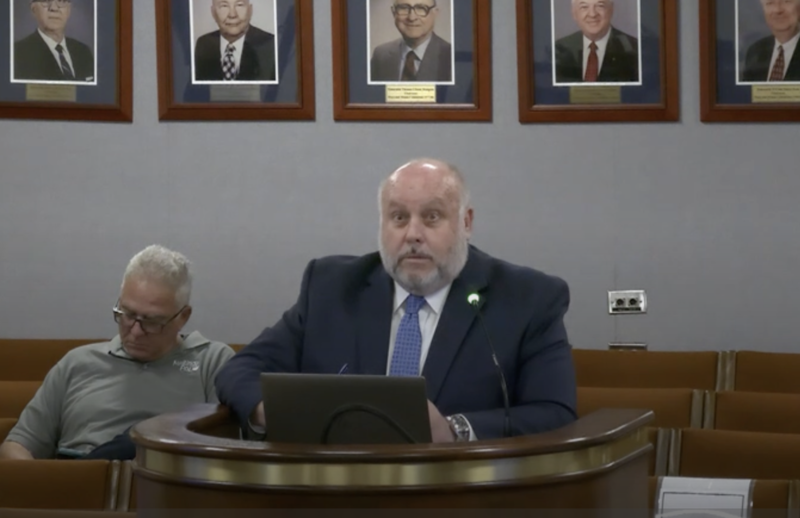
Attorney Mark Moore speaks to the House Ethics Committee on Tuesday, Oct. 14, 2025, in the House office building on Statehouse grounds in Columbia, S.C. (Screenshot of SCETV legislative livestream)
COLUMBIA — Investigators could find no evidence former Rep. RJ May paid taxes for himself or his campaign consulting business during at least three of the years he spent in the House of Representatives, an attorney told the House Ethics Committee on Tuesday.
The committee began investigating the West Columbia Republican’s conduct in July, several weeks after his arrest on charges of sending videos of children being sexually abused. An investigation is usually the first step toward expelling a member from the House.
May resigned his House seat in August, while the investigation was ongoing. He pleaded guilty to five charges of distributing child sexual abuse material last month and is awaiting sentencing in the Edgefield County Detention Center.
Former Rep. RJ May pleads guilty to sending ‘disgusting and depraved’ child sex abuse videos
The complaint, first requested by House Majority Leader Davey Hiott, R-Pickens, went beyond May’s criminal charges.
Hiott asked the committee to look into his financials as well, which was what led a hired investigator to discover years of missing tax filings, said Mark Moore, an attorney with Maynard Nexsen, the law firm hired to look into the matter.
When attorneys requested May’s personal income tax filings and tax filings for his political consulting business, Ivory Tusk Consulting, the Department of Revenue came back with nothing, Moore said.
Ivory Tusk Consulting was not registered with the Secretary of State, suggesting May might have been operating it as a sole proprietorship, a business model that would require him to report his business’ income alongside his personal income on his tax returns. However, May seemed to have filed neither for tax years 2022 to 2024, Moore said.
“I think the conclusion is easy to draw there, and you don’t need me to draw it,” Moore said.
It’s unclear why the investigation didn’t include 2021, May’s first year in office. But it was 2022 when May helped launch the hardline-conservative Freedom Caucus in the House — as a chapter of the Washington, D.C.-based State Freedom Caucus Network — ran primary campaigns to oust his fellow Republicans, and drove an increasingly public schism with the GOP majority caucus.
The investigators did not try to get May’s federal tax returns, since the federal treasurer’s office wouldn’t have to comply with a state investigation in the same way as a state agency, he said.
The law firm’s investigator also raised concerns that May didn’t disclose all he should have on a financial statement he submitted to a federal judge asking for a public defender to represent him in court.
May claimed he had no assets other than his pickup truck, leading federal Magistrate Shiva Hodges to appoint him a team of two taxpayer-funded attorneys. May later fired his attorneys and opted to represent himself, though his public defenders will take over the case again for his sentencing hearing.
In calls and messages from his jail cell, however, May claimed candidates whose campaigns he ran, including sitting members of the Freedom Caucus, owed him tens of thousands of dollars. May didn’t specify exactly how much he felt was missing, but the amount was at least $50,000, according to jail communication records provided to the SC Daily Gazette.
May should have reported that money to the judge as an asset, but the attorneys investigating him determined he did not, Moore said.
“Obviously, courts expect people when they seek appointed counsel to be truthful with them in financial affidavits,” Moore told the committee. “As our investigation revealed, that did not happen here.”
Providing false information to a judge could be a felony, Moore said.
The committee found May “acted in a manner unbecoming of the House of Representatives,” Rep. Robby Robbins, R-Summerville, said. The eight committee members present agreed unanimously to issue a public reprimand against May for sending the videos.
“The whole thing is a sad and dark moment in that I served, as we served, with an individual who is engaging in some of the most reprehensible conduct imaginable,” said Ethics Chairman Jay Jordan, R-Florence.
May did not respond to the complaint or notices of meetings sent to him in jail, Jordan said. No attorney appeared at the meeting Tuesday to speak on May’s behalf.
Although May resigned his seat before the investigation reached a conclusion, the investigation was important in considering a then-sitting member’s activities, Jordan said.
A public reprimand will do little to May, who faces as many as 100 years in prison, but it allowed the committee to document its findings, Jordan said.
“Had we been able to kick him out, we would have, but we couldn’t because he had removed that opportunity from us,” Jordan said.
The committee voted unanimously to refer any possible criminal violations to a state agency equipped to handle them. Jordan declined to say what agency that might be, saying it will be up to another agency to decide whether to pursue charges.
The committee also voted to refer complaints about two people to the State Ethics Commission for review as to whether they violated ethics law. Jordan declined to say who those people are or what charges they face.
Other members of the Freedom Caucus, of which May was a founding member, came under scrutiny during the investigation, Moore said. While looking into May’s consulting business, attorneys wanted to interview some of the biggest contributors to his business, including current caucus members, he said.
Some agreed to cooperate, including voluntarily handing over financial reports and bank statements. Others declined to participate in the investigation, even when attorneys issued subpoenas, Moore said.
Three Freedom Caucus members — Chairman Jordan Pace, R-Goose Creek; Rep. Jay Kilmartin, R-Irmo; and Rep. Stephen Frank, R-Greenville — either did not respond to requests for interviews with attorneys or failed to follow through with scheduled meetings, Moore said.
When reached by the SC Daily Gazette, Frank, Kilmartin and Pace all asked if they could respond later.
When attorneys sat down with the members’ attorneys, they refused to answer questions, saying they did not believe their clients had to respond to hired counsel, an assertion the hired lawyers did not believe to be correct, Moore said.
The refusal to cooperate likely postponed the investigation’s results by at least a month, coming at what Moore said was a “significant” cost to taxpayers, though he didn’t say how much.
Columbia