Every SC K-3 teacher must finish literacy training in 2026. Officials say it’s already working.
Aug 29, 2025 | 8:30 am ET
Description
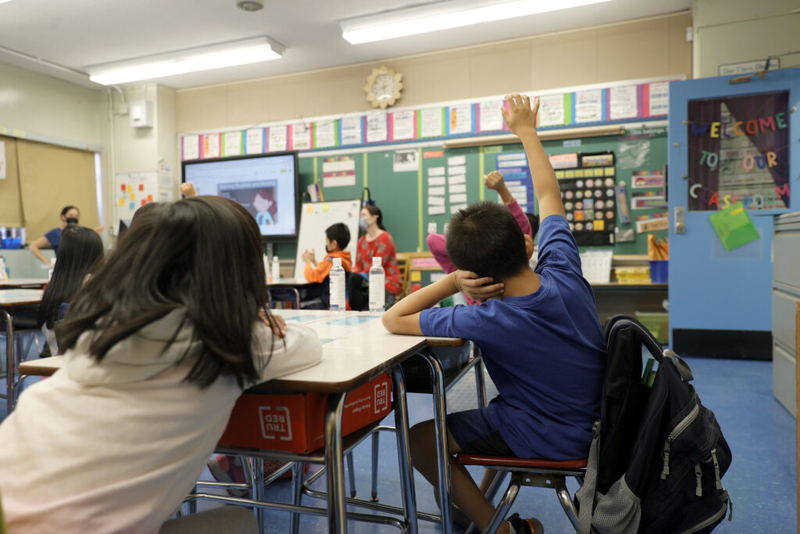
Every South Carolina teacher in kindergarten through third grade is expected to finish a literacy training program officials say has already shown results this school year. (File photo from Getty Images)
COLUMBIA — Every teacher in South Carolina is expected to finish a literacy training program this school year in a push the state superintendent says has already led to improved reading test scores.
The training is part of a nationwide push toward teaching “the science of reading,” a strategy focused on teaching children to read by sounding out letters and rhyming sounds. Essentially, it’s a return to the basics: phonics.
For years, South Carolina was among states that largely ditched phonics to instead teach a method called “three-cueing,” which encouraged children to use context clues, such as the surrounding sentence and visual cues, to figure out words. While three-cueing made sense to some students, it relied too heavily on guesswork for many to apply the words they learned in broader contexts, research found.
That practice is now banned from South Carolina curriculum. A state law signed in March 2024 requires districts to ensure the “three-cueing system” is excluded from all instructional materials.
Training on LETRS — short for Language Essentials for Teachers of Reading and Spelling — began in 2021 in 250 of the state’s lowest-performing elementary schools. In 2023, the Legislature allocated $39 million to expand the training for teachers in kindergarten through third-grade classes statewide.
This school year, every teacher in those “foundational literacy” grades must complete the training, as required by law. For some veteran teachers, it’s a refresher course strengthening their phonics knowledge. Others are newly learning a method not taught while they were in college.
State Superintendent Ellen Weaver credits the two-year training program with fewer students scoring far below grade-level on a statewide test.
“This is the foundation-building, life-changing work on which our entire education system and the success that we see for students going forward in the future is going to be built,” Weaver told legislators Wednesday.
Improving test scores
In spring 2024, more than a quarter of third graders scored in the lowest possible bracket of the state-standardized reading test. That means they were reading on a first-grade level at best, according to Department of Education data.
That number improved to 16% in the school year that just ended, Weaver told a panel of legislators Wednesday in previewing the test results. South Carolina hasn’t had that few students score in the lowest category since 2016, the first year that students took SC READY tests, according to department data.
The switch to phonics was a large part of the improvement, Weaver said.
“Y’all, that is massive, massive progress on behalf of our students and an incredible tribute to our teachers who are doing that hard work on the professional development front with the LETRS curriculum,” Weaver told legislators.
Scores on tests taken at the end of last school year will be publicly released next week, Weaver said.
Until then, the results per grade and school are not yet known.
But they sound promising, said Patrick Kelly, lobbyist for the Palmetto State Teachers Association. Whether the change was entirely because of teachers finishing LETRS is impossible to say, but the training seems to be helping, he said.
“To view (the test scores) as anything other than encouraging is missing the mark,” said Kelly, who teaches advanced government at a high school near Columbia.
The school year that started this month will be the real test of how well LETRS is working, Weaver said. Students who were kindergarteners in those 250 schools where teachers first completed the training are in third grade, when state-standardized testing starts.
“The fact that we’re seeing such incredible, encouraging progress this year shows us we’re on the right track in terms of the strategies that we are employing to ensure that these children are reading at a proficient grade level,” Weaver said.
How it works
At elementary schools across the state, “word walls,” which show common words students should memorize, have been replaced with “sound walls,” visualizing the noises letters make when combined, said Dena Crews, president of the South Carolina Education Association and a longtime literacy coach at a Florence elementary school.
That’s a result of LETRS training, which emphasizes the sounds of letters and how they work together over memorizing specific words, she said.
LETRS training begins by explaining what the science of reading is and why it works, said Crews, who completed year two of the training in May. Teachers then learn how they can use the concepts they’ve learned in their classrooms on a day-to-day basis.
For instance, the training suggests teachers use handheld mirrors to help students recognize the way their mouths move for certain letters and sounds, Crews said. Those practical lessons are ones teachers can take back to their classrooms and apply right away, she said.
Just under 13,000 teachers have completed this training. Another 11,000 have finished the first half of the training and are expected to complete part two during the coming school year. They will account for every kindergarten- through third-grade teacher in the state, said Jason Raven, spokesman for the state Department of Education.
By law, the training costs are covered by the state. The course counts toward teachers’ required continuing education credits.
As a thank you, teachers receive $500 for completing each year of the two-year program, for $1,000 total. So far, that has amounted to about $18 million since 2021, according to the Department of Education.
Over the summer, teachers complained over social media that they hadn’t been paid.
According to the state agency, teachers should expect their stipends within three months of completing the training, as long as there are no problems with the paperwork submitted by school districts.
This summer, the agency processed about 14,600 payments, which Raven called a recognition of “the time and effort teachers invest in professional learning and student success.”
The training seems to be a big step up from the professional developments under the 2014 Read to Succeed law that first began the push back toward phonics, Kelly said.
Depending on the grade level, teachers had different training requirements, with no clear way to fulfill them. That led to inconsistency and often such basic information that longtime educators felt insulted, he said.
Not only did teachers not receive a stipend to cover the time they spent completing that training, but they had to pay out of pocket for the coursework, he said.
But Crews, while calling the training helpful, said $1,000 doesn’t adequately compensate teachers for the rigorous, time-consuming course. Each of the eight units involved takes as many as eight hours, which teachers are often expected to complete on their own time, she said.
In other districts, teachers can take the training during scheduled work days without students.
In Kelly’s experience, teachers are more willing to dedicate that time and effort to training that gives them actual, practical skills they can use in the classroom, he said.
Teachers and administrators interviewed for a U.S. Department of Education study examining the program said as much. Although some noted the material was dense and questioned when they’d have time to complete it, they also said the training was helpful and enabled them to help their students with reading problems.
“[LETRS] is a gift, and not just a mandate,” one teacher told researchers.
The education department tried to make the program feel less like another mandate added to their workload and more of a chance to learn skills “to ensure these kids have a fighting chance at life,” Weaver said.
“That starts with literacy,” Weaver said.
Crews still worries about getting rid of the previous method of teaching reading. Phonetic learning is a good foundation for many students, but teaching a child to read is so complicated that no single approach is likely to work for everyone, she said.
As a literacy coach, she often works with children who are struggling to read, which means they might need an approach other than the one their teacher was already using, she said.
“We need to figure out a way of bridging everything together instead of one piece over another and saying, ‘OK, this is the only way to do it,’” Crews said.
What’s next
Teachers who have been around for decades have seen methods of learning come and go, making many skeptical about how long this training will last before the next method begins, Crews said. Committing to the program for the long-term will show teachers the state is serious about using this method to teach reading, she said.
“Many of us were happy that we were going back to how we learned how to read, and we’re hoping we will see the benefits of it,” Crews said. “I’m just hoping that we stick with it for a number of years so that we can see the benefit.”
Teaching programs must include phonics under a 2024 law that updated the decade-old Read to Succeed Act and expanded literacy programs. For it to continue helping students, though, the department needs to be diligent about making sure teachers from other states and alternative certification programs learn the same material so that students’ educations stay consistent from grade to grade and school to school, Kelly said.
“This is going to have to be a concentrated, sustained effort over time,” Kelly said.
Columbia