‘I didn’t expect it at all’: The blue wave hit a portion of red Utah County
Nov 12, 2026 | 7:01 am ET
Description
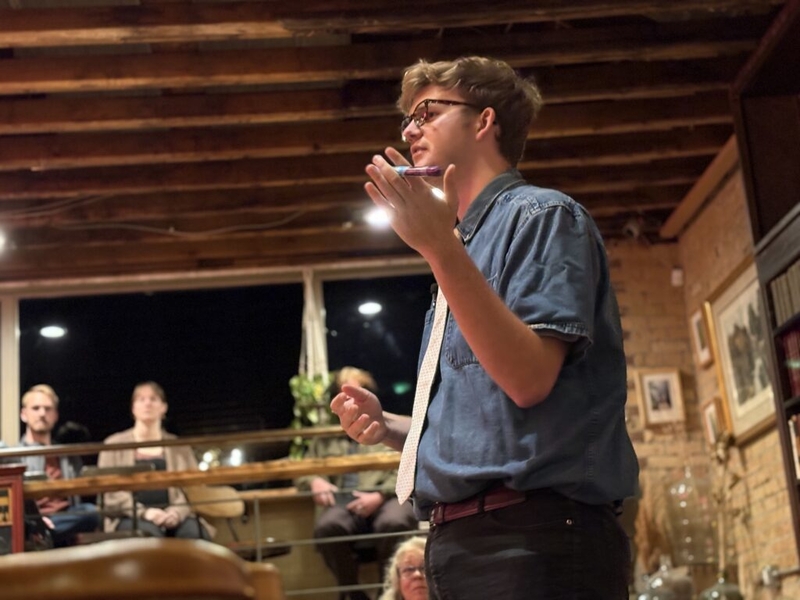
David Chappell, the Democrat who unseated a Republican incumbent in a reliably red state legislative district, speaks at a forum at Rugged Grounds in Provo on Tuesday, Nov. 10, 2026. (Annie Knox/Utah News Dispatch)
That a blue wave rolled into the Utah Legislature and washed out its Republican supermajority was a surprise. That it seeped into conservative Utah County and handed over a reliably red seat to a 27-year-old Democrat was a shock even to him.
“I didn’t expect this at all,” David Chappell said Tuesday night at a coffee shop in Provo, where he’d invited constituents to help hash out his priorities for the coming legislative session.
“A lot of people who voted for me voted for Donald Trump,” Chappell added. “I think that makes sense. We’re voting for change candidates. We want people to shake things up and make it so that it’s easier to live here.”
Chappell wants Utah to provide school meals at no cost and free up funding to help make home ownership affordable. He plans to make housing his focus at the Capitol.
“Now that there’s no supermajority, I have so much hope that we actually can deliver, and that Republicans will listen to us,” Chappell said. “And I think that they will.”
Top Republican legislative leaders last week said the losses were humbling, with Senate President-elect Evan Vickers acknowledging “the public has lost some trust.”
Still, they noted their party retains more than a two-thirds majority in the Senate and a lesser, albeit significant margin in the House.
Pundits cited the intense rebuke of Trump and his administration as one force propelling Utah’s blue wave, in addition to frustration in the state with the overwhelmingly Republican Legislature’s moves asserting power over redistricting, ballot initiatives and unions.
‘Blue tsunami’ hits Utah: House Republicans on pace to lose 17 seats, breaking supermajority
Chappell, who identifies as queer and said he sees himself more as a progressive independent than a Democrat, had never run for office before. He will represent parts of Provo — home to Brigham Young University, his alma mater — and Springville.
It’s a part of the state that has long voted red and where the state’s predominant faith, The Church of Jesus Christ of Latter-day Saints, is particularly concentrated. The church views same-sex relationships as a serious transgression.
“One of the districts by BYU is now represented by, you know, a flaming homosexual. I think that’s great,” Chappell said. He grew up in a conservative family in the Arizona ranching community of Lehi, he said, before attending the university himself.
He’s set to join a small but growing number of openly LGBTQ+ representatives in the Utah House, alongside fellow incoming Democrat Drew Howells of Sandy and Rep. Sahara Hays, D-Millcreek.
He said his victory shows that Provo is accepting — and that voters in the district were more focused on issues like the cost of food and housing than matters of identity.
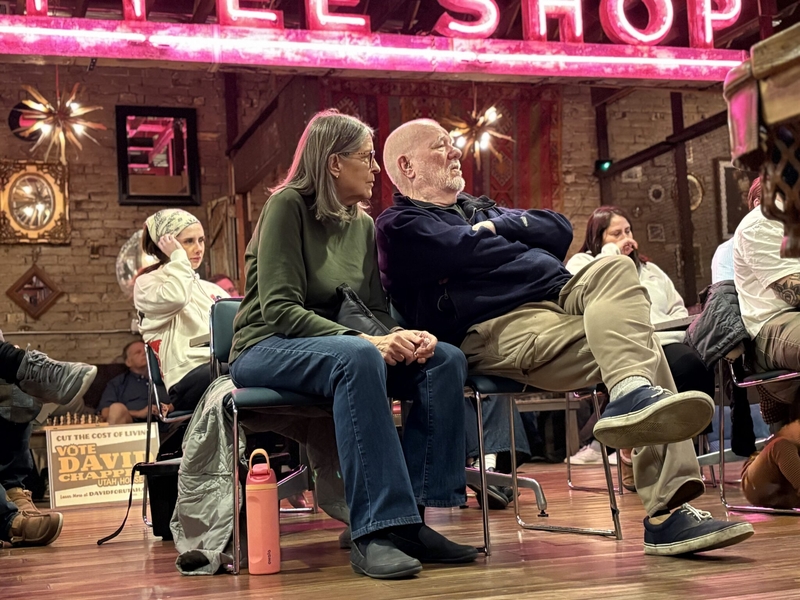
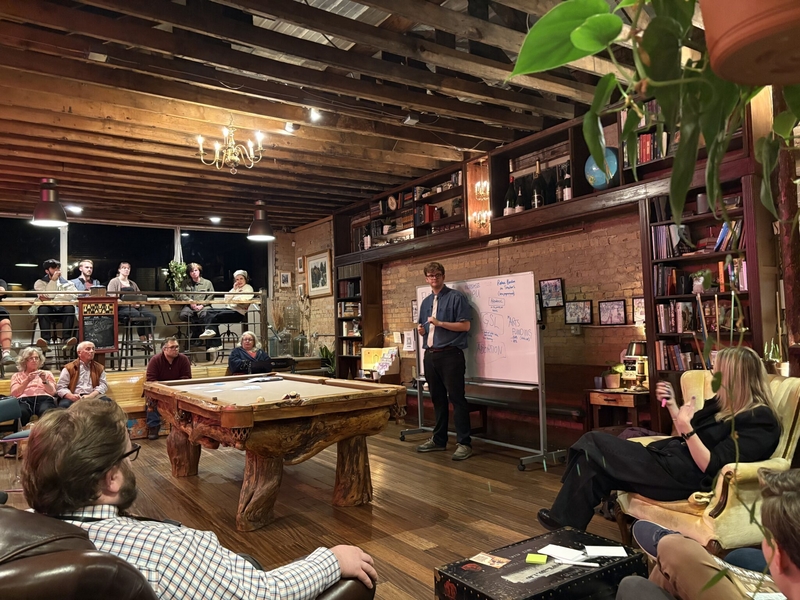
At the coffee shop in Provo Tuesday, Chappell wrote down topics on a white board that included data centers, abortion rights and the drying Great Salt Lake as a few dozen attendees reviewed what they want him to focus on.
Among those in attendance was Rep. Norm Thurston, the Republican incumbent who conceded and congratulated Chappell last week after serving almost 12 years in the House. He’s one of 16 Republicans set to lose their seats in that chamber, in addition to two in the Senate, though results are not official until a canvass next week.
In an interview, Thurston recalled advising Chappell that “you have no idea how long it’s going to last. So enjoy every minute of it for whatever time you’re given.”
In a moment that resembled mentorship at the coffee shop, Thurston chimed in from his seat in the crowd to shed light on the time it takes for state lawmakers to draft a bill with help from legislative attorneys.
Thurston carried 65% of the vote in the district in 2024 but lost to Chappell’s 53% in last week’s election. Now he’s working with fellow Republicans to figure out how to reclaim their lost seats for the GOP in 2028.
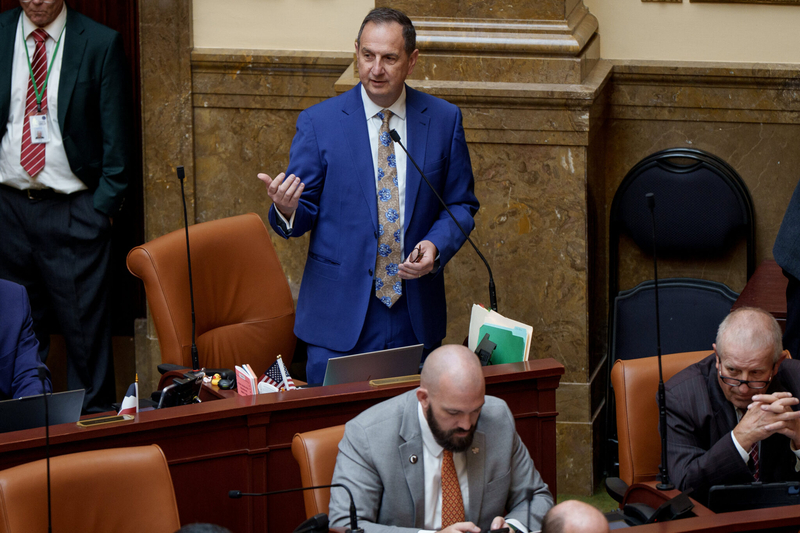
“We’re all in the same boat, and it’s like, wow, what happened?” Thurston said.
He noted the toll of national issues such as the war in Iran and gas prices and President Donald Trump’s White House ballroom construction. That’s in addition to a Utah development authority helmed by top Republican lawmakers ushering in a 20,000-acre data center proposal in Box Elder County.
Provo Mayor Marsha Judkins said Wednesday the victory for Chappell, who volunteered on her campaign last year, is surprising considering past elections.
“However, David started early in the cycle working very hard, knocking doors, energizing volunteers, and taking every opportunity to reach voters,” she said.
Judkins, a former Republican state lawmaker, said those efforts combined with frustration with the GOP to push him ahead.
“My district is extremely young and it’s extremely Hispanic, and those are two groups that really shifted towards Democrats,” Chappell said in an interview.
He recalled voters telling him about their concerns for education funding and their opposition to Utah’s school voucher program and book bans. Some of the same issues motivated him to run, he said, along with his broader sense that state lawmakers weren’t listening to Utahns.
“That’s what I’m most excited for, is to pass things that people want,” he said.
Salt Lake City, UT