Alaska education funding task force seeks input on plans to boost schools
Nov 12, 2026 | 10:00 am ET
Description
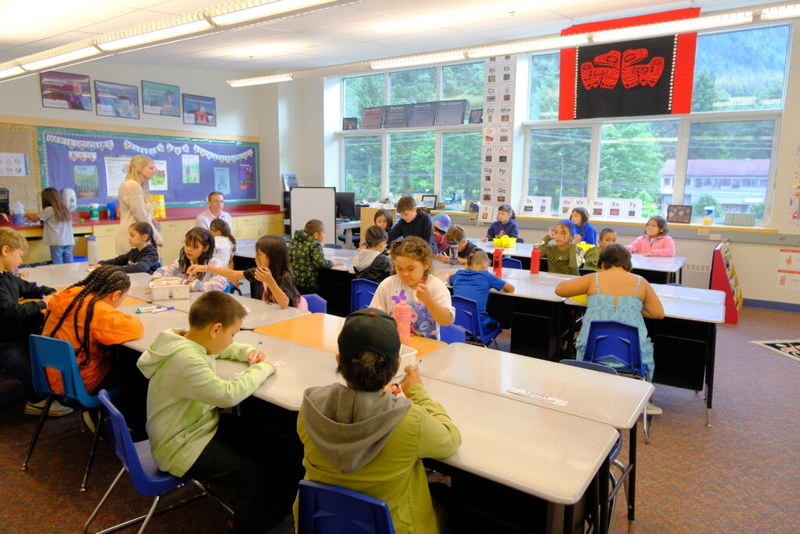
Students begin their first day of school at the Tlingit Culture, Language and Literacy program at Harborview Elementary School in Juneau on Aug. 15, 2025 (Photo by Corinne Smith/Alaska Beacon)
After a nearly 18-month investigation, a joint legislative task force on education funding seeks not only to boost state spending on schools but to change the way Alaska allocates funding to support its troubled K-12 education system.
Among the key recommendations in the draft report released Monday is the finding that annual education spending should be adjusted with inflation, and that funding for school facilities maintenance and rising energy costs should be separate from dollars intended for student instruction.
The task force also recommends that the question of how much the state should spend on education should be examined by a future independent “adequacy study” to see whether Alaska delivers adequate funding to schools.
The Legislature’s task force was launched in July 2025 in the wake of Gov. Mike Dunleavy’s partial veto of an increase to per-student funding, which lawmakers overrode in a special session later that summer. Legislators agreed the task force would further examine funding for schools and ways to address rising costs of utilities, maintenance, transportation and insurance, as well as funding levels and accountability provisions.
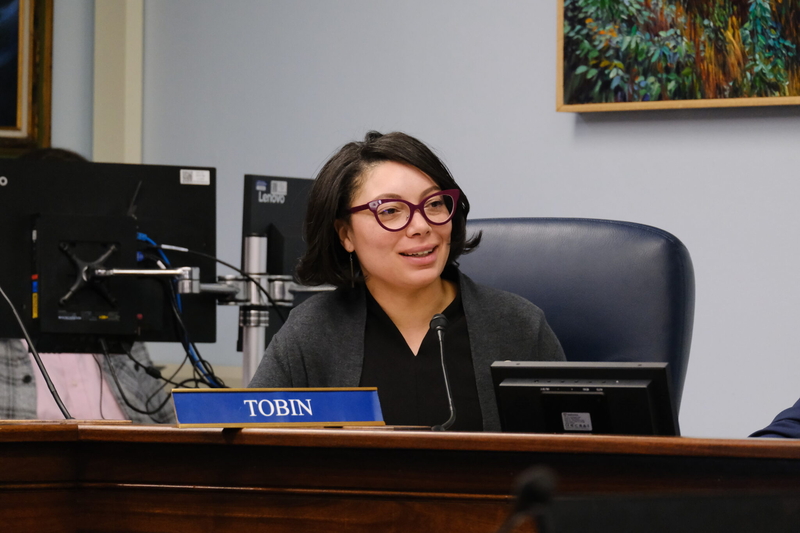
The joint task force includes co-chairs Sen. Löki Tobin, D-Anchorage, and Rep. Rebecca Himschoot, I-Dillingham; Sens. Mike Cronk, R-Tok, and Jesse Kiehl, D-Juneau; and Reps. Justin Ruffridge, R-Soldotna, and Andi Story, D-Juneau.
The task force held nine public meetings, and members made 19 school visits — in districts including the Matanuska-Susitna Borough, Anchorage, Fairbanks, Nenana, Kenai Peninsula, Juneau and Lower Kuskokwim.
The task force released a nine page draft report of short, mid and long-term recommendations and will hear public comment in-person and call-in on Thursday and written comments until Dec. 8.
The draft report references previous studies, expert recommendations and bills considered, as well as input from educators, district leaders and school visits and underscores where the incoming Legislature should take action, Tobin said.
“We really relied on all of those folks to give us quality information that we compiled into this document, and these recommendations don’t come from the task force as much as they come from Alaskans,” she said.
“This is what our community is telling us needs to happen, and has told us this needs to happen for quite a while, and now is the time for us to actually act on these suggestions,” she said.
Ruffridge, a Soldotna Republican, echoed the sentiment and the call for public input on the task force’s recommendations. “This is really the opportunity to hear from people statewide of what they consider to be some issues that they would like to see addressed,” he said.
How much the state should spend on education has been the focal point of ongoing political and financial debates among the Legislature and with the Dunleavy administration for years. The task force recommended an adequacy study examining the state’s funding formula.
Tobin said other states like Wyoming, Maryland and Massachusetts conduct regular adequacy studies, and an independent analysis is needed of Alaska’s complex education funding formula. The study would examine per student funding, known as the base student allocation, or BSA, and the multipliers added for factors like school size, special education services and correspondence schools, among others.
“We knew if we wanted to take the politics out of the BSA, we needed this independent analysis,” Tobin said.
Ruffridge said he hopes the adequacy study will take a close look at the state’s funding formula and “whether or not the pieces of the foundation formula are actually built to fund the things that people want.”
Some of the areas Ruffridge said he’s heard about from constituents are smaller class sizes, access to extracurriculars like music and sports, and well-maintained buildings, “but our formula doesn’t really take that into account at all,” he said.
“I would really like to see study dollars go towards really analyzing the formula in ways that it could be changed to more comprehensively cover what it is that goes into offering you know a well rounded education system,” he said.
Tobin and Himschoot submitted a request for an estimated $500,000 to contract researchers to conduct the study, and encouraged a partnership with the University of Alaska’s Institute for Social and Economic Research, according to a letter to the Legislative Audit and Budget Committee. Lawmakers had approved $400,000 for such a study this year, but Dunleavy vetoed it.
“We would have hoped that we would have been part way through that process at this point,” said Tobin. “Unfortunately, once again, Mike Dunleavy has stymied that input, has stymied that science-based approach to analyzing our school formula, and that is really at the detriment of our public education system, because we’re going through another year at the very least of potentially not having adequately funded education because we don’t have the information we need to make informed policy decisions in those legislative roles.”
Short term recommendations
In the short-term, the task force recommended separate state dollars for funding school operations, facilities maintenance and repairs outside the pool of funds meant for instruction.
It noted the state’s funding for capital projects has eligibility rules that excludes routine maintenance and operations and so a separate funding stream for school facilities would enable more funds dedicated to educating students.
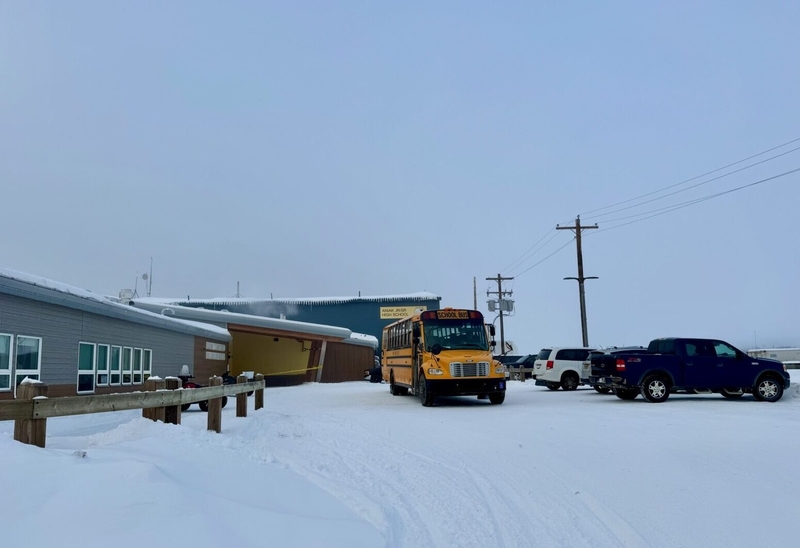
Alaska has a major school maintenance backlog, estimated at $535 million in needed repairs, the report noted, and so the task force recommended the Legislature re-evaluate the regulatory process for how those repairs are funded. “Inaction will only increase the eventual costs of repair or replacement and continue to put children at risk,” it wrote.
Ruffridge called the current school maintenance system “appalling.”
“I’ve never seen such a difficult scenario that faces, especially school districts with not a lot of staff or personnel, and the hundreds of pages of documentation that have to be produced, really for very low likelihood of getting any dollars, and sometimes (they) wait decades to have any sort of action taken on pretty significant maintenance needs,” he said. He said he thinks there will be the political appetite in the next Legislature to address those funding needs.
Members also recommended the state fund rising energy costs for school districts. Last year, lawmakers approved a bill to reimburse districts’ energy costs based on a three-year average, but it requires future Legislatures to fund the program, which the task force recommended.
“The process that we had created to deal with major maintenance and capital improvements has not been working. There needs to be a different approach that provides stable and consistent funding for every school across the state to ensure that that building is safe, it is warm, it’s well lit, and that it has the right technology in its facility,” Tobin said. “To ensure our young people are learning, and have tools and the skills they need to become future workers in our labor force.”
More broadly, members recommended several changes in the legislative budgeting process.
The task force recommended the base student allocation be adjusted with inflation each year, similar to how the state calculates an adjusted base budget for other state agencies in order to maintain services at a status quo level. “If the Base Student Allocation remains the same from year to year but the cost of delivering education increases, then the BSA is no longer sufficient to provide an adequate education,” it wrote.
Additionally, the task force recommended the Legislature appropriate education funding earlier in the year, rather than in June or July, after school district budgets are finalized and layoff notices sent out. “This instability leads to unnecessary layoffs, delayed hiring, and loss of talented educators,” the report said.
Instead of budgets based on annual student counts, the task force recommended state funding be based on a three-year average of student counts to allow more stable, predictable funding. The lawmakers recommended the Legislature adopt a bill to that effect similar to legislation introduced by Story, a Juneau Democrat and member of the task force, last year which passed the House but failed to advance in the Senate.
While Alaska law mandates the Legislature “establish and maintain” a public education system for all Alaskan students, members of the task force recommended an established definition of “adequate education.” That’s to ensure funding meets a standard so that all students have access to educational opportunities, qualified teachers with training and support, a safe learning environment, and well-maintained facilities, among others.
Tobin said creating that definition in statute will help the Legislature make its budget decisions.
Midterm recommendations
In the midterm, the task force recommended reevaluating the funding formula for transportation, to include accommodations for fluctuations in students with a hold-harmless provision.
It recommended updating the funding formula for residential boarding schools, which has not changed since 2014, and updating the cap for school districts’ contribution to charter schools to more accurately reflect costs.
For homeschool programs, known as correspondence programs, the task force recommended a review of existing statutes to ensure those students are being provided an adequate education, noting currently the statutes “allow broad exemptions from statewide content standards, proficiency assessments, and fiscal audits.”
Currently, state law allows homeschool parents and guardians to opt their student out of state testing. Last year, just 14.6% of homeschool students participated in the state’s standard assessment for math, while 80% of students in district schools participated, according to the Alaska Department of Education and Early Development.
The task force also called for districts to look into methods for incorporating homeschool programs into district neighborhood schools because they say post-pandemic research shows that “in-person learning significantly outperforms online and distance learning.”
In order to boost teacher recruitment and retention, particularly to address high turnover in rural districts, members of the task force said they support the recommendations of a 2023 Teacher Retention and Recruitment survey of over 4,000 educators.
Tobin said the task force’s final report will include more detailed recommendations for supporting teachers, including reviving a public pension system, increasing competitive pay and boosting professional development opportunities.
Long-term recommendations
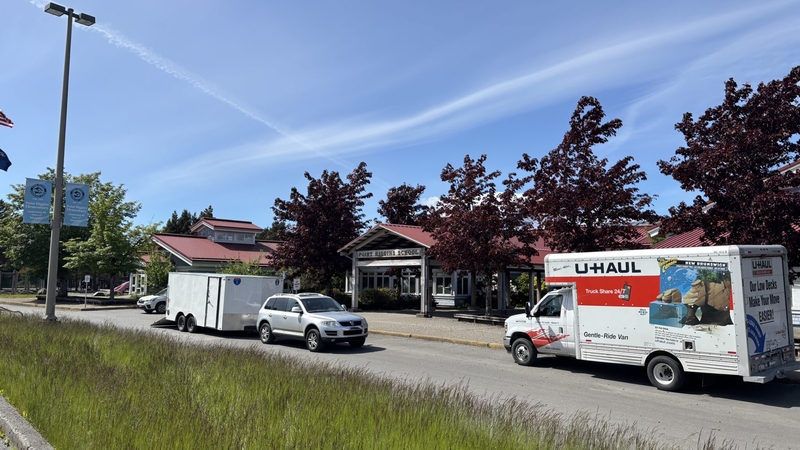
Many Alaska school districts faced steep budget shortfalls this year, resulting in the closure of 12 schools. Superintendents named the rising cost of health insurance as a major cost driver for districts. The task force recommended continuing to examine ways to reduce healthcare costs, including pooling insured workers and “exploring a publicly funded health insurance program.”
Other long-term recommendations include increasing the number of career and technical education instructors, creating a statewide absentee accounting system and creating incentives for districts to standardize equipment and create shared services agreements with regional partners.
It also recommended identifying dedicated funding with local partners to enhance community and culture-based education opportunities.
Tobin said the task force will continue to incorporate input from public comments in-person and by phone on Thursday, and those submitted in writing, into the final recommendations which will be delivered on the first day of the 35th Legislative session on Jan. 19.
“We wanted it to be a representative process, a democratic process…feedback is critical to the next steps forward,” she said. “At the end, the product is going to be one that we can all say, ‘Here’s what we do collectively believe is going to help improve education.’”
Juneau