Broad opposition meets NJ push to change rules on independent contractors
Aug 04, 2025 | 6:52 am ET

Description
Uber and Lyft drivers would be considered employees, not independent contractors, under new regulations proposed by New Jersey labor officials. The companies have opposed such moves. (Photo by Michael M. Santiago/Getty Images)
Business groups, gig workers, and freelancers are fighting what they say is the state’s latest attempt to limit the availability of independent contractor status that they say gives workers and businesses needed flexibility.
The opposition targets proposed regulations from the New Jersey Department of Labor that would regulate an examination, called the ABC test, that the state uses to determine whether workers are employees entitled to unemployment, family leave, and disability benefits — or are independent contractors not required to pay into the funds that fuel those benefits.
The Murphy administration has previously characterized companies’ push to classify some workers as independent contractors as one that denies employees benefits required by law. Labor officials’ proposed regulations would ensnare some companies like Uber and Lyft that have fought efforts to classify their drivers as employees.
Kim Kavin is a freelance writer and co-founder of Fight for Freelancers, a group that helped defeat a 2019 bill that would have altered New Jersey’s ABC test.
“This is more of the same. It’s all part and parcel of the same campaign that has been waged for years now trying to restrict independent contracting, and it needs to stop,” Kavin said.
To be marked as an independent contractor, a worker must pass all three prongs of the ABC test, which measures whether a worker is free of their employers’ control, whether a worker’s work is performed outside a firm’s regular course or place of business, and whether a worker is engaged in business independent of a given firm.
Officials could adopt the new proposal after an extended public comment period closes on Aug. 6, with or without changes.
Fighting for workers?
The proposal’s most substantive changes are confined to the test’s second prong, which weighs whether a worker’s services are done outside the usual course or place of an employer’s business.
Examples included in the rules proposal’s text would designate ride-share drivers’ vehicles as a place of business for the companies they drive for. Because workers must meet all three prongs of the ABC test to be classed as independent contractors, that example would require ride-share drivers to be treated as employees.
New Jersey has for years insisted those drivers are employees entitled to benefits and argued they and their employers are liable for unemployment, temporary disability, and family leave payroll taxes.
Uber in 2022 paid New Jersey $100 million to resolve claims of more than $600 million in unpaid taxes and interest the state said were owed due to worker misclassification between 2014 and 2018. The amount owed was reduced after the firm gave the state access to more records, and Uber maintains its employees are independent contractors.
New Jersey last year alleged Lyft, another ride-share company, owed the state $17 million in payroll taxes unpaid due to misclassification. Lyft, like Uber, maintains that its drivers are independent contractors under the ABC test and that its role is limited to acting as a platform that connects drivers with passengers.
Ride-share companies have typically prevailed in lawsuits challenging their drivers’ independent contractor classifications, though the question has not been thoroughly tested in New Jersey courts.
Roughly 20 state legislators spanning both parties have expressed concerns about the rules proposal, including that it may go beyond the statutes and case law governing worker classification. The group, which is growing, includes chairs of the Senate labor, commerce, transportation, and legislative oversight committees.
Democratic legislators in the 18th District said in a Thursday letter to Labor Commissioner Robert Asaro-Angelo that classifying workers should be the job of lawmakers, not state regulators.
“The question of how to classify workers has been considered repeatedly by the Legislature, and similar efforts to change the standard through statute have not gained approval. The decision to implement such a major policy change through regulation, rather than legislation, risks creating confusion among both workers and employers,” the letter reads.
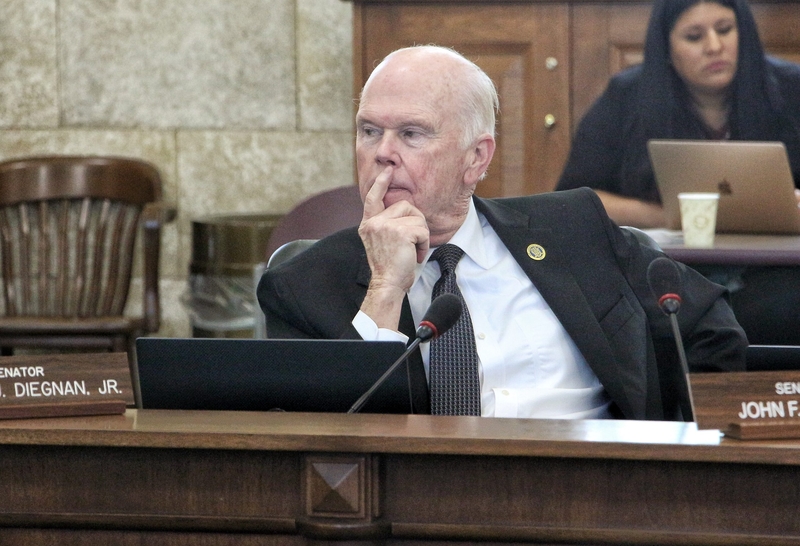
Sen. Pat Diegnan and Assemblymen Sterley Stanley and Robert Karabinchak, all Middlesex County Democrats, added their “concerns with the proposed rule are wide-ranging and substantive.”
A spokesperson for the Department of Labor declined to comment on criticism of the rules proposal. In a summary attached to the proposal, the department said it is merely codifying practices stemming from statute and case law that labor commissioners have employed for years.
Gov. Phil Murphy, a Democrat in the final months of his second term, established a task force in 2018 to examine misclassification.
“Hardworking New Jersey workers should not be kept from receiving the pay and benefits they deserve,” Murphy said last month to mark the sixth anniversary of the task force’s report. “Protecting our workers has always been a top priority of our administration as we maintain a strong and fair economy. We’ll keep fighting against those who exploit and cheat them.”
A ‘huge concern’ for businesses
Other changes in the proposal would classify customers’ homes as a place of business for drywall installers, limiting their ability to employ independent contractors to install drywall; name caddies working for country clubs as employees; and say truck drivers working for a trucking company may be classed as employees.
Elissa Frank, vice president of government affairs for the New Jersey Business and Industry Association, said the state’s plan would create “employment relationships that don’t currently exist.”
“Those people under the examples that are cited in the rule are currently serving under independent contractor status,” said Frank. “That’s a huge concern because it’s hitting at the flexibility of the business.”
Planned changes to the ABC test’s second prong note that workers outside of a firm’s normal course of business — say, someone hired to clean a dentist’s office — could still be classified as independent contractors.
Other portions of the state’s proposal offer fewer changes but have nonetheless alarmed freelancers and business groups.
The proposal would add a non-exhaustive list of criteria to determine whether an employer controls or directs an individual’s work. That list includes questions like whether the business requires the individual to work set hours, use specific tools, or wear a particular uniform, among several others.
Some have worried the list’s non-exhaustive nature — meaning officials can consider factors not listed there — would create uncertainty among contractors.
“I wouldn’t say it’s a substantive change, but the fact that it’s non-exhaustive is a difference to the existing standard,” Frank said, adding it could lower the bar to classify independent contractors as employees.
Courts use those criteria when adjudicating misclassification cases.
In Carpet Remnant Warehouse v. Department of Labor, a 1991 New Jersey Supreme Court decision on worker misclassification cited in the rules proposal, justices found carpet installers that did jobs for a carpet sales business were not under the business’ control because the installers could determine the means of installation, freely choose — or not choose — from the business’s posted jobs, and work for the business’s competitors, among other factors.
The test’s final prong measures whether a worker is engaged in “independently established trade, occupation, profession or business.” It typically measures whether an individual’s business would survive the loss of income stemming from the end of a relationship with one business.
There, too, the proposal adds a non-exhaustive list that includes factors like how many clients the individual has, how their income breaks out among clients, and the individual’s investment in their own tools and equipment, among several other factors courts use when adjudicating misclassification cases.
Frank said the proposal would make some bona fide independent contractors vulnerable to employee classification, raising the hypothetical of a heating, ventilation, and cooling technician who incorporates her own firm, secures her own tools and insurance, and gathers jobs from several clients — including one she works with frequently.
The frequent client’s workload, a lack of employees at the technician’s firm, and her lack of office space could make the hypothetical contractor vulnerable to an employee classification she would not seek, Frank said.
“This hypothetical shows how the proposed rule shifts the bar from functional independence to structural perfection — penalizing legitimate small businesses that don’t have the scale or resources to meet every new evidentiary factor,” she said.

Trenton, NJ