SC foster children often wait in cubicles and conference rooms. A nonprofit is changing that.
Jul 17, 2025 | 2:12 pm ET
Description
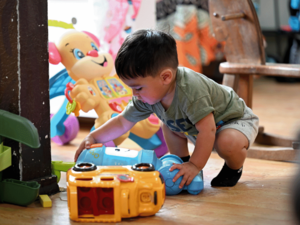
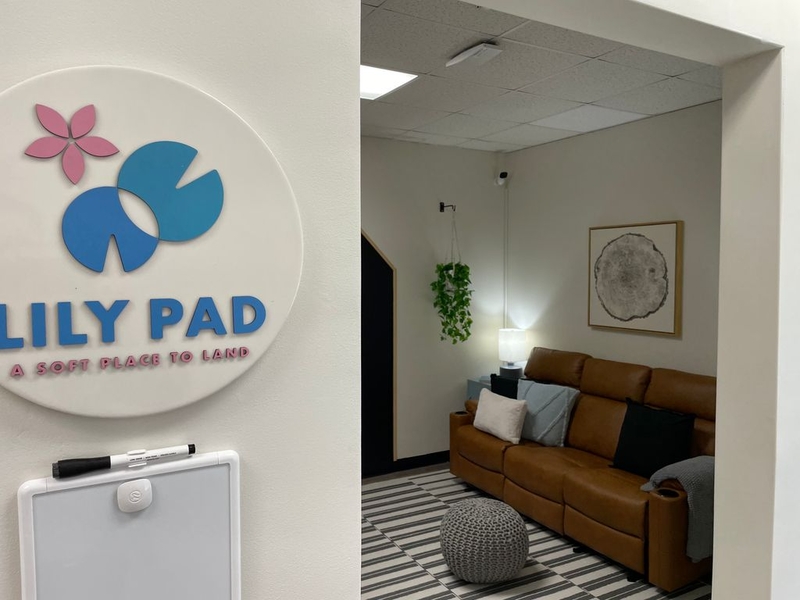
A Lily Pad room in Horry County is meant to give children a comfortable space to rest and decompress, nonprofit leaders said. (Provided/Lily Pad)
Ashlyn Rees was exhausted when the caseworkers brought her to a local social services office after school.
The then-15-year-old had hardly slept the night before, and the stress of trying to look after her three younger siblings while they moved between homes was getting to her. Sitting in her caseworker’s cubicle, she fell asleep in the office chair.
When she later relayed this story to her foster mother, Jennifer Tice, Tice’s maternal instincts kicked in.
“I was like, ‘We can do better than that,’” Tice said.
Wanting to prevent other children from similar situations, Tice and her husband, who had been fostering children for a decade at their home in Greer, founded a nonprofit to create living room-like spaces in adoption centers and social services offices.
The couple named the nonprofit Lily Pad, after another foster child who had been with the Tices for several years before returning to her biological family. The group’s tagline is “a soft place to land.”
Since its founding in 2022, Lily Pad has renovated 33 rooms in Department of Social Services offices across the state. The goal is to have a Lily Pad room in all 46 county foster care offices and six regional adoption offices by the end of 2027, said Tice, a former labor and delivery nurse.
Reducing trauma
As was the case with Rees, children often spend time in social services offices while waiting for a relative or foster family to take them. How long they spend there depends on the situation. In some cases, a shortage of foster parents has led to children spending the night in offices, according to reports filed in federal court.
More than 200 children spent the night at a social services office between April and September 2023, according to the most recent data available.
Those children have gone from one traumatic situation to another, Tice said.
After experiencing the abuse, neglect or other turmoil that caused social services to intervene, the children’s lives are upended as they’re taken out of their homes and separated from their families, she said.
Walking into a social services office means walking into an unfamiliar place, where children are asked to sit in a cubicle or a conference room with nothing to occupy them, Rees said. Caseworkers, who must constantly supervise the children, have no choice but to make calls in front of them, she said.
Rees sat and listened to a caseworker search for foster families who would take her and her siblings. She listened to calls from foster parents who needed to send the children they were looking after elsewhere. Those calls weighed on her, she said.
“It was just a really difficult time,” said Rees, now 18.
After hearing that, Tice started to ask Rees whether her time in the office might have been better if she had a quiet place to sit or a bed to sleep in or games to play. That would have changed the whole experience, Rees told her.
She could have distracted herself and her younger siblings by reading them books or playing board games, she said.
“Every situation was always stressful, but it could have been less stressful and maybe calmer,” Rees said.
From there, the idea for the Lily Pads began to form, Tice said.
She and other volunteers would give children somewhere comfortable to rest and play, with monitors for caseworkers to supervise them while also stepping out of the room to take sensitive phone calls. They would have books, games and a TV to occupy them and help calm them down.
“We’re just reducing trauma from an already traumatic situation,” Tice said.
What the rooms are like
Tice talked to an occupational therapist, who recommended rocking chairs and sensory friendly toys for children who had behavioral problems or just needed a calmer environment. She talked to a friend who works in interior design, who agreed to help make the rooms beautiful.
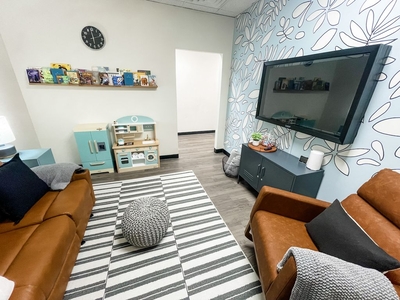
The first priority for any Lily Pad is a bed and clean floors. Whether children come into the office in the middle of the afternoon or the middle of the night, they should have a place to lie down and rest, she said.
Each Lily Pad also has a couch, a rocking chair, a TV, a video game console, weighted blankets and toys, Tice said. Volunteers repaint and redecorate the rooms so they look less like an old conference room and more like an actual living room, she said.
“We know that we could just throw a bed and then throw a couch and throw a TV in and call it a day, but we feel like these kids deserve more, and it should look like a living room,” Tice said. “Oftentimes, people say, ‘It looks much nicer than my living room.’ It looks much nicer than my living room, too, but they deserve that.”
Helping communities
The Lily Pad rooms were designed with children in mind, but caseworkers have told Tice the spaces have improved their lives as well. Rocking chairs give social workers somewhere to rock babies to sleep other than their office chair. Staff can focus more on their work as children entertain themselves, Tice said.
Even playing video games alongside a child can be a huge help, caseworkers have told Tice.
The social workers and the children in their care can bond over a toy or a game, making the child more comfortable opening up about their experiences, Tice said.
Attorneys have found that playing with young children makes them more receptive to difficult information, such as explaining what will happen during a court hearing, Tice said.
Families in the process of reuniting can use the rooms as well, giving them a more personal time together with movies to watch and games to play instead of sitting across from each other in a conference room as they did before, Tice said.
Volunteers put the rooms together in a matter of days. The most recent Lily Pads to open, a set of two rooms in Horry County, were completed in less than a weekend, she said.
The renovations are entirely supported by donations, so they come at no cost to the state, Tice said.
The nonprofit is an example of a way people can come together to help, even if they can’t foster children, agency director Tony Catone said during the opening for the Horry County office last month.
“Altogether, it’s a great day in South Carolina whenever we as a community can do something good for the children who experience foster care in our state,” Catone said. “And this is something that’s very good.”
Local volunteers, such as church groups and small businesses, keep the rooms clean and in shape by washing blankets, cleaning rugs and going through any items with small pieces to make sure everything stays together.
Those details can make a big difference for a child using the room, Tice said. If a child has finally decided on a game to play or a movie to watch, only to realize the DVD is wrong or the pieces are missing, “that could be the one thing that causes a meltdown,” Tice said.
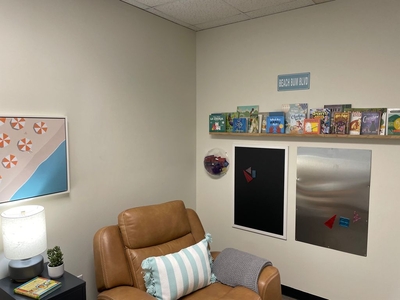
The nonprofit doesn’t track how many children have come through the rooms. But in bigger areas, such as Greenville, local officer managers have told Tice children come through the rooms every day, she said.
Tice has plans to open three more Lily Pads by the end of the year, bringing the total this year to a dozen.
Someday, she hopes to expand the program into other states or to other places that could benefit from similar environments, she said.
Police and sheriff’s departments, for instance, have reached out saying they would like to have a similar room for survivors of domestic violence who are waiting for spots to open up in shelters, she said.
For the time being, though, Tice’s focus is on helping as many foster children as she can, she said.
And Rees, who was adopted by Tice’s sister, is going to the University of South Carolina in Beaufort to study business administration in the hopes of one day taking over the nonprofit, she said.
“This is a way for us to serve hundreds and thousands of kids across our state without them ever coming through the doors of our home,” Tice said. “But hopefully when they go through the doors of the Lily Pad, they’ll know that somebody loves them.”
Columbia