A couple fled Russia to seek asylum in the US. They’ve been kept apart for a year.
Jul 11, 2025 | 2:02 pm ET

Description
Alexey and Svetlana Demin left Russia last year to seek asylum in the United States. The were separated July 8, 2024, after they reported to immigration officials in California for a scheduled appointment to apply for asylum. (Courtesy of Alexey Demin)
Alexey Demin says he talks to his wife, Svetlana, on the phone almost every day. The Russian expatriate now lives in California with his stepdaughter, having been granted asylum in April. She’s at an immigration detention center in Louisiana, where she’s been held since September.
Alexey, 63, admits he holds back information from Svetlana, 56, during these calls.
“Physically, she is fine, but psychologically, it’s very difficult,” Alexey said in an online interview, translated through an interpreter. “Periodically, there are hysterics during our conversations. She throws the phone. Every call is a challenge. I also can’t tell her anything hopeful. I even hide the truth from her. The truth is the only certainty right now is that she’ll be deported.”
The truth is more like a strong hunch for Alexey. Insight on their case from their Seattle-based lawyer wasn’t available. She’s also Russian and hasn’t returned calls, text messages or emails from a reporter.
Immigration and Customs Enforcement has not responded to questions about the status of Svetlana’s case. The Illuminator was able to confirm the status of the Demins’ immigration cases through an ICE online database.
The Demins are among countless families who have separated through the U.S. immigration enforcement system, though their difficulties began in the waning months of President Joe Biden’s term. The couple also followed the proper steps to obtain asylum, booking an appointment with officials online rather than trying to enter the country illegally.
They attempted to relocate to the U.S. at a time when the federal government was trying to unravel a knotted immigration system with vast backlogs of court cases and asylum applications. Those with experience navigating the legal labyrinth say efforts to clear the bureaucratic morass under Biden have turned into a purposeful effort from Trump to expedite removals, regardless of whether families are impacted.
ICE policy that calls for parents to be detained close to where their young children reside is now routinely ignored, said Nora Ahmed, an attorney with the ACLU of Louisiana. She was part of the legal team for Mahmoud Khalil, the Columbia University student who was taken from his New York City apartment in March and detained at the ICE detention center in LaSalle Parish until a judge ordered his release last month. While in custody, Khalil’s wife, Noor Abdallah, gave birth to their first child.
The Demins do not have young children, but Ahmed said their experience follows the same pattern of divisive immigration enforcement.
“This is family separation 2.0,” she said. “It’s taking form in different ways. We’re not necessarily seeing kids in cages, but we are seeing the destruction of families and the destruction of family units.”

Punishment for protest
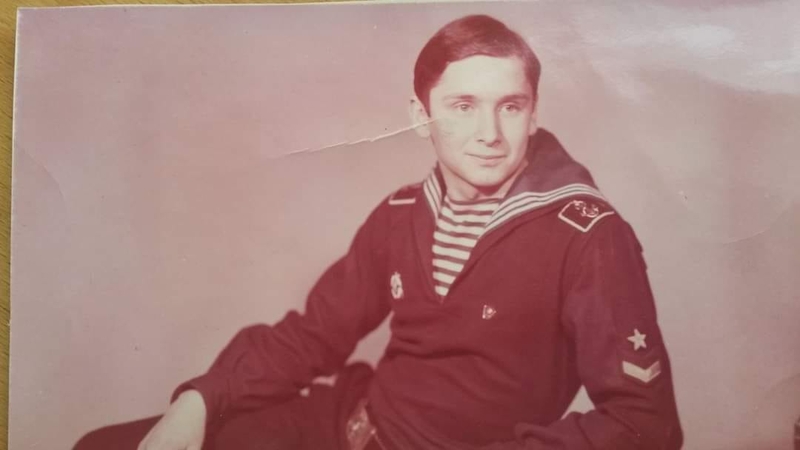
The Demins decided to leave Russia last year after Alexey said he had been threatened multiple times with punishment for his activism against President Vladimir Putin. Alexey’s disenchantment with his country’s leadership came after his 28-year career in the Russian navy as an engineer-geographer.
After leaving the military, Alexey became a driver for members of the Russian cabinet during the early years of the Putin regime. He and Svetlana, who is his second wife, married in 2002, and Alexey gradually became more politically active as Putin’s autocratic power grew. Key events came in 2012, when Putin disregarded the Russian constitution and assumed his third term in office. Two years later, he annexed the Crimean Peninsula, and the Russian military steadily established its presence in the Donbas region of Ukraine.
This led Alexey to publicly back opposition candidates, take part in protests against Putin and – in Alexey’s words – write political posts on Facebook that became “more and more dangerous.”
Social media activity in Russia wasn’t actively policed until after the full-scale invasion of Ukraine in September 2022, said Kathleen Smith, a political scientist and associate director of Georgetown University’s Center for Eurasian, Russian and East European Studies. A law approved shortly afterward banned any criticism of Putin’s foreign policy, with penalties including hefty fines and prison time.
“Most people [in Russia] who say things on social media, nobody is ever going to get to them,” Smith said. “But you could be that unlucky person, and what you don’t want is some reason for the authorities to look at your social media or to look at your footprint.”
Alexey said he was detained twice after taking part in protests, but the real scare came from a former Russian navy colleague who threatened to ensure his punishment for criticizing Putin.
“In addition to this constant pressure, more than once, the police showed up at my house, warning me that my activities could have criminal consequences,” he said. “My wife and I discussed this and, before the incident with my former colleague, there were many instances where we felt in danger. It was also psychologically difficult and demoralizing to know we were part of a country that, in our view, is committing crimes and acts of aggression against Ukraine.”
‘I was never denied freedom’
Alexey and Svetlana left Russia on Oct. 17, 2023, traveling through Dubai to reach Puerto Vallarta, Mexico, the next day. Once there, they made attempts every day to secure an appointment through the U.S. Customs and Border Protection app, CBP One.
It would take months for them to arrange that meeting, with the couple unable to secure jobs during their extended stay in Mexico because of their transient status. They earned money from renting their home back in Russia, but the income wasn’t going to support them for long, Alexey said. Their ultimate goal was to reunite with Svetlana’s daughter and granddaughter in California, who both have legal status in the U.S.
In mid-June – eight months after their arrival in Mexico – the Demins locked in their CBP appointment. It was set for July 5, and the couple flew to Mexicali to cross the border. Immigration personnel met them there and escorted them to the Calexico border station, where Alexey said he and his wife were handcuffed upon arrival.
“This was not easy psychologically,” Alexey said. “I’d never been handcuffed before in my life. I was never denied freedom. I was never a criminal element. Neither was my wife.”
The Demins were then taken to the station’s second floor, where they were placed in separate sections of makeshift holding cells. They were given small, thin mattresses and foil blankets, Alexey said. He also wasn’t allowed to talk with Svetlana.
“The one time I tried to do this, a CBP officer told me the next time, he’d send me to an isolated cell,” he said.
The Demins last saw one another July 8, 2024, when Alexey was transferred to a nearby ICE detention center. It was the first of three sites where he would be held – one in Texas, another in Virginia – before he was granted asylum April 17.

Couple wanted to combine asylum cases
Svetlana was kept at the CBP station 10 days before she was sent to another ICE site near San Diego. In September, she was sent to the South Louisiana ICE Processing Center in Basile, Louisiana.
While they were both in custody, communication between the couple was limited. Alexey said scheduling calls would take weeks, and coordinating their asylum cases was impossible.
The couple’s strategy was to make their appeal for asylum together, with plans to emphasize the risk Alexey faced back in Russia for being so outspoken. Svetlana was not nearly as active in anti-Putin protests, he said.
Smith, the Georgetown political scientist, said this approach lines up with Russian society’s prevailing paternalistic views toward women involved in political protest. Authorities typically don’t target women, she said, assuming they are following the lead of men.
“In this case, they’d be telling her, like, ‘Grandma, go home. Mind your own business. Don’t get involved,’” Smith said. “They essentially take male protesters more seriously. So the fact that she wasn’t detained is not evidence that she didn’t participate in protests. It’s probably more about the policing system.”
By the time Alexey was given asylum in April, Svetlana had lost her case in March. Immigration court procedure provides her 30 days to appeal her ruling, but it’s not clear where she stands in that process.
Ahmed, the ACLU attorney, said asylum applicants were typically granted parole prior to Trump returning to office. This allowed them the time, freedom and access to information to build their case. But in ICE detention, none of these resources are available, she said.
“Your best shot at getting asylum granted is to get an attorney,” Ahmed said. “But you also need to be on the outside to be able to get the evidence because it’s not like you even have Google available to you [in detention].”
More than 1.4 million asylum applications were pending at the end of 2024, according to the most recent U.S. Citizenship and Immigration Services data. Just more than 100,000 were granted asylum last year.
U.S. Department of Justice numbers for 2023 showed 1,745 people from Russia received asylum out of more than 2,800 applicants. Since the start of the war with Ukraine, 118,000 Russians have filed applications through CBP One, The Moscow Times reported in January.
In California, Alexey’s ability to assist his wife is extremely limited. He said U.S. immigration officials still haven’t returned his passport and personal documents, making traveling to Louisiana unfeasible. He can’t travel, apply for a job or open a bank account.
His sole source of support is his stepdaughter, who declined to be interviewed out of fear that bringing attention to her mother would lead to her deportation.
Alexey was also reluctant to share their story but ultimately decided the alternative was not an option.
“I’m afraid to hurt her, but I didn’t come to America only to live the same way I did in Russia, where silence was the price for freedom,” he said. “What’s the point of coming to America if all I do is stay silent?”
Correction: This report was updated to indicate the Demins left Russia in 2023.
Baton Rouge, LA