Arizona says judge turned to ‘last resort’ fix for prison healthcare too soon
Aug 04, 2026 | 3:39 pm ET
Description
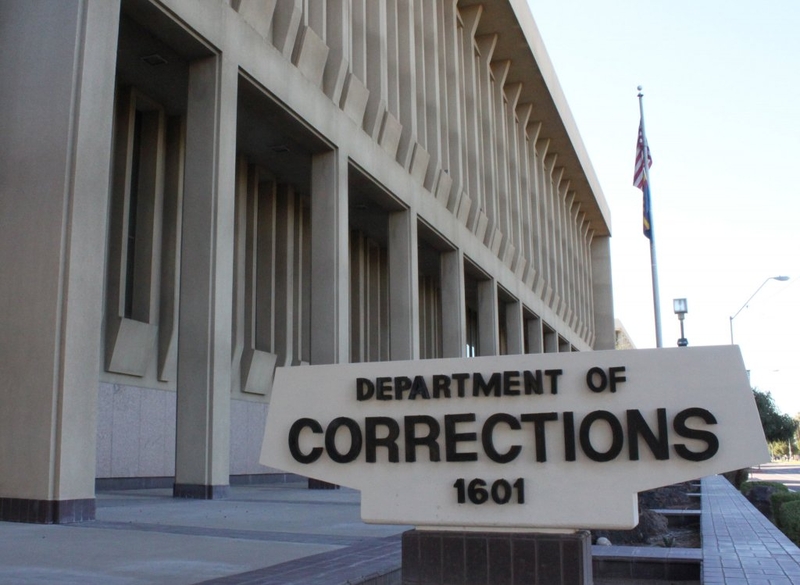
Photo by Matthew Hendley | Flickr/CC BY-SA 2.0
The Hobbs administration says a federal judge went for the nuclear option too soon when she turned over control of the state’s prison healthcare system to a receiver without exhausting other remedies in a lawsuit that has dragged on for 14 years, and is asking the judge to pause doing so.
“Jumping from the current tools that are yielding measurable results to the Receivership Order’s ‘remedy of last resort,’ before employing any intermediate measures, is an abuse of discretion,” Arizona Department of Corrections, Rehabilitation and Reentry attorney Mary O’Grady wrote in a brief aiming to persuade Judge Roslyn Silver to issue a stay on her July order appointing Annette Chambers-Smith to oversee the system.
Since ruling in 2022 that the healthcare system in Arizona prisons is so substandard that it amounts to a violation of the Eighth Amendment rights of inmates, the state has only had about three years to comply with the terms of an injunction that the Corrections Department and the plaintiffs in the class-action lawsuit agreed to.
“Since it made its constitutional findings, the Court has not attempted to improve compliance through any intermediate measures, such as remedial plans or sanctions,” O’Grady argued.
In July, Silver appointed Chambers-Smith and granted her the sole power to determine what the state needs to do to stop violating the constitutional rights of inmates.
The plaintiffs, represented by the ACLU Foundation of Arizona and Prison Law Office, said it is “outrageous” that the Department of Corrections would argue that the court skipped steps and that its legal position effectively attempts to hand-wave away the myriad failures of the system that were documented prior to the 2022 injunction.
Prior to that injunction, Prison Law Office attorney Sophie Hart wrote, the court did escalate its attempts to bring the state into compliance through fines, contempt orders, expert evaluations and a trial. Ultimately, she argued, the injunction “did not fundamentally alter what the Department is required to do.”
And Silver, Hart noted, has previously rejected the state’s attempt to reframe evaluation of its compliance by ignoring what happened before 2022 as a “profound misunderstanding of the law and facts.”
The class-action lawsuit stretches back to 2012, when prisoners sued the department and alleged that its shoddy health care violated their Eighth Amendment right against “cruel and unusual punishment.” The 14 years since have been marked by escalating judicial intervention, culminating in Silver ordering the prison health care system into receivership.
In 2014, the prisoners and the state reached a 103-point agreement on health care performance. But when the Corrections Department repeatedly failed to comply with those standards, the court twice held the agency in contempt and levied fines totaling more than $2.5 million.
Following a 15-day bench trial in 2022, the court issued a 200-page order declaring the health care system “pervasively and systemically unconstitutional.” The next year, a permanent injunction was issued with specific “quality indicators” to assess how the prison system was complying with the court’s directives.
In 2024 and 2025, Silver wrote, the state repeatedly and flagrantly violated those orders, and a pilot program aimed at testing a new model for prison health care failed disastrously — it was only partially implemented at one of the two test sites, and was only in place for eight days before it was scrapped.
“The Court’s patience has run out. Too many individuals are needlessly suffering while Defendants have deployed many delay tactics,” Silver wrote in a February order placing the healthcare system into receivership. “The Court has exercised restraint for much of this litigation, to the point that anymore tolerance of unconstitutional healthcare becomes judicial indulgence.”
But the Corrections Department says that Silver asked the wrong question. Instead of focusing on whether the department has complied with the injunction, she should have asked whether a receiver is the only way to achieve compliance.
“Will a receivership achieve compliance more quickly and efficiently than the remedies already in place? Plaintiffs’ opposition elides that question,” O’Grady argued.
The plaintiffs, who asked Silver to appoint a receiver, said that, after nearly 15 years of litigation and ongoing failures of the healthcare system — including documented deaths as a result — the answer to either question leads to the same result: The state has consistently refused to do what it has been ordered to do and has proven it won’t take the steps needed to comply.
The crux of the Corrections Department’s argument is that allowing the receiver to take the reins now, while the state appeals the receivership order, results in irreparable harm and violates the principles of federalism by stripping the state of its inherent authority.
While the plaintiffs have argued that $2.2 million in contempt fines can be used to pay for the receiver during the appeal, the Department of Corrections noted that the costs are likely to far exceed that. O’Grady pointed to California, where a judge put its prison healthcare system into receivership more than 20 years ago, which spent more than $180 million on its receiver in the first five years, ranging from $11 million to $93 million in a single year.
And on top of that, the state argued, using the contempt fines to pay for the receiver would actually create irreparable harm because those fines were designed to be coercive and the Corrections Department can still recover them through compliance. But if that money gets spent on a receiver, that ability goes away if the appeals court reverses Silver’s order.
O’Grady also argued that Silver also irreparably harms Arizona’s authority because “rather than temporarily enjoining state officials from enforcing their enacted policies, the receivership displaces the officials’ authority altogether.”
“Any time a State is enjoined by a court from effectuating statutes… it suffers a form of irreparable injury,” she wrote.
There’s also the broader issue of the money needed to comply with the litigation. Although Gov. Katie Hobbs initially proposed more than $118 million in new funding for compliance, but the final budget she negotiated with the Republicans who control the state legislature provides only about a third of that — and $45 million of that money is contingent on the Corrections Department and its private healthcare vendor, NaphCare, signing a contract amendment with automatic penalties for persistent job vacancies.
That amendment is not yet in place, but an ADCRR spokesman told the Arizona Mirror that the agency is “currently working through the contract amendment process” with NaphCare.
The Department of Corrections also said that Silver relied too heavily on inmate deaths due to poor medical care.
“Evaluating a system serving 25,000 patients by reference to its worst outcomes will inevitably overstate systemwide risk,” O’Grady argued. “If that method were sound, any time inadequate medical care is provided in a correctional setting, the entire corrections system would be exposed to court-managed institutional reform.”
But Hart countered that the court’s methodology went far beyond merely the documented deaths, and it was based on the state’s own self-reported compliance data.
“Defendants do not dispute this evidence. Instead, they take aim at this Court’s analysis,” she wrote.

Phoenix, AZ